The Underground Churches of Lalibela
The city of Lalibela, perched at 2,600 meters above sea level and located 500 km north of the capital Addis Ababa, is a monastic town inscribed on the UNESCO World Heritage list since 1978...
The city of Lalibela, perched at 2,600 meters above sea level and located 500 km north of the capital Addis Ababa, is a monastic town inscribed on the UNESCO World Heritage list since 1978 to protect its remarkable religious architecture.
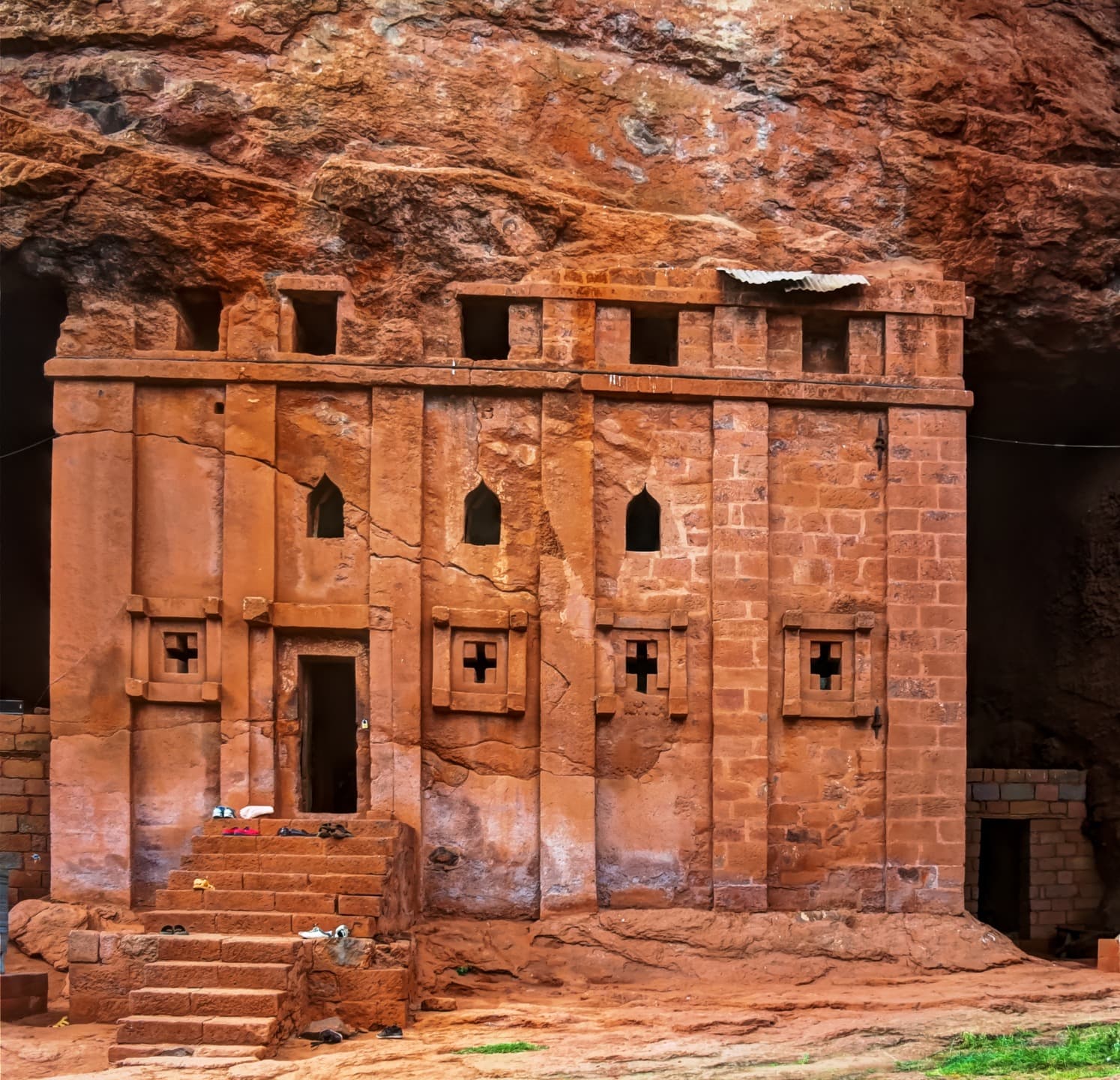
The city is home to 11 Christian churches constructed between the 12th and 13th centuries at the behest of Emperor Lalibela. These places of worship are remarkable for their distinctive architecture. They were built directly out of the rock, beneath the ground. Each is named with the word Bete, meaning house. The numerous tunnels connecting them make this a tourist destination shrouded in mystery and history. An unmissable experience during a trip to Éthiopie.
The Jerusalem of Black Africa
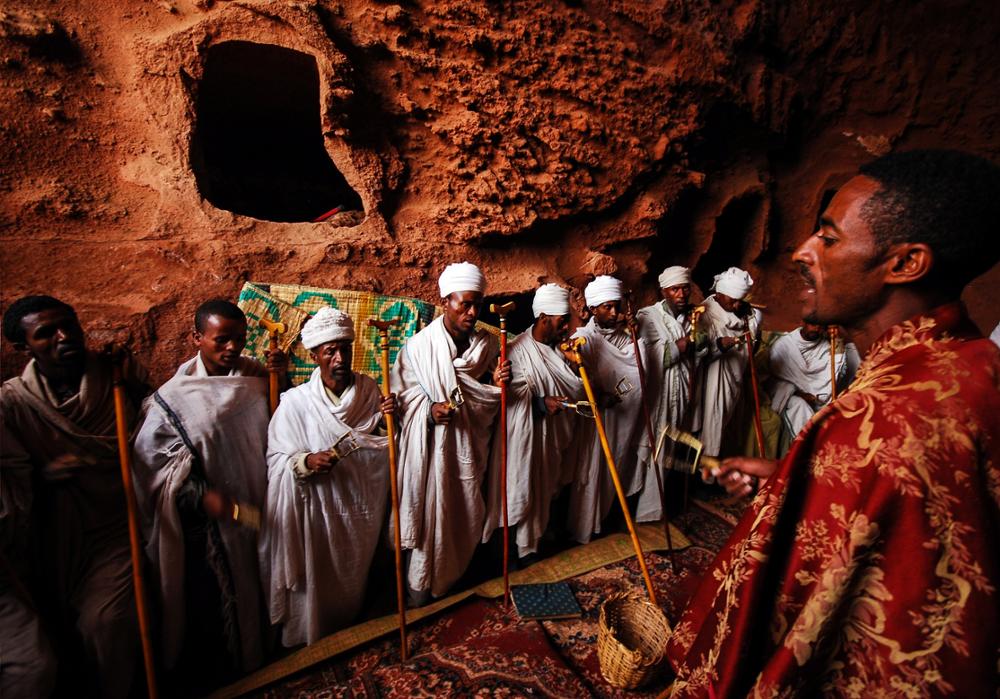
Emperor Gebre Meskel Lalibela was one of the most important sovereigns in the history of Éthiopie despite a relatively short reign (1182–1221). As a historically Christian people, Ethiopians made pilgrimages to the holy city of Jerusalem. After Saladin's Islamic army conquered the city in 1187, Lalibela decided to invest in the city of Roha and rename it... Lalibela. He had 11 churches built directly into the ground, carved from a single block of volcanic stone called tuff. This reddish-hued material dazzles with its uniqueness. No other materials such as brick or marble were added. Legend has it that construction of these buildings took just 24 years. However, studies have concluded that it actually took several decades, if not centuries, to achieve the results visitors see today. In any case, Emperor Lalibela gave this city the nickname "Jerusalem of Black Africa" and allowed Coptic Christians in the region to make their pilgrimages there.
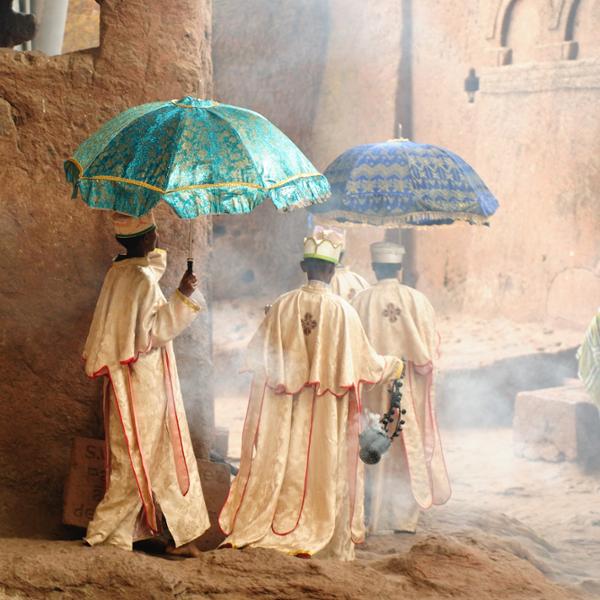
He created, in a sense, a new holy land for his people. The emperor's body now rests in a tomb located inside one of the 11 churches: Bete Golgota-Selassié (House of Golgotha-Selassié, another name for Lalibela). Listed as a UNESCO World Heritage site, the city has only 17,000 inhabitants, which ensures lasting tranquility for travelers eager to learn more about its enlightening depths.
Your Guide, Your Best Friend
These 11 churches are divided into three groups located in the center of Lalibela. On a map, these three groups form a triangle. Six buildings are located on the northern point, five on the southeastern point, and one on the southwestern point: Bete Giyorgis. This last one is the most recent and most famous of all the churches. Following a cruciform plan, the roof, at ground level, depicts the Christian cross three times over. Each group of churches is connected by a network of magnificent, mythic underground tunnels carved directly into the volcanic tuff. Bete Giyorgis is linked to the five buildings located to the southeast.
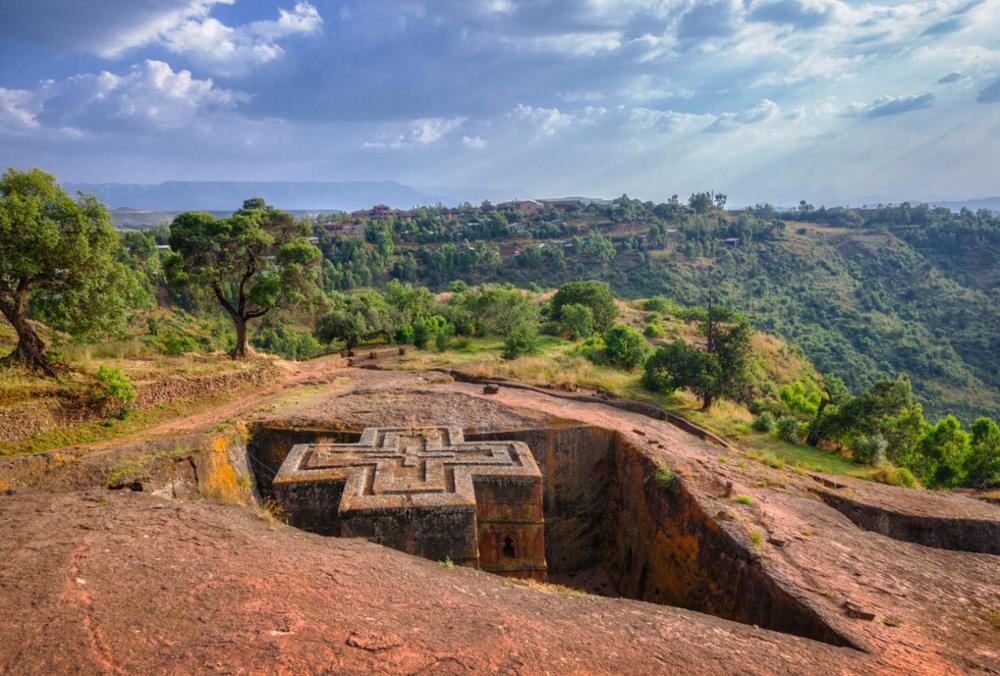
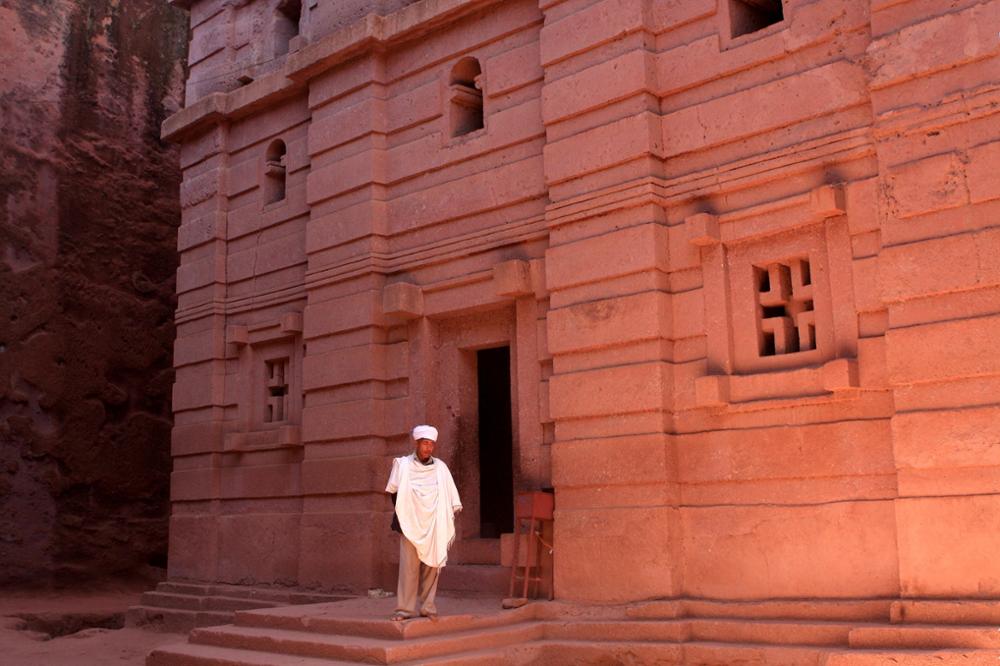
Our local agency can find you an English-speaking guide who knows these cavities perfectly and can teach you much about the history of this place. You enter the northern grouping via a passage descending underground to the west of the site. The entrance is decorated with a monolith called the "Tomb of Adam" and containing several cellae and burials. The first church built after this entrance is the largest on the site: Bete Medhane Alem (House of the Savior of the World). Among the remaining five, you'll find Bete Golgota-Selassié, which houses the tomb of Emperor Lalibela. The five southern churches are linked together by larger tunnels, some exceeding 35 meters. Don't miss the sumptuous entrance of Bete Amanuel (photo below), built underground and illuminated to create a fantastic atmosphere. You are free to visit all these religious buildings in whatever order you choose. Your guide can certainly advise you on this matter.
Frequently asked questions
Lalibela is home to 11 Christian churches carved into the rock, built between the 12th and 13th centuries at the behest of Emperor Lalibela. They are divided into three groups forming a triangle in the center of the city.
Emperor Lalibela had these 11 churches built after Saladin conquered Jerusalem in 1187, in order to provide a new pilgrimage site for the Coptic Christians of Éthiopie. He renamed the city Lalibela and made it a substitute holy city.
Bete Giyorgis (House of Saint George) is the most famous and most recent of the 11 churches. It follows a cruciform plan and its roof, at ground level, depicts the Christian cross three times over. It is often regarded as the symbol of Lalibela.
Lalibela is located approximately 500 km north of Addis Ababa. The quickest way is to take a domestic flight from Addis Ababa Bole Airport with airlines such as Ethiopian Airlines. The journey takes around 1 hour 30 minutes. It is also possible to travel by bus, but the journey takes several days.
Yes, a combined ticket is required to visit all 11 churches of Lalibela. It is strongly recommended to hire a local English-speaking guide to understand the history and significance of each building and its interior decorations.
The best time to visit Lalibela is the dry season, from October to May. The religious festivals of Timkat (January) and Genna (Ethiopian Christmas, January) are particularly festive and spiritual times, but also very crowded with pilgrims.