Festivals and celebrations to discover in Ethiopia
Religious festivals and rituals hold an important place in Ethiopian culture. A chance to discover the country's traditions and rich history, no matter what season you travel…
Religious festivals and rituals hold an important place in Ethiopian culture. An opportunity to discover the country's traditions and its historical heritage, whatever season you journey to the Horn of Africa! Orthodox, Protestant or Catholic: the entire population celebrates ceremonies and popular gatherings… An overview of the festivals and celebrations to discover in Ethiopia!
Genna (or "Leddet"): Orthodox Christmas
Genna celebrates the birth of Jesus Christ. On the morning of January 7th, dressed in traditional attire (the shamma), the faithful attend mass at sunrise! After the service, families gather to share a stew and drink tella, a traditional beer made from teff grains, barley, or corn. Leddet is the Ethiopian equivalent of European Christmas.
Timkat: Ethiopian Epiphany
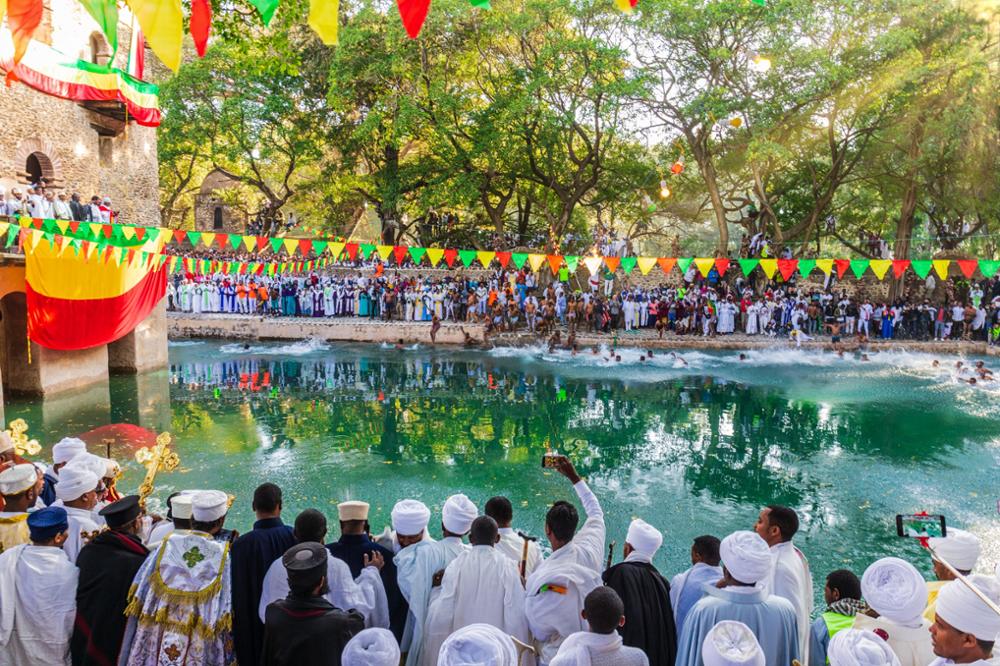
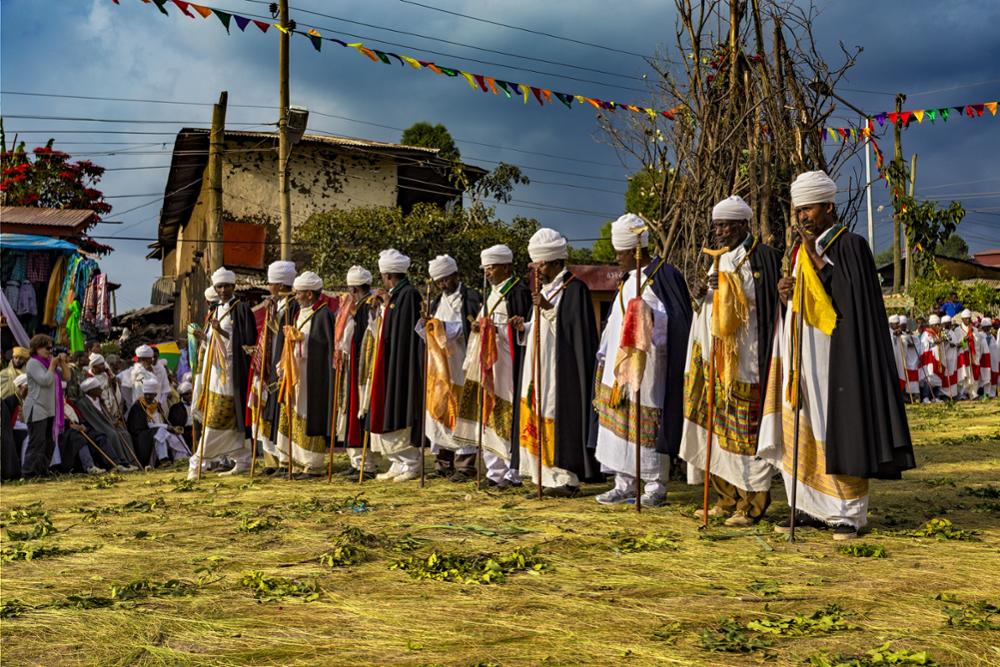
The Timkat festival takes place on January 19th and celebrates the Ethiopian Orthodox Epiphany. During the ceremony, the tabots (replicas of the Tables of the Law inscribed with the Ten Commandments) are removed from churches, wrapped in cloth, and displayed to the crowd during the procession. Priests, dressed in colorful vestments, carry the tabots on their heads and bring them to the water's edge. Around two o'clock in the morning, after the divine liturgy, the crowd is sprinkled with holy water.
Bull jumping ceremony: a traditional Hamar ritual
The "bull jumping" ceremony takes place each year in the Omo Valley between late January and early April. This ritual, unique to the Hamar people, is a coming-of-age rite into adulthood. Under the watchful eyes of their elders, young boys jump across the backs of a row of 30 bulls. Those who fail the test are whipped by the women of their family, while the winners are celebrated by the village. The few tourists witnessing the ceremony pay a fee, which is then used to feed the ceremony's guests…
The Eid ul Adha Feast: an important Muslim ceremony
Eid ul Adha is one of the most important Muslim festivals. It commemorates the moment when Abraham decided to sacrifice his son as an act of obedience to God. On this occasion, each family sacrifices an animal (sheep, goat, cow, etc.), with the head necessarily turned toward Mecca. A portion of the meat is given to the needy, according to Allah's commandments. It is also a day of reconciliation, when everyone is invited to forgive. Though it always falls in February, its exact date varies according to the lunar calendar.
Fasika: Orthodox Easter
In April, Fasika marks the end of a 55-day fast and celebrates the Resurrection of Christ. During the festivities, churches are in celebration and display their heritage for all to see! A tip? Travelers particularly appreciate the monastic city of Lalibela, located in the Lasta province. This UNESCO World Heritage site is an ideal place to witness the most important celebration in the Orthodox calendar.
Buhe: Ethiopian Halloween
Each summer (August 18th or 19th), Ethiopia celebrates Buhe for the "Transfiguration of Jesus." Young men parade in traditional dress through their villages, cracking whips called chibos. They knock on house doors and sing for the residents. In return, locals offer them buhe, a paste used to prepare mulmul bread.
Meskel festival: the "Feast of the True Cross"
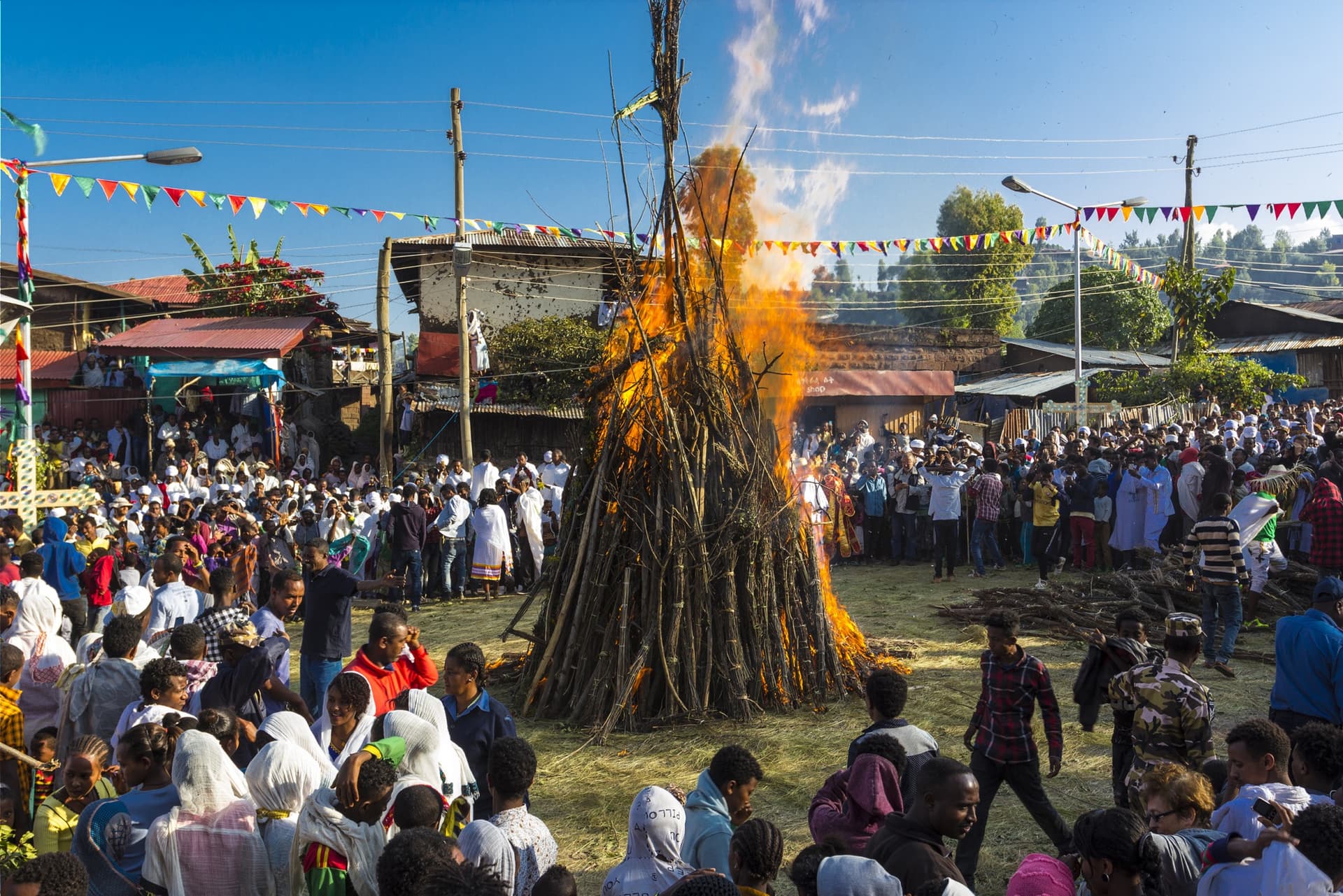
Meskel is celebrated on September 27th and commemorates the discovery of the "True Cross" by Empress Helen. During the ceremony, a large bonfire (the demera) is covered with grass and yellow flowers… For the occasion, bundles of wood are sold throughout the city so everyone can participate in the celebration fire! The bonfire is lit the evening before or on the day itself, depending on local traditions. The faithful then use the bonfire's ashes to mark their foreheads in the sign of the cross.
Festival in Ethiopia: Irreecha celebrates the arrival of spring
On the first Sunday after Meskel, the Oromo (a multi-religious ethnic group representing approximately 35% of the national population) celebrate Irreecha. This is a festival dedicated to Birra (spring). After months of monsoons, rains, and gloomy weather: this ceremony is a way to make a fresh start! For the occasion, residents don their traditional costumes, dance, and sing around the lakes of the Oromia region or in the city of Bishoftu.
Frequently asked questions
Ethiopia celebrates festivals throughout the year. January is particularly rich with Genna (January 7th) and Timkat (January 19th). September is also a festive month with Meskel (September 27th) and Irreecha. Plan your trip around the festival that interests you most!
Timkat takes place on January 19th throughout the country. The cities of Lalibela, Gondar, and Addis Ababa are prime locations to experience it. It is advisable to book your accommodation several months in advance, as demand is very high during this period. Dress respectfully and arrive early to secure a good spot for the procession.
Yes, tourists can attend the bull jumping ceremony organized by the Hamar people in the Omo Valley between late January and early April. A fee is requested from foreign visitors, with proceeds used to feed the ceremony's guests. It is recommended to be accompanied by a local guide to respect traditions and obtain necessary permits.
Meskel, celebrated on September 27th, commemorates the discovery of the 'True Cross' by Empress Helen. The highlight of the celebration is the lighting of a great bonfire called demera, covered with yellow flowers. The faithful then use the ashes to mark their foreheads in the sign of the cross. It is one of Ethiopia's most visually striking and photogenic festivals.
Yes, when attending Orthodox or Muslim religious festivals, it is strongly recommended to dress modestly: shoulders and knees covered for both women and men. Wearing white or light-colored clothing is appreciated, as it is the traditional color worn by the faithful during ceremonies. Consult with your local guide before attending an event.