Timkat Festival
Timkat Festival
Timkat commemorates the baptism of Christ according to Ethiopian Orthodox tradition. Each January 19th, torchlit processions, liturgical vigils, and ritual baths transform Gondar, Lalibela, and Addis Ababa into a spiritually charged celebration recognized by UNESCO.
Timkat is the feast of the Ethiopian Orthodox Epiphany, celebrated each year on January 19th (or January 20th in leap years). It commemorates the baptism of Christ in the Jordan River. For three days, nocturnal processions, liturgical chants, and ritual baths transform Ethiopian cities—Gondar, Lalibela, and Addis Ababa foremost among them—into scenes of collective devotion of rare intensity.
Quick Practical Overview
- Fixed date: January 19th (Gregorian calendar); January 20th in leap years.
- Recommended duration: 2 to 3 days to follow the entire cycle (eve, night, following day).
- Access: Domestic flights to Gondar or Lalibela from Addis Ababa; the festival is public and free.
- Dress code: Modest clothing recommended; white preferred to blend in with the faithful.
- Crowds: Very dense—book accommodation and transport several weeks in advance.
What You'll Witness
On the evening before, priests remove the tabot—a replica of the Ark of the Covenant unique to each church—wrapped in embroidered veils. The procession advances by torchlight, accompanied by the chants of debtera (liturgical chanters). The night passes in prayer around the tabot, placed near a body of water. At dawn, the water is blessed and the faithful immerse themselves or are sprinkled with it.
History and Context
The Ethiopian Orthodox Tewahedo Church, one of the world's oldest Christian communities, has celebrated Timkat for centuries. The festival is inscribed on the UNESCO List of Intangible Cultural Heritage since 2019. The tabot, a sacred object inaccessible to the uninitiated, lies at the heart of the ritual: each church possesses its own, and its public display is an exceptional event in Ethiopian religious life.
Highlights of Your Visit
The Evening Procession (Ketera)
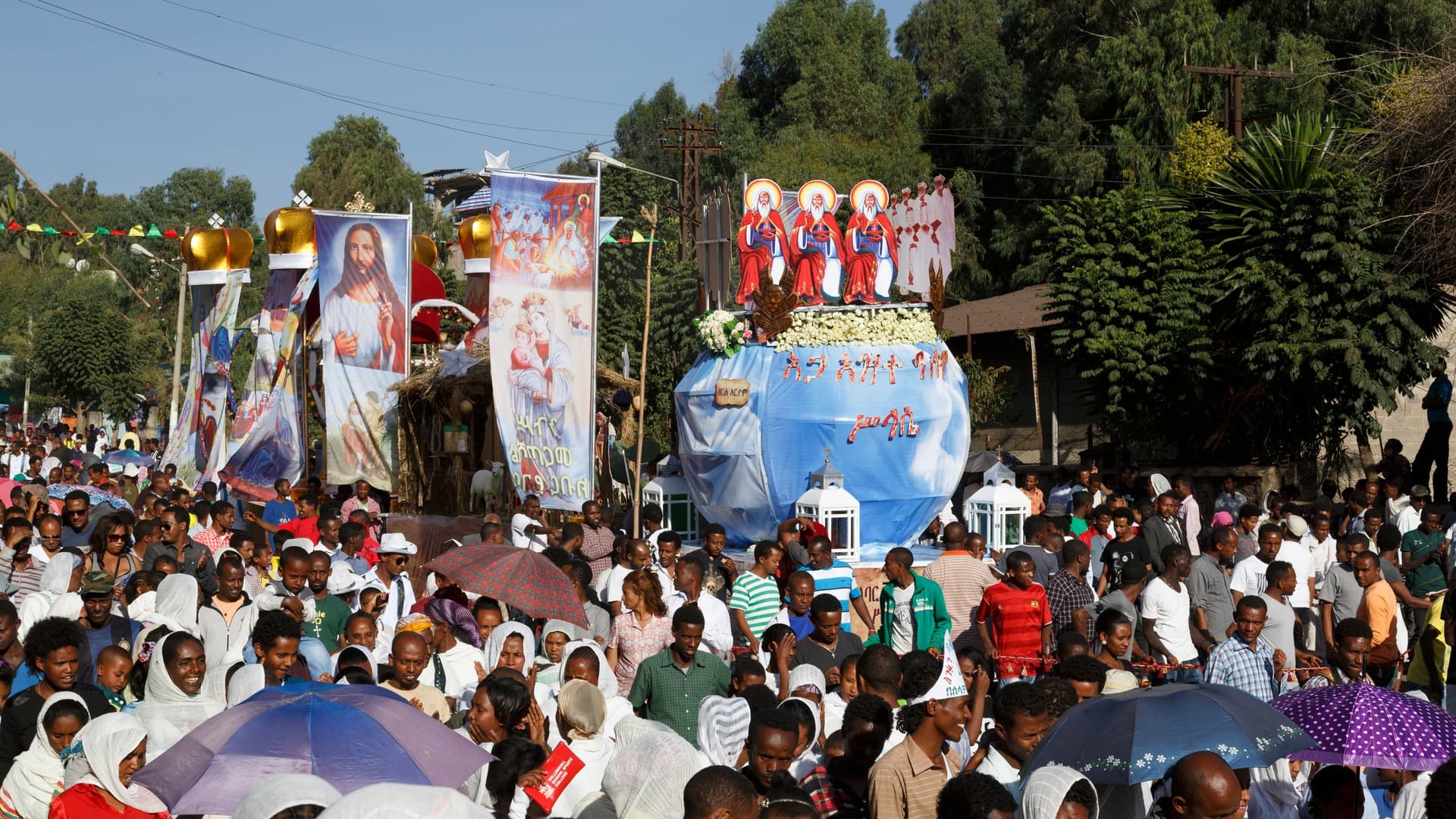
As darkness falls on January 18th, cortèges depart from churches. Colored ceremonial umbrellas, gilded crosses, embroidered priestly robes: the visual spectacle is striking. In Gondar, the procession converges toward the Fasilides Pool.
The Nocturnal Vigil
Around the tabot, priests and the faithful sing and pray throughout the night. The atmosphere blends profound reverence with collective fervor. The chants of zema (Ethiopian liturgical music) resound until dawn.
The Morning Ritual Bath
At dawn on January 19th, the bishop blesses the water. The faithful dressed in white rush into it. In Gondar, the Fasilides Pool is filled specially for the occasion—a scene photographed worldwide.
The Return Procession
In the afternoon, the tabot returns to its church of origin. Dancing, singing, and popular celebrations extend the festival into the late evening.
Etiquette and Visitor Rules
- Never touch the tabot or its veils—this is an absolute prohibition, even for ordinary faithful.
- Always ask permission before photographing priests or the faithful in prayer.
- Dress modestly: shoulders and knees covered, preferably in white as local tradition dictates.
- Stay back during intense liturgical moments; crowds can be extremely dense.
Photography Tips
The torchlight during the nocturnal procession is spectacular but demands a bright lens (f/1.8 or f/2.8) and elevated ISO sensitivity. In the morning, the golden light of dawn over the Fasilides Pool in Gondar offers the most iconic images. Position yourself early—crowds gather from 5 a.m. Avoid flash in liturgical contexts.
Location and Access
Timkat is celebrated throughout the country, but three cities concentrate the most significant festivities:
- Gondar: The Fasilides Pool is the most iconic setting. Flights from Addis Ababa (approximately 1 hour).
- Lalibela: Processions between the rock-hewn churches create a unique medieval atmosphere.
- Addis Ababa: Jan Meda, a vast plain north of the capital, hosts the main ceremony with tens of thousands of participants.
Nearby Attractions
- Rock-Hewn Churches of Lalibela — eleven sanctuaries carved into volcanic rock, UNESCO-listed, to visit before or after Timkat.
- Fasilides Castle (Gondar) — 17th-century fortress whose pool is the heart of the Gondar celebration.
- Simien National Park — UNESCO-listed mountain massif, accessible from Gondar in a few hours.
- Lake Tana — source lake of the Blue Nile, dotted with island monasteries, an hour from Gondar.
Give it a go!
Our local experts arrange this activity for you.