2000 Habesha Cultural Restaurant
2000 Habesha Cultural Restaurant
The 2000 Habesha Cultural Restaurant is an unmissable destination for those seeking to discover the richness of Éthiopian culture through a unique culinary experience. Located in Addis-Abeba, in the Bole district, this restaurant offers far more than a simple meal.
The 2000 Habesha Cultural Restaurant is an unmissable destination for those seeking to discover the richness of Éthiopian culture through a unique culinary experience. Located in Addis-Abeba, in the Bole district, this restaurant offers far more than a simple meal. It invites you on an immersion into the history, music, and traditions of this ancient nation. Whether dining with family or celebrating a special occasion, this establishment guarantees a memorable experience.
A Journey Into the Heart of Éthiopian Culture
The 2000 Habesha Cultural Restaurant is not merely a place to eat. It represents a genuine journey through time and space. The term "Habesha" refers to the Éthiopian and Eritrean peoples who share a common culture and heritage. The restaurant is dedicated to celebrating this identity across every dimension. Here, cuisine encounters dance, music, and traditional arts.
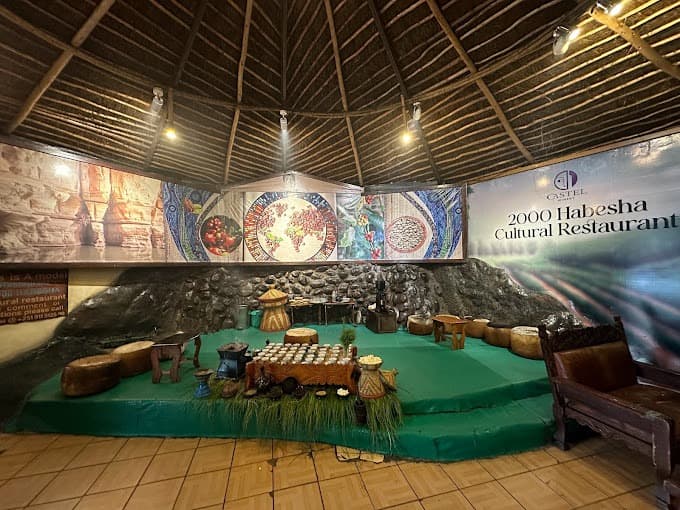
The restaurant's décor transports visitors into traditional Éthiopia. The spaces are adorned with paintings, artworks, and traditional Éthiopian textiles depicting:
- Scenes of daily life in the country
- Picturesque landscapes
- Figures from Éthiopian mythology and history
Tables are decorated with simple yet elegant touches, featuring typical artisanal objects that create a warm and welcoming atmosphere.
A Feast for the Senses
Éthiopian cuisine is one of the most fascinating aspects of the country's culture. It distinguishes itself through bold, aromatic spices, unique cooking techniques, and the use of fresh local ingredients. At the 2000 Habesha Cultural Restaurant, guests have the opportunity to discover signature dishes that have made Éthiopian gastronomy renowned. Upon arrival, an intoxicating fragrance of spices, aromatic herbs, and prepared dishes awakens the senses.
Injera
The centerpiece of nearly every meal in Éthiopia is injera—a flatbread made from teff flour (a local grain)—both light and gently tangy. It serves not only as bread but also as an eating utensil. Éthiopians tear it into pieces and use it to scoop the various dishes served alongside. It becomes a true shared experience, as meals are often presented in large communal baskets where diners serve themselves together.
Traditional Dishes
The 2000 Habesha Cultural Restaurant's menu features a variety of traditional Éthiopian dishes. Among the most popular are:
- Doro Wot, a spiced stew of chicken and eggs, slowly cooked in a sauce of berbère (a distinctly Éthiopian spice blend)
- Kitfo, finely minced beef seasoned with spices
Vegetarians are well catered for with options such as:
- Shiro, a spiced chickpea purée
- Misir Wot, a lentil stew seasoned with tomatoes and spices
Dishes are often accompanied by sautéed vegetables, such as Gomen (collard greens sautéed with spices) or Atayef, a vegetable stew. The complex, spiced flavors and varied textures create an explosion of taste that delights the palate.
Traditional Beverages
To complement the cuisine, the 2000 Habesha Cultural Restaurant also serves traditional beverages, including T'ej, a lightly fermented Éthiopian honey wine, or spiced T'ej for those preferring heat. Bunna—Éthiopian coffee—is also an essential element of the country's culture and is often served after meals. It is prepared ceremonially in a small coffee pot and consumed with crystallized sugar.
A Cultural Immersion
What truly sets the 2000 Habesha Cultural Restaurant apart from other establishments is its vibrant, immersive atmosphere. Beyond the food, the restaurant offers a complete sensory experience where visitors can savor the cuisine while enjoying traditional music and dance performances.
Live Music
The 2000 Habesha Cultural Restaurant regularly features live music performances with groups playing traditional Éthiopian instruments such as:
- The krar (a five or six-stringed lyre)
- The masinko (a single-stringed violin)
- The Washint (a wooden flute)
These performances create a festive, authentic atmosphere that allows guests to immerse themselves in Éthiopian culture through rhythm and melody.
Traditional Dance
Another striking element of the 2000 Habesha Cultural Restaurant experience is traditional dance. Dancers, dressed in colorful costumes, perform choreography that tells stories of daily life, historical events, and mythological legends. Éthiopian dance is generally characterized by hip and shoulder movements, often accompanied by singing and hand clapping. These performances allow visitors to experience an essential aspect of the country's cultural heritage.
A Gathering Place and Space for Sharing
The 2000 Habesha Cultural Restaurant is far more than a simple restaurant. It is a place where people gather, exchange, and share a unique experience. The atmosphere is warm, welcoming, and inclusive. This makes it an ideal destination for families, groups of friends, and travelers seeking a deep cultural encounter.
Practical Information
The 2000 Habesha Cultural Restaurant is open daily from 10am to 11pm. Reservations are available for both the indoor dining room and outdoor terrace. Staff can provide explanations about performances and the traditional clothing worn by singers and dancers. The restaurant also features a gift shop where guests can purchase artisanal goods, traditional Éthiopian clothing, and various other items.
A unique culinary experience
Discover the local food scene with our advisors.