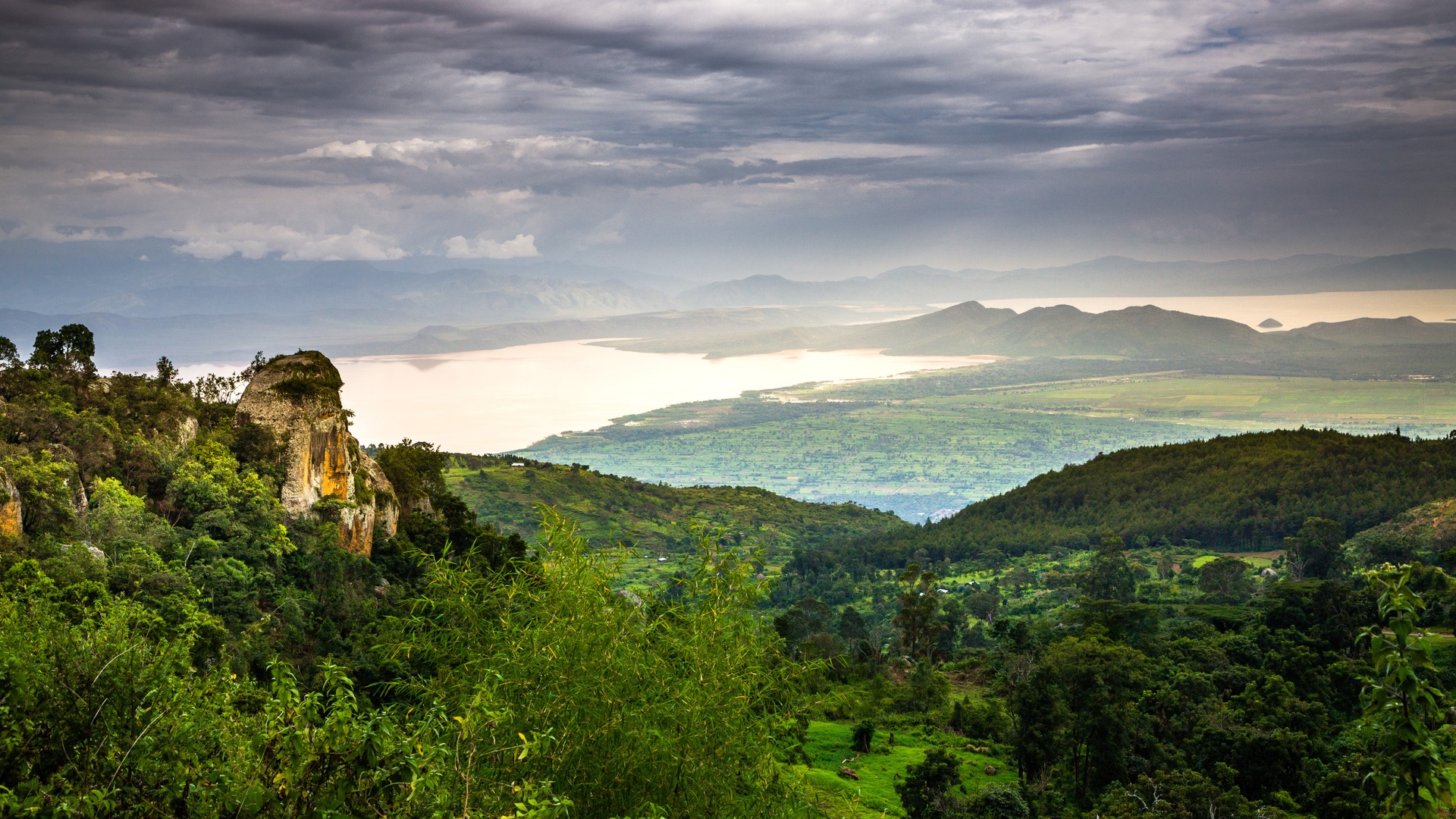
Cultural journey in Ethiopia: rock-hewn churches, Abyssinian royalty, historic route
Ethiopia is a destination rich in historical heritage. Nicknamed the Cradle of Humanity, the country is dotted with archaeological sites, rock-hewn churches, megaliths and monuments
Ethiopia is a destination rich in historical heritage. Nicknamed the Cradle of Humanity, the country is dotted with archaeological sites, rock-hewn churches, megaliths and UNESCO-listed monuments. From Axum to Gondar, passing through Lalibela: discover the full wealth of this East African country and the must-see sites to explore during a cultural journey in Ethiopia.
Why is Ethiopia a major cultural destination?
1. A history that traces back to the origins of humanity
Ethiopia (formerly known as Abyssinia) is considered the "Cradle of Humanity". Indeed, the oldest known human fossils, dating back more than 3 million years, have been found on its lands, in the Awash valley (Afar region).
Among them is that of the australopithecus afarensis Lucy (discovered in 1974 at the Hadar paleontological site) and Selam, discovered in 2000 at Dikika. For history enthusiasts, Ethiopia offers a 100% immersive experience in ancient history!
2. A country that has preserved its traditional culture
With nine sites inscribed on the World Heritage list, Ethiopia is the African country with the most UNESCO inscriptions. But beyond these exceptional monuments, the country also possesses a rich intangible heritage.
Ethiopia occupies a singular place on the African continent: it is the only country to have resisted colonization throughout the centuries. While Italy occupied part of the territory during the twentieth century, it never managed to control it completely.
This resistance limited Western influence on local art and traditions. Architecture, religious painting, rites and customs have thus been preserved. They can be found today in craftsmanship, religious festivals (such as the Gifaataa festival) and ways of life; witnesses to a culture preserved, without rupture from the past.
Want to explore the highlands of Abyssinia? Discover our hiking circuit through ancient kingdoms! Endemic fauna, authentic villages and millennial culture are at the heart of this journey devoted to nature and major tourist destinations. |
Axum: a must-see on a cultural journey in Ethiopia
Founded in the thirteenth century, the kingdom of Abyssinia is part of a much older historical legacy. Indeed, the origins of this civilization date back to the kingdom of Aksum (or Axum) founded in the 1st century of our era on the Ethiopian highlands.
This kingdom played a foundational role in Ethiopia's political, religious and cultural history. Indeed, it was the first sub-Saharan African state to officially adopt Christianity around 350 of our era.
Due to competition and new Red Sea trade networks, the kingdom of Aksum lost its luster at the end of the eleventh century.
The stelae of May Hedja (Axum obelisk)
Located in the Tigray region in northern Ethiopia, the city of Axum is considered the religious capital.
From its great era remain many ancient treasures, like May-Hedja; an archaeological site with a vast necropolis and numerous stelae. Among them? The Obelisks of Axum, which designate tombs dating from the 4th century.
Its monoliths are renowned for their geometric motifs and rank among the oldest stone blocks carved by man.
The Church of Saint Mary of Sion
About ten meters from the stelae, you can admire the Church of Saint Mary of Sion. According to Ethiopian Orthodox tradition, it houses the Ark of the Covenant, which makes it, even today, a major pilgrimage site for Orthodox Christians.
The church houses a monastery and the remains of a basilica. The sites are particularly interesting to visit during the Festival Maryam Zion; one of the country's most important religious festivals held each year on November 30.
The rock-hewn churches of Tigray: a stop in the heart of Abyssinia
The churches
Located in the heart of ancient Abyssinia, the Tigray region is full of religious buildings, like the church of Beta Maryam. These 125 rock-hewn churches, less touristy than those of Lalibela, nevertheless constitute an exceptional ensemble spread over the highlands of the North-East region.
Nestled in the mountains or perched on peaks – so that, according to legend, they are built as close to God as possible – some rock-hewn churches are quite difficult to access, but promise, upon arrival, sublime heritage in the heart of unspoiled nature.
Many of them are adorned with carved motifs and offer, by their isolation, a sense of tranquility conducive to contemplation. To reach some buildings, you must first undertake hikes lasting several hours. A chance to admire the surrounding nature, its monkeys and endemic plants (junipers, aloe vera, cacti, etc.).
Among the many churches, monuments in the Gheralta massif and the surroundings of Degoum are among the most accessible. The church of Abuna Abraham (Degoum) is accessible after about an hour's walk and is renowned for its paintings.
Conversely, one of the most difficult is the church Abuna Yemata (located in the Gheralta chain), but it offers breathtaking views of the surroundings.
Mekele
During your visit to the region, take the opportunity to stop in Mekele, its capital. Renowned for its proximity to major historical sites, the city also houses the palace of Yohannes IV (the emperor of Ethiopia in the nineteenth century).
It houses a history museum where you can discover the entire history of the region. It can be interesting to visit it before the historical sites to better understand their context and importance.
Lalibela: the "Black Jerusalem" and its monolithic churches
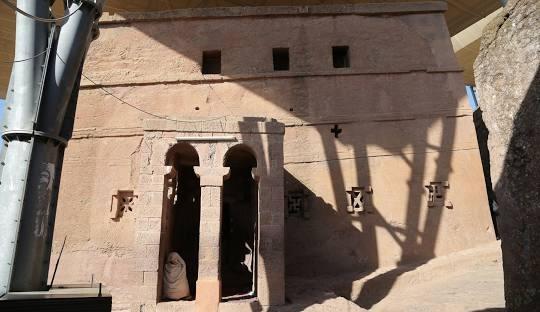
Lalibela is a holy city located in the north of the country, at 2,700 meters altitude. It is renowned for its eleven superb churches carved out of rock. The ensemble comprises two types of buildings: monolithic churches (carved from a single block with facades exposed to the open air) and hypogean churches (underground) carved to depths of over 12 meters.
The city was founded in the twelfth century at the request of the king. The latter, who was returning from a trip to Jerusalem at the time, wished to offer a "New Jerusalem" to his people, at a time when pilgrimages to the Holy Land were difficult. It is now nicknamed the Black Jerusalem because of its geographical location.
Long kept secret, the churches of Lalibela are now a major site of Ethiopian Christianity. Listed as a UNESCO World Heritage site in 1978, the site attracts tourists from around the world who come to admire its unique buildings, adorned with paintings and bas-reliefs. One of the best-preserved churches is Bete Giyorgis.
During the Timket festival (Ethiopia's most important Orthodox event), many faithful gather in the heart of the religious city. An opportunity to witness processions, rhythmed by traditional songs and dances. Note that a religious community lives on the site year-round to welcome pilgrims.
Gondar: the city of Fasil Ghebi
Founded in the seventeenth century by Emperor Fasiladas, Gondar is the former imperial capital. Located in northern Ethiopia, northeast of Lake Tana, it brings together a patrimonial ensemble renowned for its multicultural architecture (with Arab and Indian influences) and baroque style – imported by Jesuit missionaries.
Gondar's fortified city was the residence of all emperors, from its construction at the end of the seventeenth century, before becoming the center of Ethiopian government until 1864. Despite its rich historical past (its settlers and British bombardments during World War II), the site retains many buildings.
Surrounded by a rampart 900 meters long, the ensemble includes several churches, as well as monasteries, baths, and about twenty palaces, including the castle of Fasilidas. After its decline, which occurred in the nineteenth century, Gondar nonetheless remains the most important commercial center in the northwest of the country.
Listed as a UNESCO World Heritage site in 1979, the vestiges of Fasil Ghebi are now recognized for their conservation and historical value.
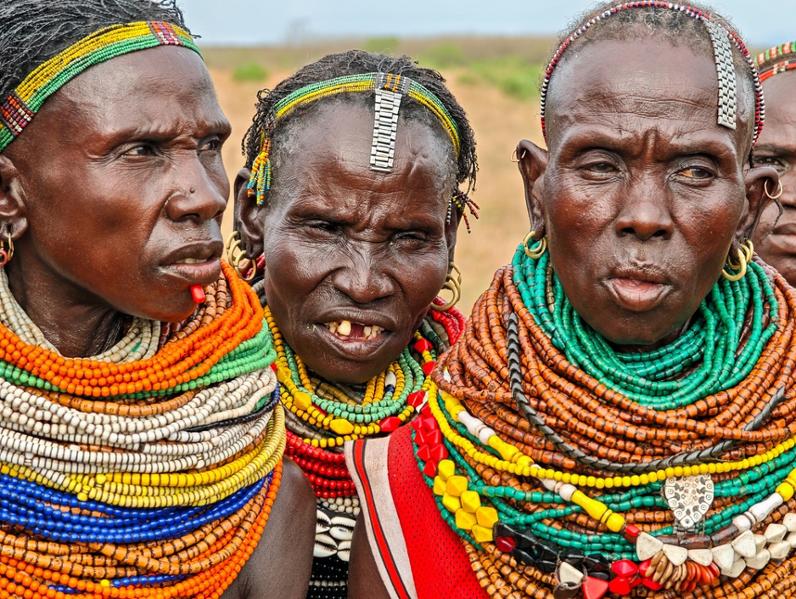
Want to share authentic moments with local people? Travel to meet the ethnic groups in the Omo valley! 80 ethnic groups live there far from modern life, thanks to craftsmanship and hunting. Our tour allows you to meet these nomadic tribes and experience genuine immersion in their daily lives. |
Learn more about "The historic route of the north" in Ethiopia…
The historic route of the north refers to a major cultural itinerary that crosses the highlands of northern Ethiopia. It is not a single road, but rather a coherent ensemble of emblematic sites linked to the political, religious and cultural history of ancient Abyssinia. This itinerary notably includes Axum, Lalibela, the fortified city of Gondar, as well as Lake Tana, the source of the Blue Nile and the Simien Mountains.
Ethiopian megaliths
Ethiopia possesses many dolmenic cists (or megalithic burials). Several thousand monoliths line the southern part of the country in particular, making this region one of the main megalithic centers in East Africa.
One of the most important sites is the archaeological site of Tiya, which has 36 monuments, including "32 stelae presenting sculptural representation" according to UNESCO.
Many stelae present carved signs, where one can distinguish figures, geometric motifs and various objects. These suggest symbolic or ritual practices still being studied today by archaeologists.
Ethiopian culture in daily life
In Ethiopia, traditional culture is an integral part of daily life. It is expressed in gestures, rituals and exchanges, offering travelers a genuine cultural immersion.
The coffee ceremony
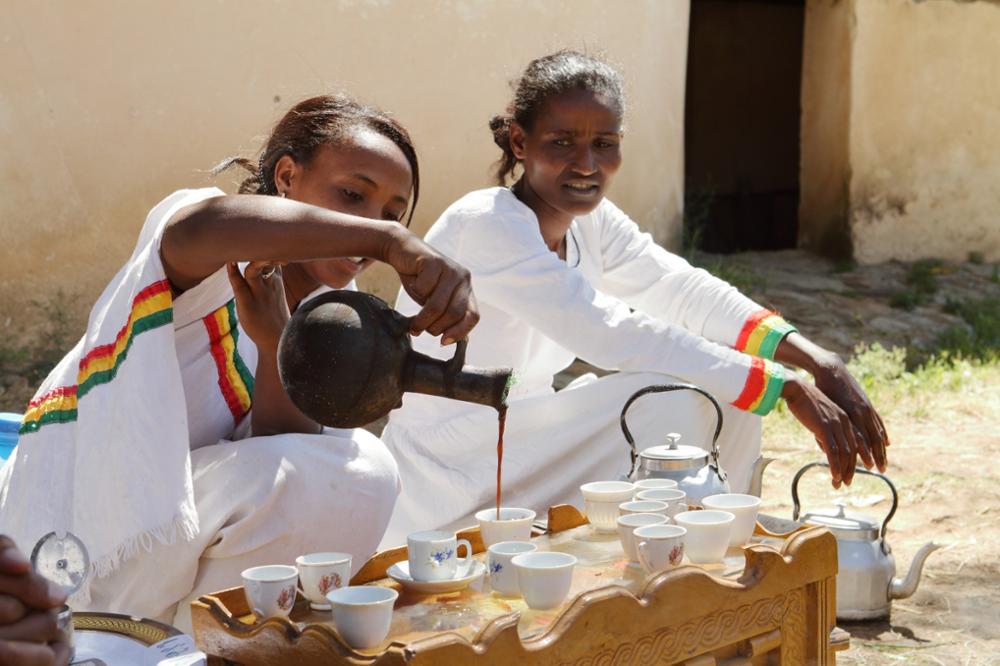
The Habesha coffee ceremony is a long, codified ritual that is part of a communal tradition. Before the ceremony, women burn incense in the room to ward off evil spirits.
The green coffee beans are then cleaned and roasted. Once they are black and shiny, they are ground using a mortar (mukecha) or pestle (zenezena). The resulting powder is poured into the water of a jebena, the traditional coffee maker, then brought to a boil. The coffee is served very strong.
The host then pours the coffee (buna) about 30 centimeters above the cups. The youngest child present at the ceremony generally serves the first cup to the oldest guest. In some regions, the ceremony can be held up to three times a day. It constitutes a genuine mark of hospitality, especially during visits or family celebrations.
Ethiopian cuisine
The "cradle of humanity" also reveals itself in its traditional cuisine. Indeed, Ethiopia is known for its bean culture for three millennia, as well as that of teff; one of the oldest cereals cultivated by man.
Teff flour is notably used to prepare the national dish called injera: a thick and spongy flatbread, symbol of Ethiopian cuisine. It is enjoyed according to precise rules: eat only with the right hand and never lick your fingers.
The fasting periods of the Orthodox Church, during which meat is forbidden, also explain the wide variety of vegetarian dishes offered in Ethiopia.
Ethnic groups and languages
Ethiopia is composed of a dozen major cultural groups, with customs and languages sometimes very different. The Oromo ethnic group, which is both Christian, Muslim and animist, represents 17 million inhabitants. It is closely followed by the Amhara ethnic group, which numbers about 16 million people. The country has more than 80 languages spoken, not counting the numerous local dialects.
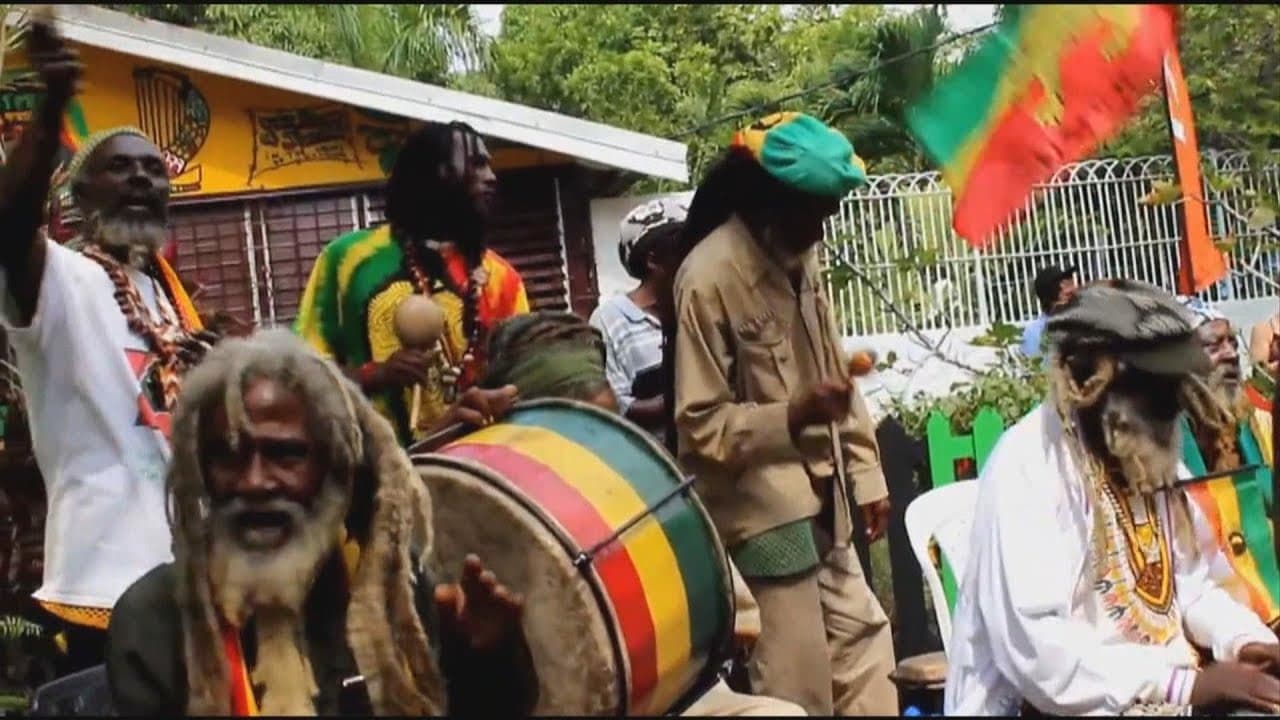
Want to share authentic moments with the local population? Set off to meet the ethnic groups in the Omo valley! 80 ethnic groups live there far from modern life, through craftsmanship and hunting. Our tour allows you to meet these nomadic tribes and experience genuine immersion in their daily lives. |
Traditional music
Ethiopian traditional music (called Balawi) sits at the crossroads of sub-Saharan music (rich in rhythms and percussion) and Islamic music, which is distinguished by a unique rhythm accompanied by stringed instruments and nasal voices.
There is also church music and its Ethiopian liturgical chant called Zema; practiced within the Orthodox Church. These musical expressions occupy an important place in the country's cultural and spiritual life.
Tips on the right attitudes to adopt during your trip ● Taking photos: ask for permission Some religious monuments may prohibit taking photos during a visit. Before taking out your camera, verify that photographs – as well as the use of flash – are indeed permitted within the building. Similarly, if you wish to capture moments of life, ask permission from your subjects before taking shots, particularly if you wish to photograph children. Note that in some tourist areas, such as the Omo valley, taking photos for tourists is a source of income. Inhabitants will therefore ask you for compensation in exchange for their permission. This is not a bribe, but a common practice that you should respect. ● Visiting places of worship: wear appropriate clothing Men or women, it is mandatory to cover your shoulders and legs when entering a religious building. Depending on the type of monument, you may also be asked to remove your shoes at the entrance. Women must also cover their hair with a scarf. ● · Meeting indigenous people: respect their customs Finally, if you plan to meet Ethiopian tribes, find out in advance about their customs and practices; in particular about conduct to observe and things to avoid at the table! |
Practical advice for organizing your cultural stay in Ethiopia
1. Choosing the right time
Ethiopia's climate is divided into three distinct periods: the dry season (October to January), the intermediate season (February to May) and the rainy season (June to September).
To visit historical sites, the dry season is recommended and in particular the month of January, which is characterized by clear skies and daytime temperatures around 25°C – with some variations depending on the regions. For example, in January, the thermometer reads around 20°C in Gondar and Lalibela (in the north of the country) and 25-30°C in the south.
2. Determine the duration of your trip
There are so many sites to discover in Ethiopia that a trip of at least two weeks is ideal. If you have less time, plan ten days and choose either north or south. If the goal is to visit as many historical treasures as possible, prioritize the north and its "Historic Route".
3. Call on a local agency
If you are short on time, call on a local agency to help you organize your stay. Indeed, religious monuments or rock-hewn remains can be far from each other and require good logistics. A tour designed by local professionals is the promise of a successful stay, without wasting time on travel.
Frequently asked questions
The best time to visit Ethiopia's cultural sites is the dry season, from October to January. The month of January is particularly recommended: the sky is clear and daytime temperatures average around 25°C in the south, and 20°C in Lalibela and Gondar in the north. This is also the period of the Timket festival, one of the country's largest Orthodox festivals.
To travel the historic route of the north — which includes Axum, Lalibela, Gondar, Lake Tana and the Simien Mountains — a minimum of two weeks is recommended. If you have less time, allow ten days by focusing on the three major sites: Axum, Lalibela and Gondar.
Yes, French nationals must obtain a visa to enter Ethiopia. It is possible to apply for an e-visa online before departure on the official website of the Ethiopian government. Check with the embassy or your travel agency to learn about the conditions in effect at the time of your trip.
Lalibela is nicknamed the 'Black Jerusalem' because of its geographical location in Africa and its religious purpose. Founded in the twelfth century by King Lalibela, the city was designed as a 'New Jerusalem' to allow Ethiopian pilgrims to make a pilgrimage on their own soil, at a time when reaching the Holy Land was difficult.
Ethiopia has nine sites inscribed on the UNESCO World Heritage list, making it the most represented African country. Among the most emblematic are the rock-hewn churches of Lalibela (listed in 1978), the remains of the fortified city of Fasil Ghebi in Gondar (1979), the stelae of Axum, the archaeological site of Tiya and the Simien Mountains national park.
The 125 rock-hewn churches of Tigray are spread over the highlands of northeastern Ethiopia. Some are accessible after about an hour's walk, such as the church of Abuna Abraham in Degoum. Others, like the church of Abuna Yemata in the Gheralta massif, require a more difficult climb but offer exceptional views. It is advisable to check access conditions to the region before departure.