Trekking and hiking in Simien National Park
Keen to explore the Simien massifs? Excellent idea! This exceptional site (UNESCO-listed) promises an unforgettable adventure…
Keen to explore the Simien massifs? Excellent idea! This exceptional site (UNESCO-listed) promises an unforgettable adventure... Join us as we guide you through 4 routes to undertake a trek in Simien National Park – and the ascent of Ras Dashen.
Trekking in Simien National Park: 4 routes to explore the site
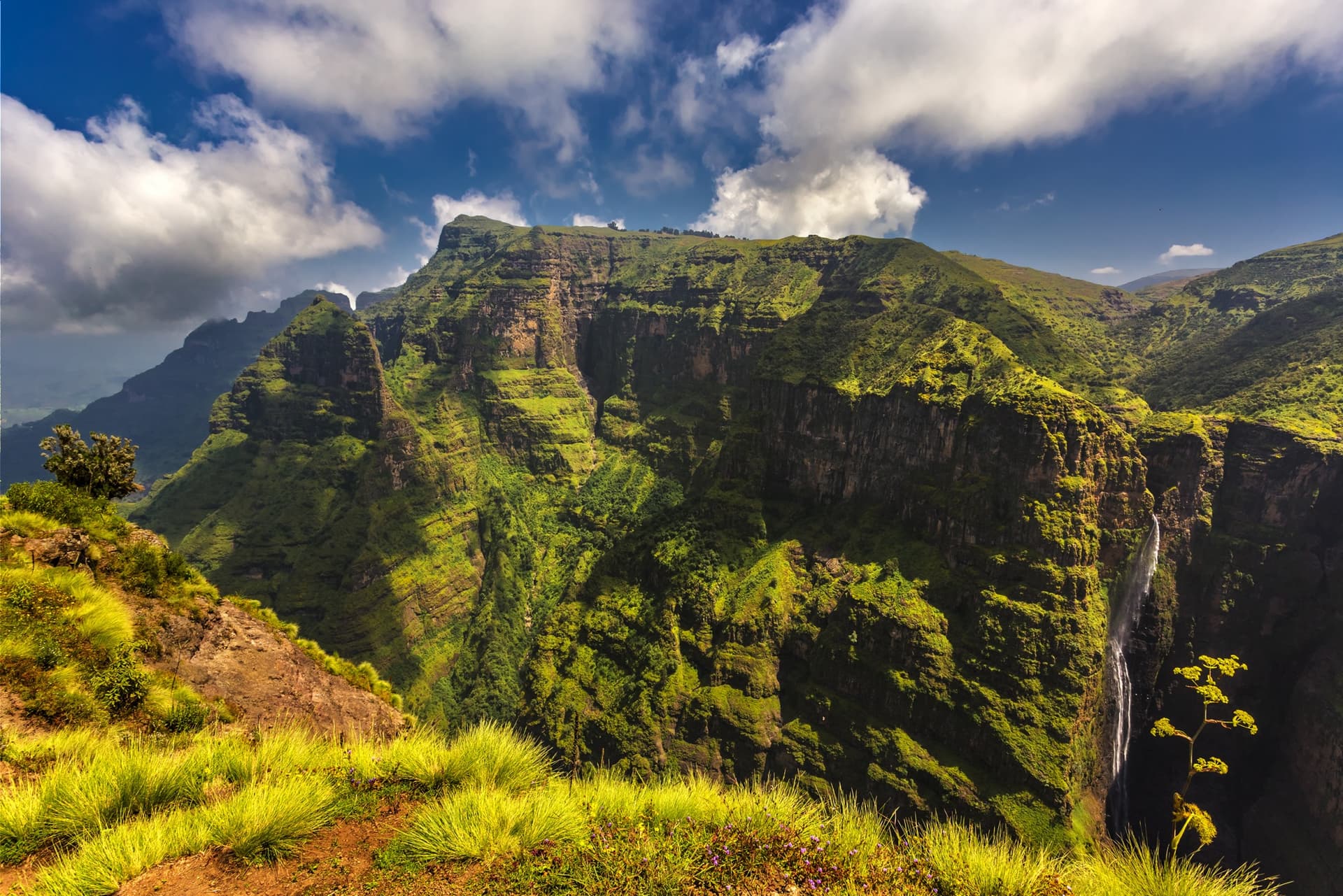
Opened in 1959, the Simien National Park is a vast protected area covering more than 200 km² in northern Éthiopie. This rugged terrain – composed of valleys, high plateaus and lowlands – was formed over 20 million years ago, then shaped by volcanic eruptions and erosion! Listed as a UNESCO World Heritage site in 1978, this Éthiopien plateau is recognised for its dramatic cliffs and deep gorges...

1. Trek from Gondar to Geech (3 days)
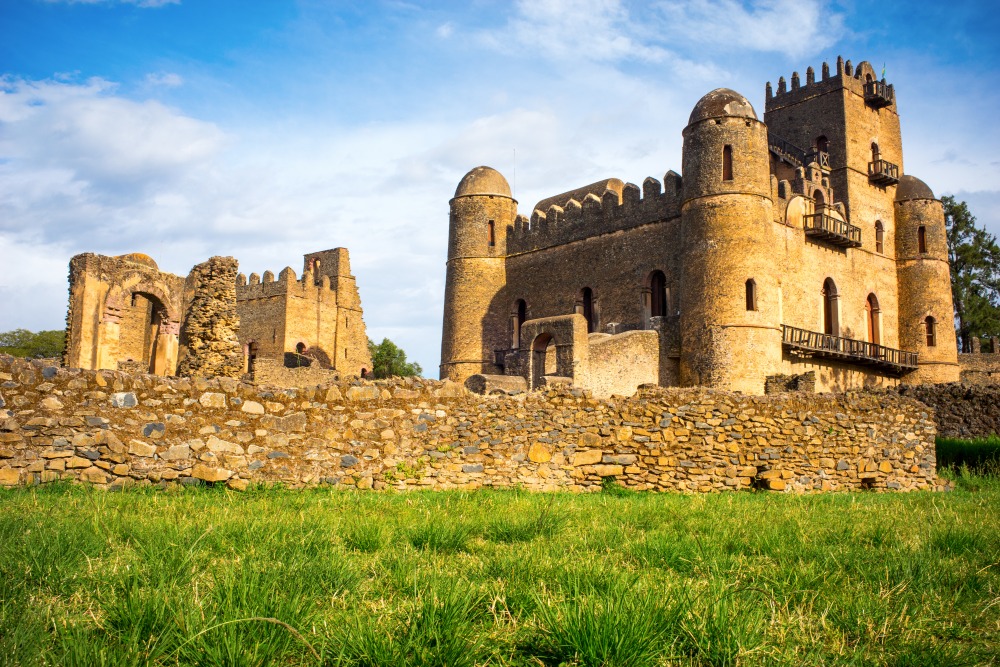
Starting from Gondar (the ancient imperial city, located in north-western Éthiopie), discover the route heading towards the Geech mountains. While the historic city lies outside Simien National Park, it serves as one of the main starting points for the Geech massif (or Gich), where you can admire the impressive gorge of the same name, from which the Jinbar waterfall cascades.
Practical information ● Hiking level: fairly easy ● Trek departure: from the town of Gondar (or Debark), to the starting point at Sankaber ● Main stage(s): Sankaber camp, Jinbar Waterfall, Geech village ● Duration: 3 days |
2. Trek from Gondar to Chenek (7 days)
A route spread over 7 days allows you to discover the full beauty of the park without time constraints. This option breaks down as follows:
● Day 1 (departure from Gondar to Simien National Park): stop at Debark (2,800 metres), then trek for approximately 3 hours to Sankaber camp. Moderate difficulty.
● Day 2 (trek from Sankaber to Geech): 3-hour trek between Sankaber (3,200 m) and Gich (3,800 m), during which you can admire Jinbar waterfall. Then hike towards Geech village (and its campsite for the night). Moderate difficulty.
● Day 3 (trek from Geech to Chenek): time for 7-8 hours of hiking, during which you'll see sublime rugged landscapes, as well as the Imet Gogo viewpoint (one of the summits of the Simien Mountains, at 3,926 m altitude).
● Day 4 (trek from Chenek to Ambiko): early morning departure for the ascent of Buwhait pass, which peaks at 4,430 m altitude. After enjoying the panoramic views, descend to Mesheha valley, then final hike to Ambiko camp. Moderate to difficult, with steep elevation gains (and 8 hours of hiking in total).
● Day 5 (trek from Ambiko to Ras Dashen): a long day of trekking with 10 hours of hiking! From camp, set out for the ascent of Ras Dashen with its stunning 360° view. Then descend back to Ambiko camp. Difficult trekking level, with a long route and steep elevation gains (up to 1,500 m).
● Day 6 (trek from Ambiko to Chenek): early morning departure to Mesheha valley (and its river), then pass through Buwahit col, before reaching Chiroloba village, then Chenek camp – for your final night among the Simien mountain plateaus! Moderate to difficult hiking difficulty (with 22 km and 8 hours of trekking).
● Day 7 (Chenek to Gondar): 4x4 departure from Chenek town to Gondar (or an opportunity to visit the historic city and its iconic sites, such as its castles and Fasiladas baths).
Practical information ● Hiking level: medium to difficult, depending on the stages ● Trek departure: loop departure/arrival at Gondar ● Duration: 7 days |
3. The ascent of Ras Dashen

Standing at over 4,500 metres altitude, Ras Dashen is the highest point in Simien park – and in Éthiopie. Africa's fifth-highest peak, this summit is a must-see attraction for experienced trekkers!
Indeed, its ascent requires excellent physical fitness, good endurance and, of course, regular practice of high-mountain hiking. Why? Rugged terrain and positive elevation gain – potentially reaching 1,500 metres on certain sections! Once at the summit, you'll be rewarded with a 360° view over Simien park and its relief features…
Practical information ● Hiking level: ascending Ras Dashen presents no particular difficulty, but requires very good physical condition ● Main stage(s): Ambikwo base camp (at 3,100 metres altitude), Mizma village (3,600 metres) ● Duration: 4 to 9 days (depending on the itinerary in which the peak ascent is included) |
4. A trek organised by a local agency
If you wish to discover Simien National Park without necessarily undertaking a multi-day hike, know that it can be integrated into a broader tourist itinerary, such as the circuit from ancient Abyssinia to the lakes of the African Great Rift Valley. This option also offers the advantage of receiving help with trek organisation.
To note ● Entry to Simien National Park is paid and occurs at the park office in Debark. Once entry is paid, you receive a document proving you have paid the entrance fee (90 birrs/adult and 10 birrs/child – negligible amounts in euros). ● Also note that the parking near the entrance is also charged. The amount varies depending on vehicle type and parking duration. ● A tip: bring cash (to pay if you experience issues with the electronic payment terminal). |
How to prepare your hike in Simien Park?

Acclimatise your body to altitude
Whether you wish to undertake a multi-day trek in Simien National Park, climb Ras Dashen, or simply take a short stroll on the site, you should acclimatise your body to high altitude before the excursion.
Indeed, the entire territory sits at an average of 3,000 metres altitude, so it is essential to properly prepare your body. To do this? Stay in a high-altitude town for at least 48 hours before beginning the ascent.
Note that altitude sickness generally occurs around 2,400 metres altitude. The main symptoms are breathing difficulties and headaches.
Be well equipped
For a successful trek, you should also be well equipped. The list below should be adapted based on trek type and excursion duration:
● Good hiking boots,
● Warm clothing (especially at night when temperatures can approach 0°C);
● A raincoat,
● A telescopic trekking pole (to help on steep sections),
● A tent,
● A sleeping bag,
● Water (mineral),
● Food (in adequate quantities)
● A stove and cooking utensils.
To simplify trek organisation, don't hesitate to contact a local agency, which can handle logistics and meals.
If you prefer to undertake the excursion solo and without a guide, note that it's also possible to rent camping equipment at various camps in Simien Park (but rates are quite expensive). Where possible, go on the excursion with your own equipment to keep costs down.
Finally, know that it's easy to find a liquid-fuel stove (and fuels) in shopping centres inAddis Ababa; and to buy food from local residents – including bread and eggs.
Choose the right season
Trekking in Simien National Park is generally straightforward. Except for some elevation gains: most trails remain classic hiking routes, without climbing zones.
Nevertheless, trails can be much more difficult between June and September, when the country's north (where the park is located) experiences heavy rainfall. From January to April, then November to December, weather conditions are favourable.
What animals can you see on an excursion in Simien National Park?

Known for the beauty of its landscapes, Simien National Park holds an "exceptional importance for biodiversity conservation", but is also a "nerve centre of eastern afro-alpine biodiversity", according to UNESCO.
Both nature reserve and refuge, the site shelters a large animal population, including several rare and threatened species. This natural wealth is part of the criteria that contributed to its UNESCO World Heritage listing. During your stay in the Simien mountains, you'll have the chance to spot:
● The Abyssinian Wolf: also called the "Éthiopien wolf" or "Simien jackal", this canid is one of the most threatened, with only a few hundred specimens living in their natural habitat… It is identifiable by its reddish coat, as well as its white front paws, throat and ears.
Rather slender, this wolf can weigh nearly 20 kilos and is capable of living beyond 4,000 metres altitude!
● Gelada baboons: renowned for their sociability, geladas are identifiable by their elongated muzzles and red colouration across their chests. A large portion of the remaining population lives on Éthiopien plateaus, from 1,500 metres altitude. It is therefore very likely you'll spot some during a trek in Simien National Park!
● The Walia Ibex: commonly called the Abyssinian ibex, this mammal is an endemic species that lives only in Simien massifs. Located around 2,000 m altitude, the Walia Ibex is a species with brown fur and two majestic horns.
Long a victim of poaching, this ibex ranks among the world's most threatened mammals. Nevertheless, it seems to be gradually reappearing, thanks to protection measures undertaken by Éthiopie.
● The Bearded Vulture: this magnificent vulture is a bird typical of Simien. Of great wingspan, this bird species, with white and russet plumage, typically lives at very high altitude (around 4,000 m). Its distinctive feature? The Bearded Vulture feeds essentially on bones, earning it the nickname "bone-breaker bird"!
In total, Simien Park is home to around twenty large mammal species and over 130 bird species. Regarding flora? You can see a wide variety of afro-alpine plants, including aloe vera and everlastings...
Where to sleep in Simien National Park?
Simien National Park has nine campsites and three community lodges, equipped with a water source and toilets, except Ambiko (which has no water source), Sona (which has no toilets) and Arkwasiye (which has neither).1
The campsites of Sankaber, Chenek and Gich also have cold water showers1 – with the possibility of hot water at Gich camp, in exchange for payment.
Regarding lodges? The establishments are equipped with toilets, running water, beds, blankets and offer local meals. Some establishments are more upmarket – like the Limalimo Ecolodge which offers comfortable rooms and suites with views over the park...
To note For safety reasons, camp only in designated areas, and be very careful of fire risk, which can be caused by a cigarette. Campfires are permitted only in certain campsites (and strictly prohibited outside designated areas). |

Frequently asked questions
How many national parks are in Éthiopie?
Among its many wild zones, Éthiopie has nine national parks. These were initially created to protect endemic fauna and flora, endangered by poaching and massive deforestation. These initiatives, undertaken in the 1950s, make Éthiopie recognised for its abundant biodiversity.
How many protected areas are there in Éthiopie?
Thanks to its environmental efforts, Éthiopie comprises numerous protected zones of different types – national parks, sanctuaries, wildlife reserves and controlled hunting areas. In total, these preserved areas cover approximately 10% of Éthiopien land.
Is it safe to travel to Éthiopie?
Before planning your trip to Éthiopie, check the Ministry of Europe and Foreign Affairs website to verify the political situation and current alert level – which may differ by region.
Frequently asked questions
Yes, Simien National Park regulations require you to be accompanied by an approved local guide and an armed ranger for any trek, regardless of duration. This rule aims to ensure visitor safety and wildlife protection. It's possible to find guides in Debark, at the park entrance office, or through a specialised agency.
The best period for hiking in Simien National Park runs from January to April, then November to December. During these months, weather conditions are favourable with little rainfall. Avoid June to September, which marks the rainy season in northern Éthiopie, making trails slippery and difficult.
To reach Simien National Park from Addis Ababa, the most practical solution is to take a domestic flight to Gondar (approximately 1.5 hours flight). From Gondar, Debark town — the park's gateway — is around 100 km away, roughly 2 hours by 4x4. It's also possible to reach Gondar by bus from Addis Ababa, but the journey takes a full day.
This depends on the itinerary you choose. A 3-day hike from Gondar to Geech is accessible to occasional walkers with fairly easy difficulty. Conversely, the 7-day route including the Ras Dashen ascent (4,550 m) requires excellent physical condition, good endurance and familiarity with high-mountain hiking, with elevation gains potentially reaching 1,500 metres on some stages.
No, wild camping is prohibited in Simien National Park. For safety and environmental preservation reasons, trekkers must stay in one of the 9 official campsites or 3 community lodges in the park. It is strictly forbidden to build fires outside designated areas, and cigarettes must be handled with the greatest care.