Focus on Orthodox Epiphany in Ethiopia
A major centre of Christianity, Ethiopia attracts thousands of pilgrims from around the world. With a significant Orthodox community, the country celebrates Epiphany like nowhere else.
A major centre of Christianity, Ethiopia attracts thousands of pilgrims from around the world. With a significant Orthodox community, the country celebrates Epiphany like nowhere else. Called Timkat, the celebration takes place every year on January 19th (or 20th) with impressive processions. Here's more about this religious festival you absolutely cannot miss if you're travelling to Ethiopia at that time…
Timkat, the country's greatest religious festival
Timkat, also known as Timqet, is Ethiopia's Orthodox celebration. It is the greatest religious festival in the country and the Horn of Africa, and one of the most important moments of the year for a large portion of Ethiopians. It takes place each year on January 19th (or January 20th in leap years) according to the Julian calendar and unfolds across the entire country. Since December 2019, Timkat has been inscribed on the Representative List of the Intangible Cultural Heritage of Humanity.
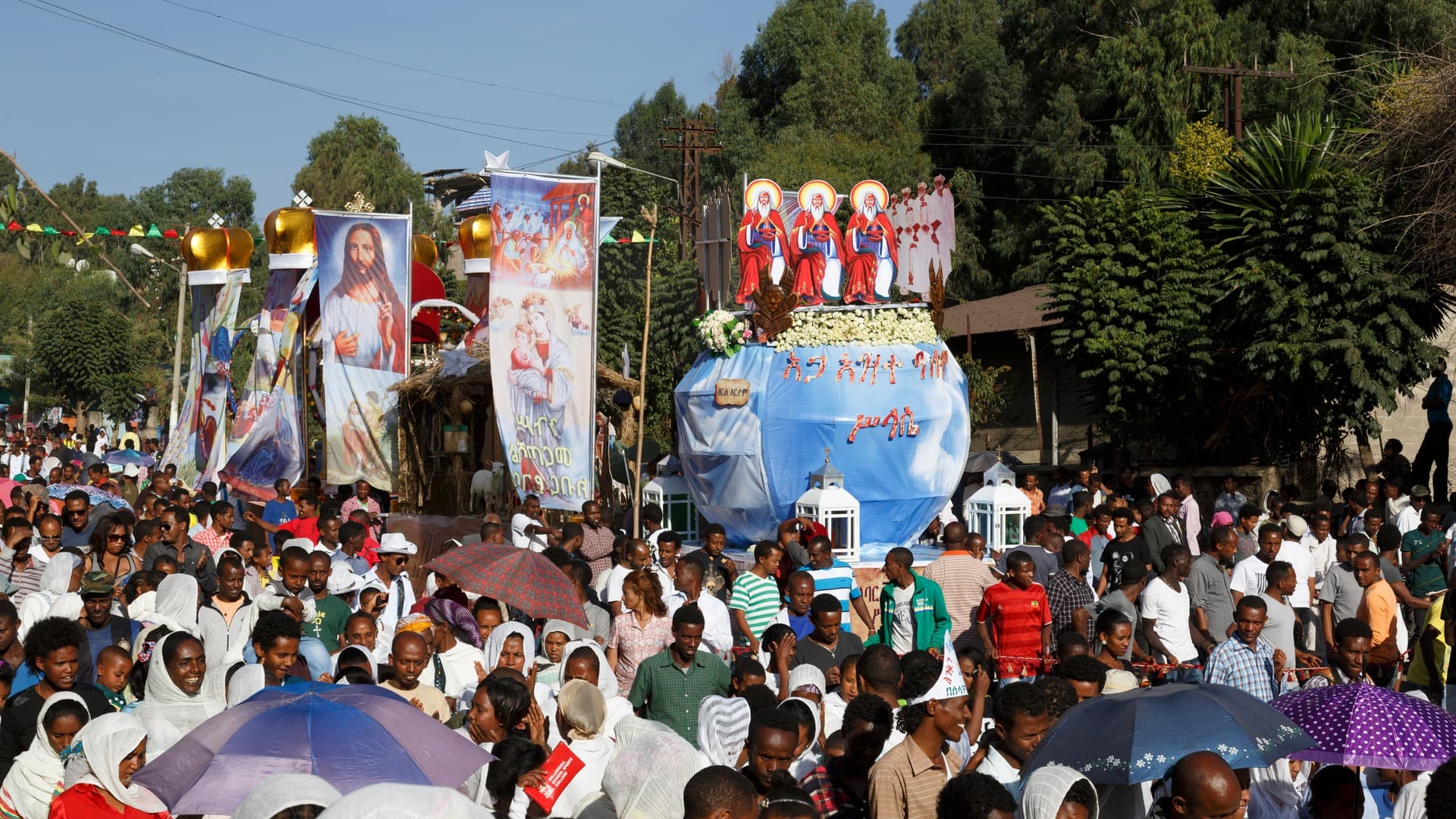
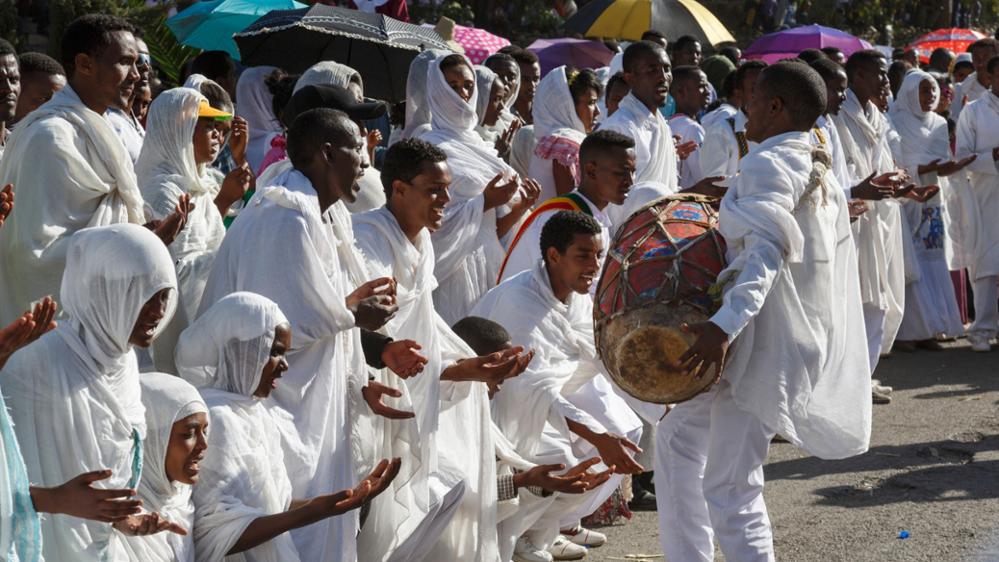
For three days and three nights, thousands of faithful gather to celebrate both the baptism of Jesus in the Jordan and the Epiphany. Accompanied by orchestras, they sing, pray, dance and perform a series of religious and pagan rituals. The Timkat processions centre on the appearance of replicas of the Ark of the Covenant.
The celebration of Timkat and the Ark of the Covenant
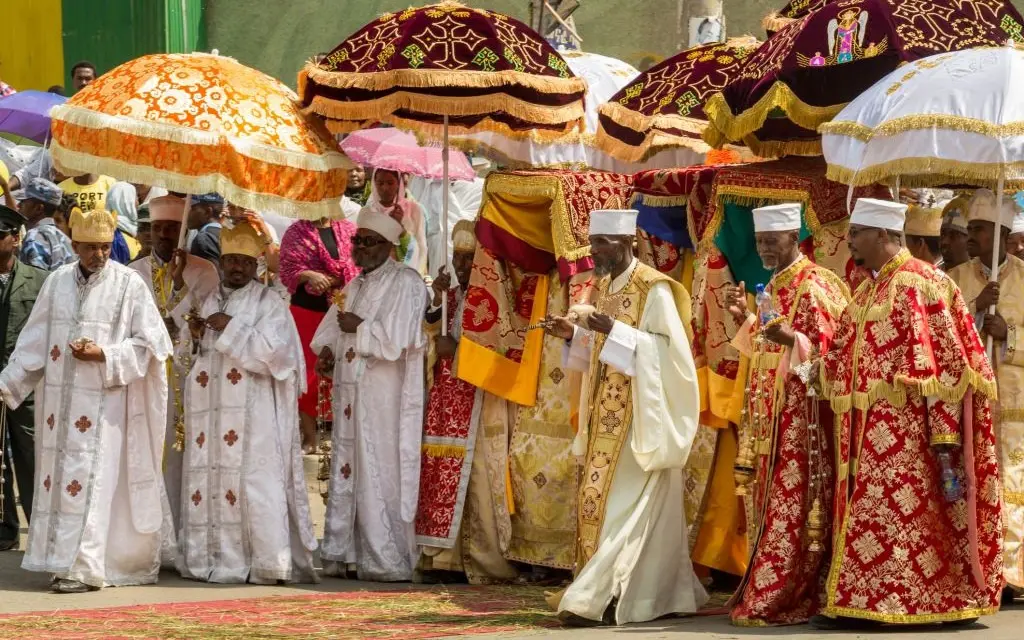
The Ark of the Covenant is represented by Tabots that the Ethiopian Orthodox clergy carry on their shoulders during parades before bringing them, according to tradition, to the nearest watercourse. This is the only time of the year when you have a chance to catch a glimpse of them, albeit wrapped in cloth! The original wooden chest is believed to contain the tablets of the Law given to Moses on Mount Sinai (known as the Ten Commandments). The Ark generates much discussion and debate. But according to the Ethiopian Orthodox Church, it was brought by Menelik I, son of Solomon and the Queen of Sheba. It is said to rest today in Aksum under the protection of a guardian.
Once they reach the water's edge, the Tabots are set up under a tent for a night vigil during which the religious body prays and performs chanting. At dawn, the clergy bless the waters, making way for the patriarch to immerse a cross in the water to symbolise the baptism of Christ. The faithful gathered around wait for one thing: to receive this blessed water and renew their baptismal vows. A final vibrant procession closes the festival and the tabots return in secret to their place in the churches…
Where to go in Ethiopia for Timkat?
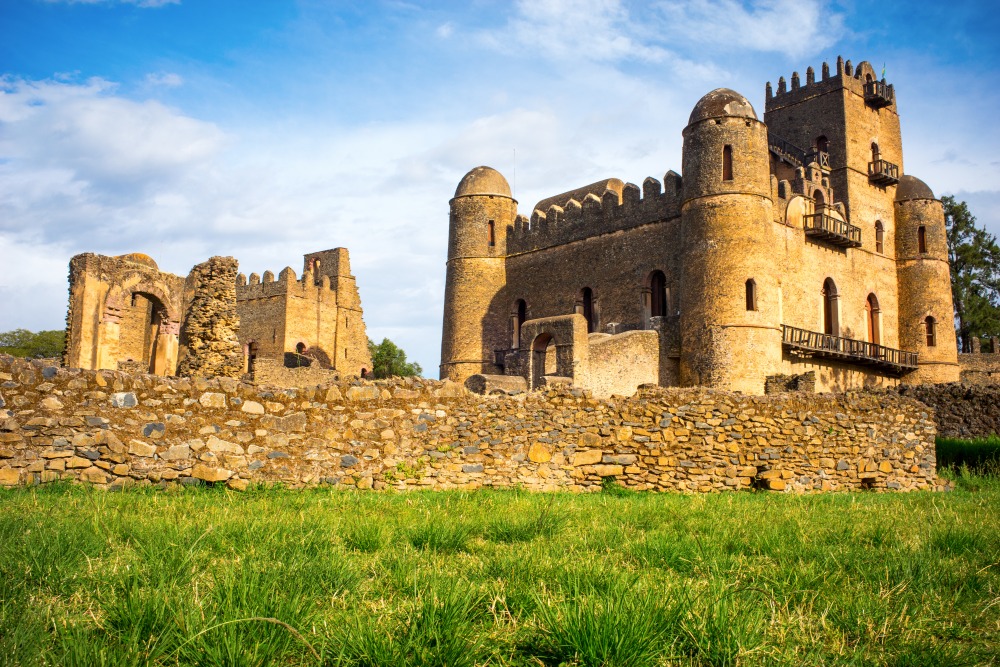
While the most spectacular ceremonies take place in Axum, the birthplace of Christianity, it is at the Fasiladas baths (or Fasilidès) —the ancient retreat of Ethiopian kings— that the famous water blessing by the patriarch takes place. Built in the 17th century, the baths are located north-west of the city of Gondar in Ethiopia. The festival is also in full swing in Addis Ababa and Lalibela, where you will have the opportunity to admire twelve churches hewn, carved and sculpted from volcanic tuff.
Frequently asked questions
Timkat (or Timqet) is the celebration of Orthodox Epiphany in Ethiopia. It is the greatest religious festival in the country and the Horn of Africa, commemorating the baptism of Jesus in the Jordan. Inscribed on UNESCO's Representative List of Intangible Cultural Heritage since December 2019, it takes place over 3 days and 3 nights around January 19th each year.
Timkat is held each year on January 19th according to the Julian calendar, or January 20th in leap years. The festivities last 3 days and 3 nights, with processions, night vigils and the blessing of the waters at dawn.
The most spectacular celebrations take place in Axum, birthplace of Ethiopian Christianity. The water blessing by the patriarch takes place at the famous Fasiladas baths in Gondar. Lalibela, with its 12 churches carved into the rock, and Addis Ababa also offer remarkable ceremonies.
The Timkat processions are organised around the Tabots, replicas of the Ark of the Covenant carried by the Ethiopian Orthodox clergy. According to Ethiopian tradition, the original Ark is believed to have been brought by Menelik I, son of Solomon and the Queen of Sheba, and is said to rest today in Axum.
It is advisable to book your accommodation several months in advance, as cities like Gondar and Lalibela are very busy during Timkat. Plan for modest clothing out of respect for religious customs, and check the procession schedules to make sure you don't miss any of the 3 days of festivities.