Jinbar Waterfall
Jinbar Waterfall cascades into the gorges of the Simien Mountains in northern Ethiopia, within a UNESCO-listed national park. An alpine-altitude site reached by hiking, surrounded by geladas and basalt cliffs.
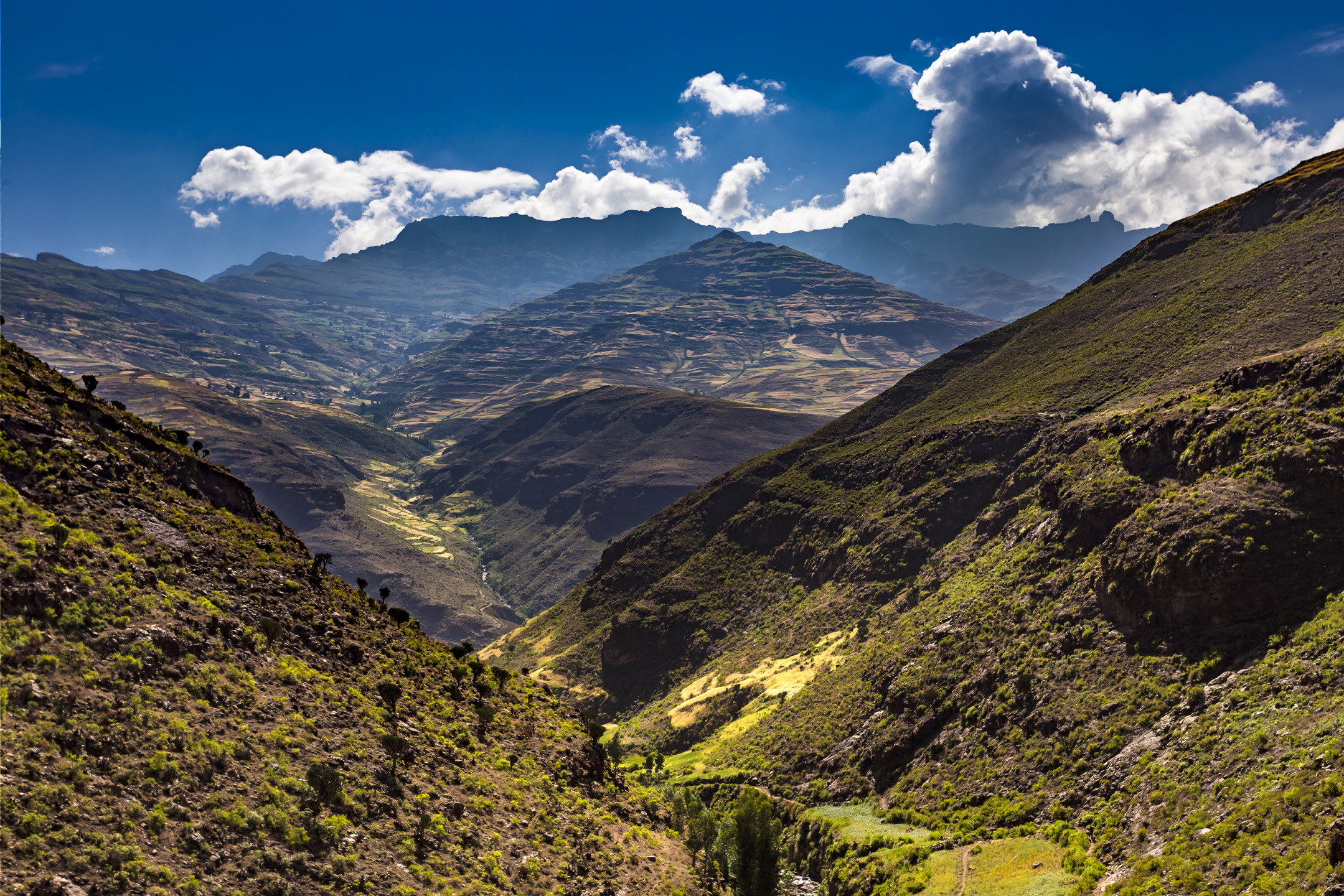
Jinbar Waterfall plunges into the gorges of the Simien Mountains in northern Ethiopia. With a drop estimated at several hundred meters, it ranks among the tallest waterfalls on the African continent. The site lies within Simien Mountains National Park, inscribed on the UNESCO World Heritage list, amid a landscape of basalt plateaus and sheer cliffs.
Practical Information at a Glance
- Access: The waterfall is reached via hiking trails in Simien Mountains National Park, departing from the town of Debark (the park's main entry point).
- Admission: Entry to the national park is fee-based; an accredited local guide is mandatory for all hiking in the park.
- Recommended duration: Allow half a day to a full day depending on your starting point within the park.
- What to wear: Sturdy hiking boots are essential, along with warm clothing (high altitude, cool temperatures even in the dry season).
- Best time to visit: Dry season (October to May) for passable trails and optimal visibility.
What You'll See
The waterfall plunges from the plateau's edge into a vertiginous canyon. Water flow varies dramatically by season: spectacular after the rains (July–September), more modest during the dry season. The cliffs around the site host colonies of geladas, primates endemic to Ethiopia recognizable by their crimson chests. Birds of prey—notably the lammergeier—regularly soar above the gorges.
History and Context
Simien Mountains National Park was established in 1969 and inscribed on the UNESCO World Heritage list in 1978. It protects a unique afroalpine ecosystem, shaped by erosion of volcanic plateaus millions of years old. Jinbar Waterfall is one of the park's most visited natural landmarks, featured on hiking circuits connecting the Simien's various camps.
Highlights of Your Visit
The Waterfall Overlook
The trail leads to a viewpoint overlooking the full height of the cascade. The canyon's depth below amplifies the sense of vertigo. Keep well away from the edges: the cliffs are unstable in places.
Wildlife of the Gorges
The waterfall's surroundings rank among the best spots in the park to observe geladas in the wild. These primates graze in large groups on alpine meadows and shelter at night on rocky outcrops. The walia ibex, a bouquetin endemic to the Simien, may also be spotted along nearby ridges.
High-Altitude Landscape
The approach to the waterfall crosses alpine grasslands dotted with giant lobelias and yellow immortelles (Helichrysum), vegetation characteristic of Ethiopian afroalpine terrain. Panoramas over the Simien's escarpments accompany the entire trek.
Photography Tips
Morning light is most favorable: it illuminates the waterfall directly and minimizes backlighting caused by the canyon's orientation. During the rainy season, morning mist may veil the cascade but creates compelling atmospheres. A wide-angle lens allows you to frame both the waterfall and surrounding walls. For geladas, a telephoto lens is recommended to avoid disturbing the animals.
Location and Access
Jinbar Waterfall lies within the Simien Mountains National Park, in the Amhara region. Debark, approximately 100 km north of Gondar, is the park's usual entry point. From Gondar, minibuses and private 4×4 vehicles serve Debark. A guide accredited by the park is mandatory; local agencies based in Gondar or Debark arrange permits and logistics. Access to the waterfall itself requires hiking from one of the park's camps.
Nearby Sites
- Simien Mountains National Park — home to the waterfall, offering multi-day treks, endemic fauna, and peaks exceeding 4,000 m.
- Ras Dashen — Ethiopia's highest peak (4,550 m), reachable by several days' walk from the same park.
- Gondar — former imperial capital with 17th-century castles, the main logistics hub for the Simien.
- Lake Tana — Ethiopia's largest lake, with island monasteries, south of Gondar.
Frequently asked questions
The waterfall is most impressive just after the rainy season (late September–October), when water flow is at its peak. The dry season (November to May) offers more passable trails and clearer skies, but the cascade has less volume.
Yes. Simien Mountains National Park regulations require an accredited guide for all hiking. Agencies in Debark or Gondar handle the formalities.
Yes, depending on your base camp in the park. Jinbar Waterfall is often included in multi-day hiking circuits that traverse different viewpoints and wildlife zones in the Simien.
Sturdy hiking boots are essential. Even in the dry season, alpine temperatures can be cool, especially in the morning and evening. Bring warm layers and a lightweight waterproof jacket.
No. Access requires hiking on unimproved mountain trails with significant elevation changes. The site is not suitable for people with reduced mobility.
Interested in this visit?
We can include it in your personalised itinerary.