Entoto Mountains
Entoto Mountains
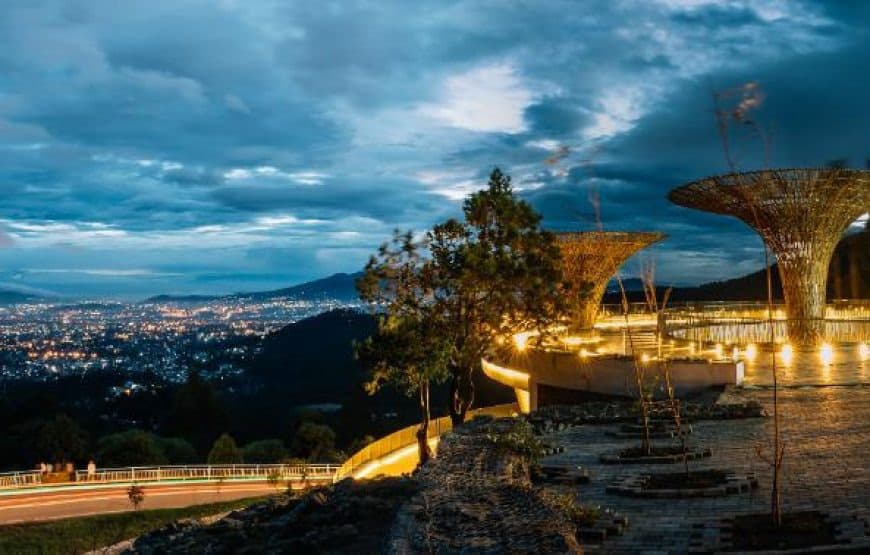
At 3,000 meters above Addis Ababa, the Entoto Mountains blend eucalyptus forest, 19th-century Orthodox churches and sweeping panoramic vistas across Ethiopia's bustling capital.
The Entoto Mountains dominate Addis Ababa from the north, standing at roughly 3,000 meters in elevation. This eucalyptus-covered massif marks the site of Ethiopia's first capital, founded by Menelik II in the late 19th century. Between dense forests, historic churches and commanding views of the city, Entoto offers a natural and historical counterpoint to the capital's intensity.
Quick facts at a glance
- Access: minibus or taxi from central Addis Ababa to the Entoto district; paved road to the summit.
- Recommended duration: half a day to experience forest, church and panorama.
- Dress code: cover shoulders and knees when visiting the site's churches.
- Altitude: approximately 3,000 m — bring a warm layer, even during the dry season.
What to see
Eucalyptus forest blankets the slopes and is home to woodcutters — predominantly women — who descend into the city each morning with bundles of wood on their backs. This daily scene is characteristic of Entoto. The developed natural park features marked trails for walking and mountain biking.
Two Orthodox churches crown the summit: Entoto Maryam and Entoto Raguel. The first houses a small museum dedicated to Menelik II and Empress Taytu. On clear days, the panorama over Addis Ababa stretches across the entire metropolitan area.
History and context
Menelik II established his court on the heights of Entoto around 1881, before descending to found Addis Ababa in 1886 on the milder plain below. The church of Entoto Maryam, built during this era, was the site of his coronation as King of Shewa. The eucalyptus trees, introduced at the same period to counter deforestation, have since colonized the entire massif.
Highlights of your visit
Entoto Maryam Church and museum
The circular church, built in traditional Ethiopian Orthodox style, preserves liturgical vestments, weapons and personal belongings of Menelik II. The adjoining museum is modest yet substantive, anchored in the foundational period of modern Ethiopia's statehood.
Panorama over Addis Ababa
From the open viewpoints near the summit, the capital spreads across the plateau at your feet. Early morning's golden hour offers the best visibility before urban haze rises.
Forest and trails
Entoto's natural park offers routes for hiking and mountain biking. The eucalyptus forest, though not native, creates a cool and quiet atmosphere, rare near an African capital of this scale.
Etiquette and visiting rules
- Remove your shoes before entering the churches.
- Shoulders and knees must be covered in religious spaces.
- Ask permission before photographing worshippers or ceremonies.
- Respect the woodcutters: do not photograph them without consent.
Photography tips
Early morning is ideal: raking light through the forest, woodcutters in motion, light mist over the city. In late afternoon, the sun drops behind the hills, creating difficult backlighting. Inside the churches, photography is generally prohibited or requires the priest's authorization.
Location and access
Entoto sits at the northern edge of Addis Ababa, accessible in roughly twenty minutes from downtown via the Entoto Road. Shared minibuses serve the foot of the massif; the final ascent is made by taxi or on foot. The site's elevation means cool temperatures even during the day. Accessibility for those with mobility challenges is limited on forest trails, but the main road to the churches is passable by vehicle.
Nearby attractions
- National Museum of Éthiopie — home to the fossil of Lucy (Australopithecus afarensis), the centerpiece of human prehistory.
- Mercato of Addis Ababa — one of Africa's largest markets, in the capital's west.
- Holy Trinity Cathedral — major Orthodox cathedral in Addis Ababa, burial place of Haile Selassie.
- Jubilee Palace — former imperial residence of Haile Selassie, in central Addis Ababa.
Frequently asked questions
The dry season (October to May) ensures passable trails and maximum visibility over the city. During the rainy season (June–September), the forest is greener but paths become muddy.
Yes: shoulders and knees must be covered to enter the Entoto Maryam and Entoto Raguel churches. Also bring a light jacket; the altitude means cool mornings year-round.
Yes. A half day suffices for Entoto; the afternoon allows visits to the National Museum or Holy Trinity Cathedral in the city center.
In the forest and at viewpoints, yes. Inside the churches, ask the priest's permission. To photograph woodcutters, request their consent beforehand.
Local guides offer their services at the site entrance and from downtown. Your English-speaking Nomadays local partner can arrange an accompanied visit with historical context.
Interested in this visit?
We can include it in your personalised itinerary.