Aksumite Obelisks
Aksumite Obelisks
In the heart of Aksumite, granite stelae from the Aksumite kingdom rise to 24 meters. These funerary monuments, 1,700 years old and UNESCO-listed, bear witness to an ancient civilization that dominated trade routes between Africa and the Mediterranean.
In the heart of Aksumite, in northern Éthiopie, stand granite stelae carved over 1,700 years ago. These funerary obelisks marked the tombs of the kings of the Aksumite kingdom, one of the great powers of antiquity. Listed as UNESCO World Heritage, they constitute the most visible testimony of a civilization that controlled trade routes between Africa, Arabia, and the Mediterranean.
Practical Information at a Glance
- Admission: paid (combined ticket with other archaeological sites in Aksumite)
- Recommended duration: 1 to 2 hours for the stelae field and adjacent royal tombs
- Dress code: no specific clothing requirements at the archaeological site
- Access: on foot from central Aksumite, the main stelae field is in the open air
What to See
The northern stelae field groups the most impressive monuments. Stela No. 1, now collapsed, is believed to have measured about 33 meters — the largest monolith ever erected in antiquity. Stela No. 2, long removed to Rome by Mussolini in 1937, was returned to Éthiopie in 2005 and reinstalled at its original site. Stela No. 3, still standing, reaches about 24 meters high.
The faces of the obelisks are carved in false relief: windows, beams, and doors mimic the facades of Aksumite palaces in wood and stone. Beneath the stelae field extend underground royal tombs, including the tomb of Nefas Mawcha and the Faux-Portes tomb, accessible to visitors.
History and Context
The Aksumite kingdom flourished between the 1st and 7th centuries CE. At its height, it minted currency, maintained diplomatic relations with Rome and Persia, and controlled the port of present-day Eritrea. The adoption of Christianity in the 4th century, under King Ezana, profoundly shaped Éthiopian culture to this day.
The stelae were erected to commemorate sovereigns and the elite. Their construction mobilized remarkable techniques for granite transportation and carving for the time. The decline of the kingdom, linked to shifts in trade routes, did not erase the monumental legacy it left behind.
Highlights of the Visit
Stela No. 2 Restored
Seeing this near 24-meter monolith reinstalled after decades in Rome gives a powerful political and historical dimension to the visit. Traces of cutting related to transport are still visible on the shaft.
Stela No. 1 Fallen
Lying on the ground, it allows you to truly grasp the scale of these monuments. Scattered blocks reveal the fineness of relief sculptures across the entire height.
Underground Royal Tombs
Beneath the stelae field, chambers carved into the rock offer a dark, cool counterpoint to the monuments in full sunlight. The tomb of Nefas Mawcha is the most accessible.
Aksumite Archaeological Museum
Located in immediate proximity, it houses Aksumite coins, inscriptions in Geez and Greek, and funerary objects that usefully complement the stelae field visit.
Photography Tips
Morning light, before the sun reaches its zenith, is ideal for photographing the relief sculptures on the stelae faces — cast shadows bring out architectural details. In late afternoon, raking light gives a warm hue to the gray granite. Bring a wide-angle lens to capture standing stelae in their entirety from their base.
Location and Access
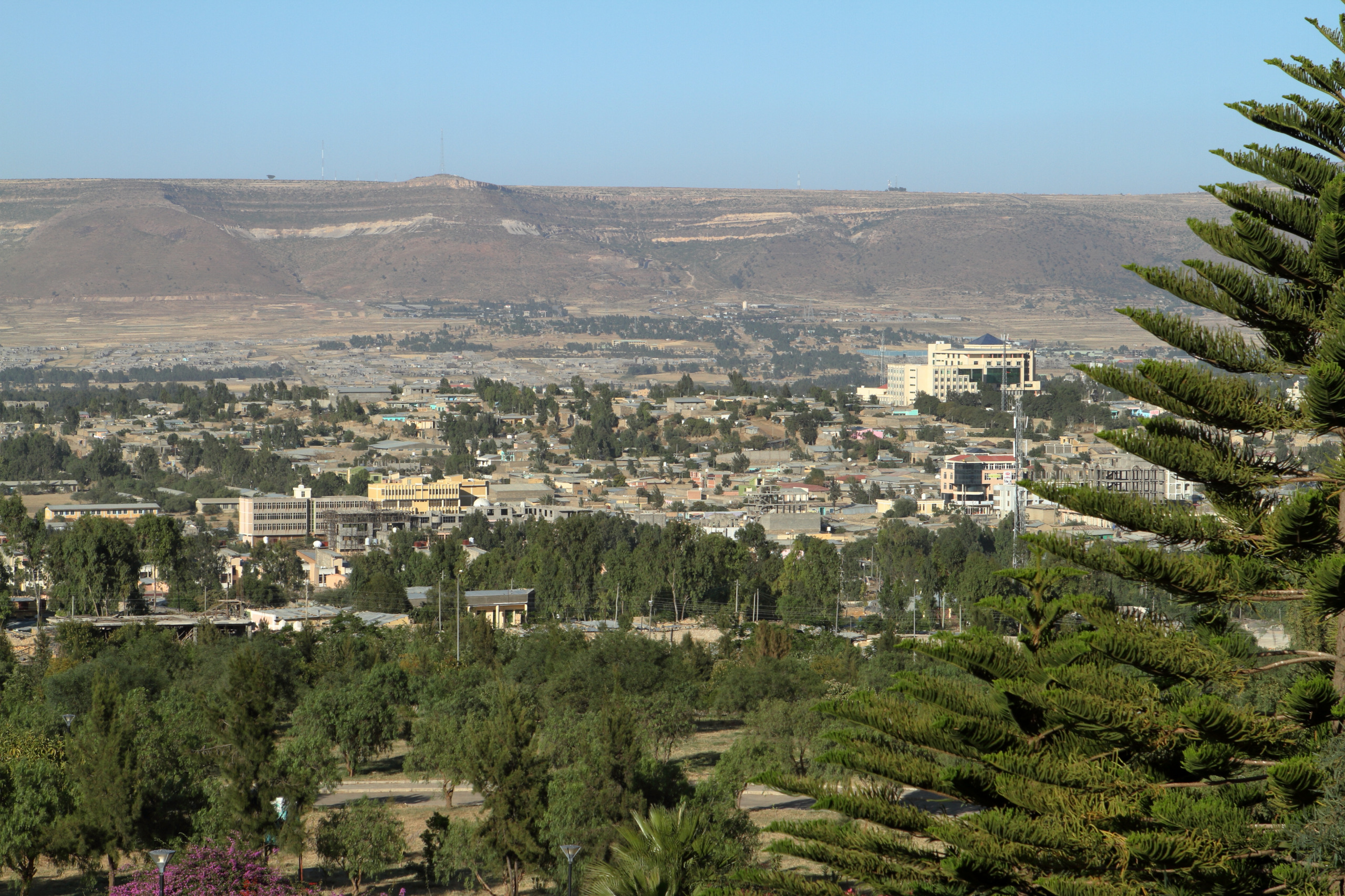
Aksumite is located in the Tigray region, in northern Éthiopie. The town has an airport with flights from Addis Ababa. The main stelae field is located in the heart of town, a few minutes' walk from the Cathedral of Saint Mary of Sion. The site is in the open air and the terrain is relatively flat, but access to underground tombs may be limited for people with reduced mobility.
Nearby
- Cathedral of Saint Mary of Sion — a few hundred meters away, it is said to house the Ark of the Covenant and remains the holiest site of the Éthiopian Orthodox Church.
- Ruins of the Queen of Sheba's Palace — remains of a large Aksumite palatial complex, on foot from the stelae field.
- Aksumite Archaeological Museum — collections of coins, inscriptions and objects from the Aksumite kingdom, adjacent to the stelae field.
- Mai Shum Reservoir — ancient basin attributed to the Queen of Sheba, a few minutes' walk away.
Frequently asked questions
The dry season, from October to May, offers the best conditions. Avoid the rainy season (June-September) when access roads can be difficult. January and February are particularly pleasant in terms of temperature.
Allow 1 to 2 hours for the stelae field and royal tombs. Combined with the archaeological museum and the nearby Cathedral of Saint Mary of Sion, half a day is needed to cover all of Aksumite's historical sites.
Yes, certain royal tombs are accessible to visitors, notably the tomb of Nefas Mawcha and the Faux-Portes tomb. Access is included in the combined site ticket. Bring a flashlight, as interior lighting may be limited.
Photography is generally permitted on the open-air stelae field. Inside tombs and in some adjacent museums, restrictions may apply. Check with the attendant at the entrance.
The stelae field, the Cathedral of Saint Mary of Sion, the archaeological museum, and the ruins of the Queen of Sheba's Palace are all accessible on foot within a restricted perimeter. A combined ticket generally covers all of the town's archaeological sites.
A local guide is not mandatory but strongly recommended. The stelae and tombs lack detailed explanatory signage in English. A guide allows you to understand the historical context of the Aksumite kingdom and identify carved details on the monoliths.
Interested in this visit?
We can include it in your personalised itinerary.