Karo (People and Region of the Omo Valley)
Along the Omo River, the Karo are among the smallest ethnic groups in Éthiopie. Their mastery of body painting with natural pigments makes them a unique encounter in the entire southern region.
Along the Omo River in southern Éthiopie, the Karo form one of the smallest ethnic groups in the valley—only a few hundred people. Their territory stretches across the eastern bank of the river, facing arid hills. What sets them apart: an exceptional mastery of body painting, practised daily with natural pigments. Visiting a Karo village means entering a world where body art is a living social language.
Practical Information at a Glance
- Access: From Jinka, the nearest city with an airport, allow several hours of rough track in a 4×4 to reach the Karo villages (Dus and Korcho are the main ones).
- Vehicle: 4×4 is mandatory; tracks are impassable during the rainy season.
- Local guide: Essential—villages do not welcome visitors without a trusted intermediary.
- Photography rights: A contribution is expected by residents to be photographed; negotiate in advance with your guide.
- Recommended duration: Half a day to a full day for one village, more if you combine with other Omo peoples.
- Attire: No religious restrictions, but wear respectful and understated clothing.
What You'll See
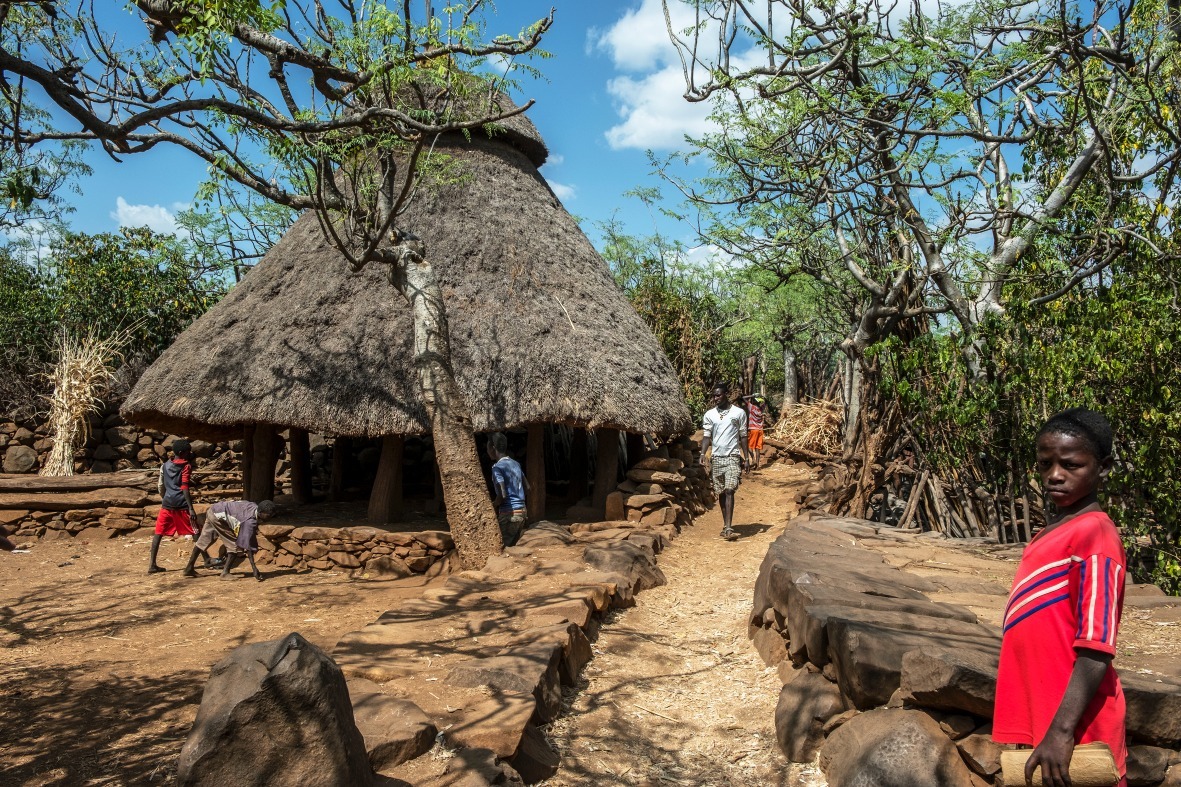
Karo villages are built on heights overlooking the Omo River. The mud-brick and thatch houses are organised around shared communal spaces. The most striking element remains body painting: white chalk, red ochre, charcoal—patterns vary from individual to individual and depending on the occasion. Women wear decorative scarification on their chests. Men sometimes display clay hairstyles dyed in colours that signal their warrior status.
History and Context
The Karo are closely linked to the Hamar, with whom they share a language (an Omotic branch). Their settlement on the banks of the Omo dates back several generations. Their small numbers—estimated at fewer than a thousand—make them particularly vulnerable to outside pressures: major hydraulic projects on the river, repeated droughts, and growing contact with tourism. The Omo Valley is listed as a UNESCO World Heritage site for its palaeontological sites, but the peoples who live there do not always benefit from this protection.
Highlights of a Visit
Body Painting in Action
Some residents are happy to demonstrate the painting process. Pigments are mixed by hand, and patterns are traced without a fixed template. Each composition is unique and ephemeral—it fades after a few days.
The Village of Korcho
Perched on a cliff overlooking the river, Korcho offers a clear view of the Omo and the farmland below. It is one of the more accessible villages and most visited by organised tours from Jinka.
The Village of Dus
More isolated, Dus is less frequently visited. The atmosphere here is more everyday, less staged. Interactions with locals are often more authentic, provided you arrive with a trusted guide.
Seasonal Ceremonies
As with their Hamar neighbours, certain ceremonies (weddings, rites of passage) bring several villages together. If your stay coincides with one of these, body painting and ornaments reach an exceptional level of elaboration.
Photography Tips
Early morning light, before the sun is high, is ideal for photographing body paintings—pigments show up better without harsh shadows. Always ask for explicit permission before photographing someone. A direct financial contribution is standard and should be factored into your budget. Avoid discreet telephoto lenses: transparency is the foundation of a respectful relationship.
Location and Access
Karo villages are found in the Debub Omo zone, at the far south of Éthiopie. Jinka is the main logistical hub, with an airport served from Addis Ababa. From Jinka, the road to the Karo villages often passes through Turmi, Hamar territory. A circuit in the Omo Valley typically includes several peoples: Karo, Hamar, Mursi, and Dassanech. Access by public transport does not exist; only a 4×4 with a driver-guide allows you to reach these villages.
Nearby Attractions
- Turmi — centre of Hamar territory, known for the weekly market and the bull-jumping ceremony.
- Jinka — a stopover town with a museum dedicated to the peoples of the Omo and departure point towards the Mursi.
- Mago National Park — an adjacent nature reserve, home to the Mursi and local wildlife.
- Omorate — a riverside town, gateway to Dassanech territory.
Frequently asked questions
The dry season (October to February) is the most accessible: tracks are passable and the river is low. Avoid the heavy rainy season (April–June) when some roads become impassable by 4×4.
Yes, a local guide is essential. Villages do not welcome visitors arriving alone. Your local agency will arrange this beforehand, with a guide who speaks the language and knows local customs.
Yes, but a contribution is expected for each photo. Negotiate the terms with your guide before arriving at the village. Respect for this protocol determines the quality of your reception.
It is actually the usual way to travel in the region. A circuit of five to seven days from Jinka allows you to meet Karo, Hamar, Mursi, and Dassanech without rushing.
There is no structured accommodation in Karo villages. Travellers typically sleep in Turmi or Jinka and make day trips to the villages.
Want to discover this destination?
Our local advisors design your tailor-made trip.