Simien Massif
Simien Massif
High-altitude plateau listed by UNESCO in northern Ethiopia, the Simien Massif offers vertiginous escarpments, rare endemic wildlife — geladas, Ethiopian wolves, Walia ibex — and some of the most pristine treks on the continent.
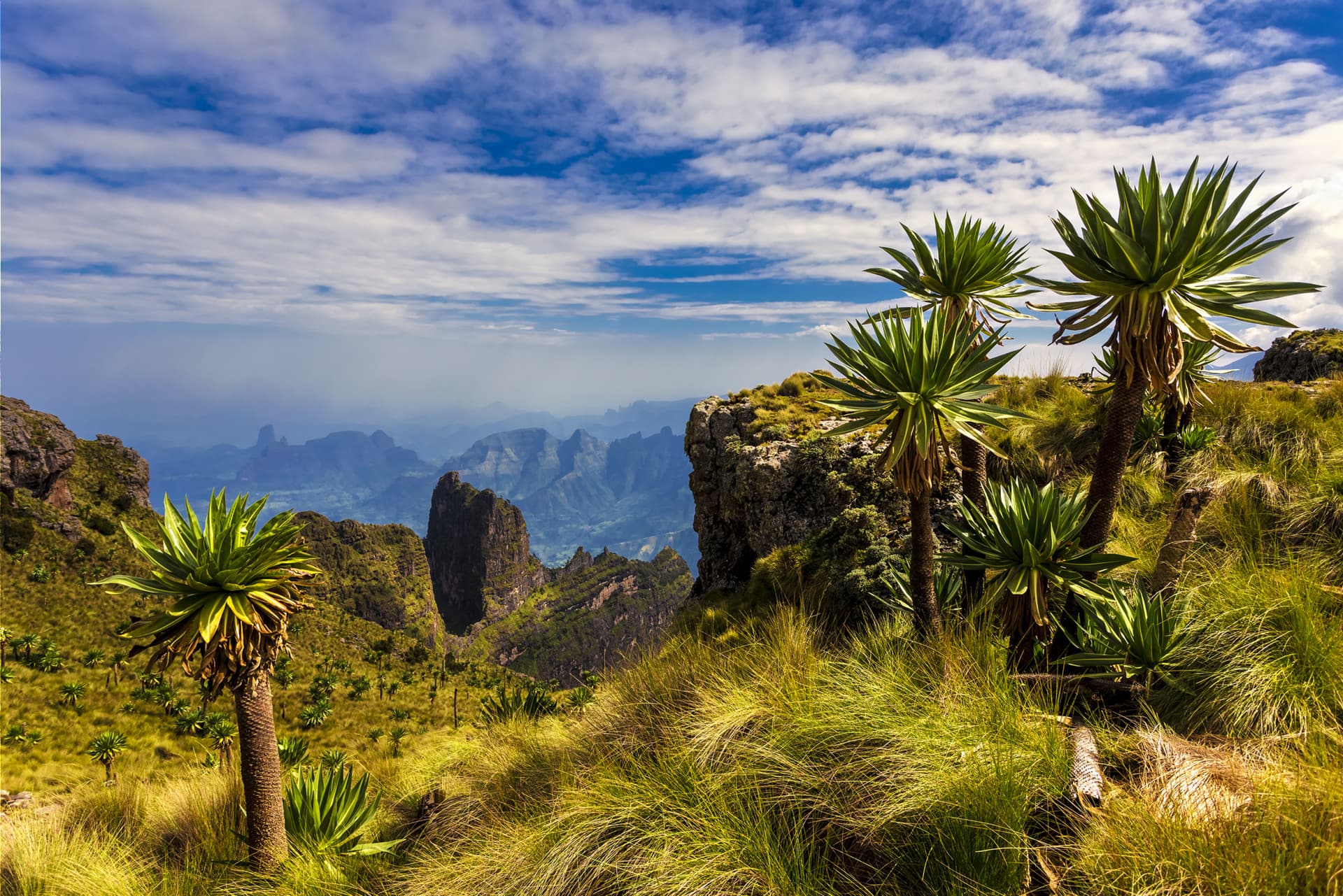
The Simien Massif stretches across northern Ethiopia, a few hours' drive from Gondar. Listed as a UNESCO World Heritage Site, this high-altitude plateau carved by millions of years of erosion peaks above 4,500 meters at Ras Dashen, the country's highest point. Sheer cliffs, deep valleys and mountain grasslands harbor rare endemic wildlife. It is one of the few places in the world where you can observe the gelada in its natural habitat.
Practical information at a glance
- Entry: national park entrance fee is mandatory for all visitors
- Armed guide: mandatory within the park — provided at the Debark entrance
- Recommended duration: 2 to 5 days for main treks; one day possible for an overview from Sankaber
- Access: Debark is the main gateway, accessible by bus or car from Gondar
- Clothing: warm clothing essential — nights at altitude are cold even in the dry season
- Accessibility for people with reduced mobility: very limited due to mountainous terrain
What to see
The landscape alternates between sheer escarpments plunging into valleys several hundred meters deep and grassy plateaus where herds of geladas graze. These red-breasted primates live in groups that can exceed several hundred individuals. The Ethiopian wolf, one of the world's most endangered canid species, frequents high-altitude zones. The Walia ibex, endemic to the Simien, can be spotted along rocky ridges.
History and context
Simien National Park was established in 1969 and inscribed on the UNESCO World Heritage list in 1978, among the first African sites to receive this distinction. It was also placed on the World Heritage in Danger list between 1996 and 2017 due to agricultural pressure and human encroachment. Management efforts have since stabilized animal populations and expanded protected areas.
Highlights of the visit
The geladas of Sankaber and Geech
The areas of Sankaber and Geech concentrate the largest gelada troops. Late in the afternoon, the primates gather near the cliffs before descending to sleep on the rock faces. Close approach on foot is possible within a few meters without disturbing them.
The Imet Gogo viewpoint
Imet Gogo, at approximately 3,926 meters altitude, offers a panorama of the characteristic escarpments of the massif. It is one of the most accessible viewing points on a day's walk from Geech camp.
The ascent of Ras Dashen
Ras Dashen rises above 4,500 meters and is the roof of Ethiopia. The climb from Chenek requires several days of walking and good physical fitness. The summit itself is not technically demanding, but the altitude is definitely felt.
Nocturnal wildlife and stargazing
The absence of light pollution and the altitude make Simien an exceptional stargazing site. Clear dry-season nights reveal a particularly dense sky.
Photography tips
Golden morning and evening light is ideal for photographing geladas against a backdrop of cliffs. Escarpments are best rendered in backlighting from viewpoints facing west. Bring a UV filter or lens protection: dust is frequent on the trails. Wildlife photography is unrestricted in the park with no special limitations.
Location and access
The Simien Massif is located in the Amhara region of northern Ethiopia. Debark, the park gateway town, is accessible from Gondar by asphalt road. Gondar has an airport with flights to Addis Ababa. From Debark, 4x4 vehicles provide access to the park's interior camps. Local agencies organize treks with pack animals, guides and cooks.
Nearby attractions
- Gondar — ancient imperial capital with its 17th-century castles, the logical starting point before Simien.
- Lake Tana — Ethiopia's largest lake is home to island monasteries decorated with medieval murals.
- Blue Nile Falls (Tis Isat) — impressive during the rainy season, accessible from Bahir Dar on the shore of Lake Tana.
Frequently asked questions
The dry season, from October to May, is most favorable. Trails are passable and visibility is excellent. Avoid July-August: rains make trails muddy and views are often obscured.
Yes, an armed guide is mandatory upon entering the park. One is assigned at the park office in Debark and accompanies your group throughout your stay.
Yes. Gondar can be visited in one day. Adding two days in the park gets you to Sankaber and lets you observe the geladas without committing to a long trek.
Nighttime temperatures often drop below freezing at altitude, even in the dry season. A warm sleeping bag, waterproof jacket and thermal layers are essential.
No. The ascent requires several days of walking, good physical fitness and gradual altitude acclimatization. It is not recommended without mountain trekking experience.
Sightings are possible but not guaranteed. The Ethiopian wolf mainly frequents high-altitude zones above 3,500 meters. Chances increase with a stay of several days in the park's upper zones.
Want to discover this destination?
Our local advisors design your tailor-made trip.