Yemrehana Krestos Cave Church
Yemrehana Krestos Cave Church
Hidden within a basalt grotto some twenty kilometers from Lalibela, the church of Yemrehana Krestos is one of Éthiopie's best-preserved Christian buildings, predating the famous rock-hewn churches.
About twenty kilometers north of Lalibela, the church of Yemrehana Krestos is concealed within a natural grotto carved into a basalt cliff face. Built during the reign of King Yemrehana Krestos in the 11th or 12th century, it predates the celebrated rock-hewn churches of Lalibela and stands as one of the finest surviving examples of late Axumite architecture in Éthiopie. Its setting within the rock, its interior decoration, and the thousands of pilgrims' bones surrounding it make it a place of extraordinary devotion and history.
Practical information at a glance
- Admission: fee required (combined ticket with Lalibela sites or separate ticket — check with your local agency)
- Dress code: modest attire mandatory, shoulders and knees covered; shoes to be removed at the entrance
- Suggested duration: 1 to 1.5 hours on-site, including travel from Lalibela
- Access: dirt track from Lalibela, passable by 4×4; a short walk on foot is necessary to reach the cave entrance
What you'll see
The church sits within a natural cavern whose rocky vault creates a dark, cool sanctuary. The structure itself is built from cedar wood and stone, with carved and painted panels that showcase remarkable craftsmanship. The interior walls retain paintings and geometric decorations characteristic of the Axumite style.
Behind and around the church, thousands of mummified bodies or skeletal remains rest within the grotto. These belong to pilgrims who came here to die, regarding this place as a gateway to paradise. This presence bestows upon the visit a solemn and singular atmosphere.
History and context
Yemrehana Krestos was a king of the Zagwé dynasty before Lalibela. His reign, situated approximately between the 11th and 12th centuries, marks a transitional period between Axumite heritage and the Christian renewal that would culminate in the monolithic churches of Lalibela. The church bearing his name was allegedly built with the aid of artisans from Egypt or Jerusalem, according to Ethiopian oral tradition.
The building is classified among Éthiopie's historical monuments and receives particular attention from the religious authorities of the Ethiopian Orthodox Church.
Highlights of the visit
Intact Axumite architecture
The alternations of dark wood and white stone, the latticed windows, and sculptured friezes are characteristic of the Axumite style. Few buildings from this era have survived in such a state of preservation.
The grotto and its remains
The space surrounding the church, shrouded in the cavern's dimness, holds the remains of pilgrims. This funerary and spiritual dimension is central to understanding the site: it is not merely a monument, but a space of living faith spanning centuries.
The natural setting
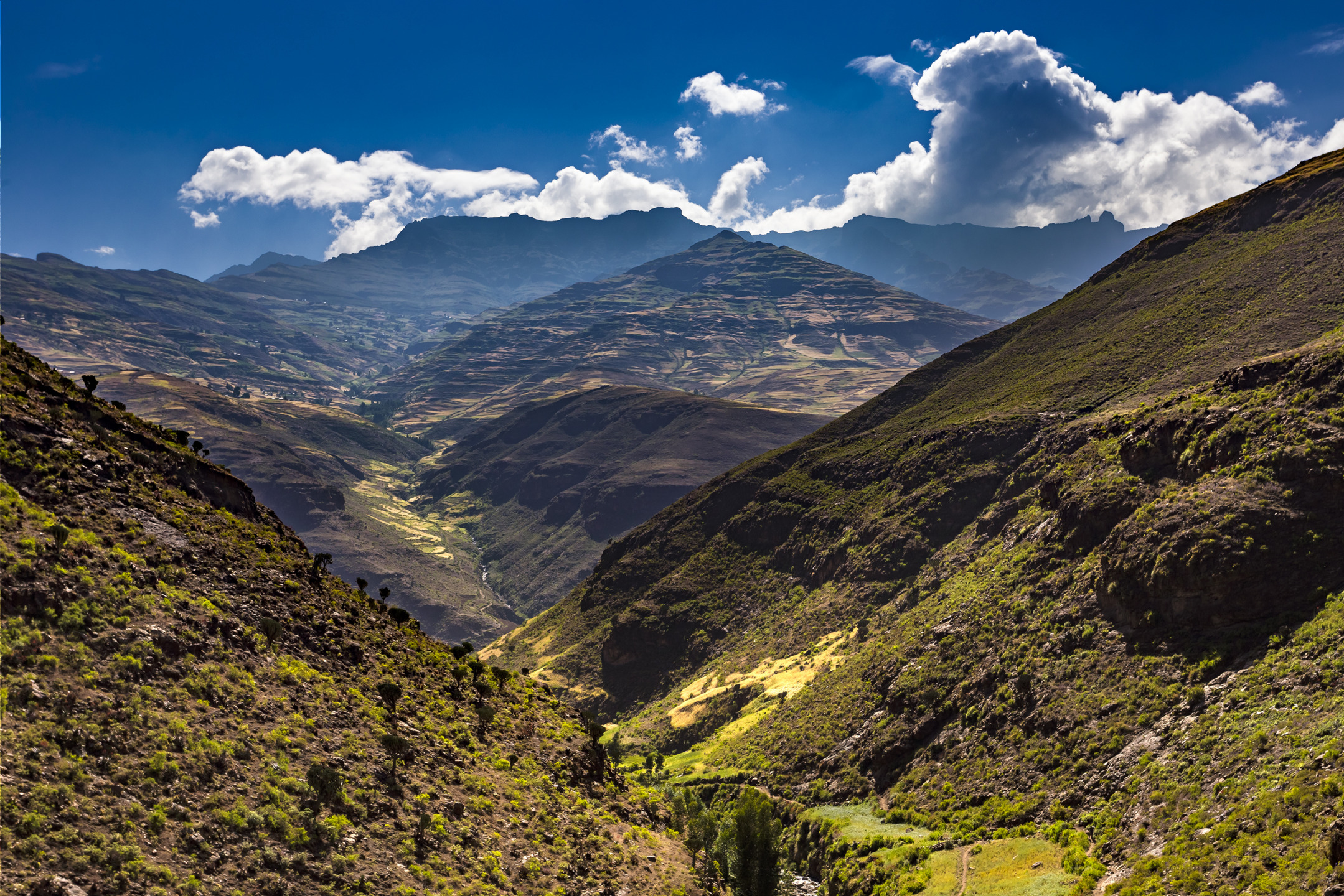
The basalt cliff sheltering the church offers sweeping views over the Ethiopian highlands. The approach path crosses mountain terrain typical of the Amhara region, with junipers and euphorbias dotting the landscape.
Etiquette and visiting rules
- Remove your shoes before entering the church.
- Dress modestly: shoulders and knees covered for all visitors.
- Speak in hushed tones indoors; religious services may be underway.
- Respect the marked areas around the remains: do not touch anything.
- Ask permission before photographing priests or worshippers.
Photography tips
Natural light penetrates scantly into the grotto: a camera with strong low-light performance is recommended. Avoid using flash inside the church, which may disturb worshippers and damage the paintings. The cave entrance, in late morning light, offers striking contrast between dark rock and exterior luminosity.
Location and access
The church is located approximately 25 km north of Lalibela, accessible by a dirt track. A 4×4 vehicle is essential, especially during the rainy season (June to September). Most visitors arrange the excursion from Lalibela, often as a half-day outing combined with other sites in the region.
The walk on foot from the parking area to the cave entrance takes just minutes along a rocky path: not well-suited for people with reduced mobility.
Nearby attractions
- Rock-hewn churches of Lalibela — the 12th-century monolithic complex, UNESCO World Heritage site, about twenty kilometers to the south.
- Asheton Maryam Monastery — perched on the heights above Lalibela, accessible on foot or by mule.
- Na'akueto La'ab Church — another cave church near Lalibela, less frequented, housing a treasury of ancient liturgical objects.
Interested in this visit?
We can include it in your personalised itinerary.