National Museum of Ethiopia
National Museum of Ethiopia
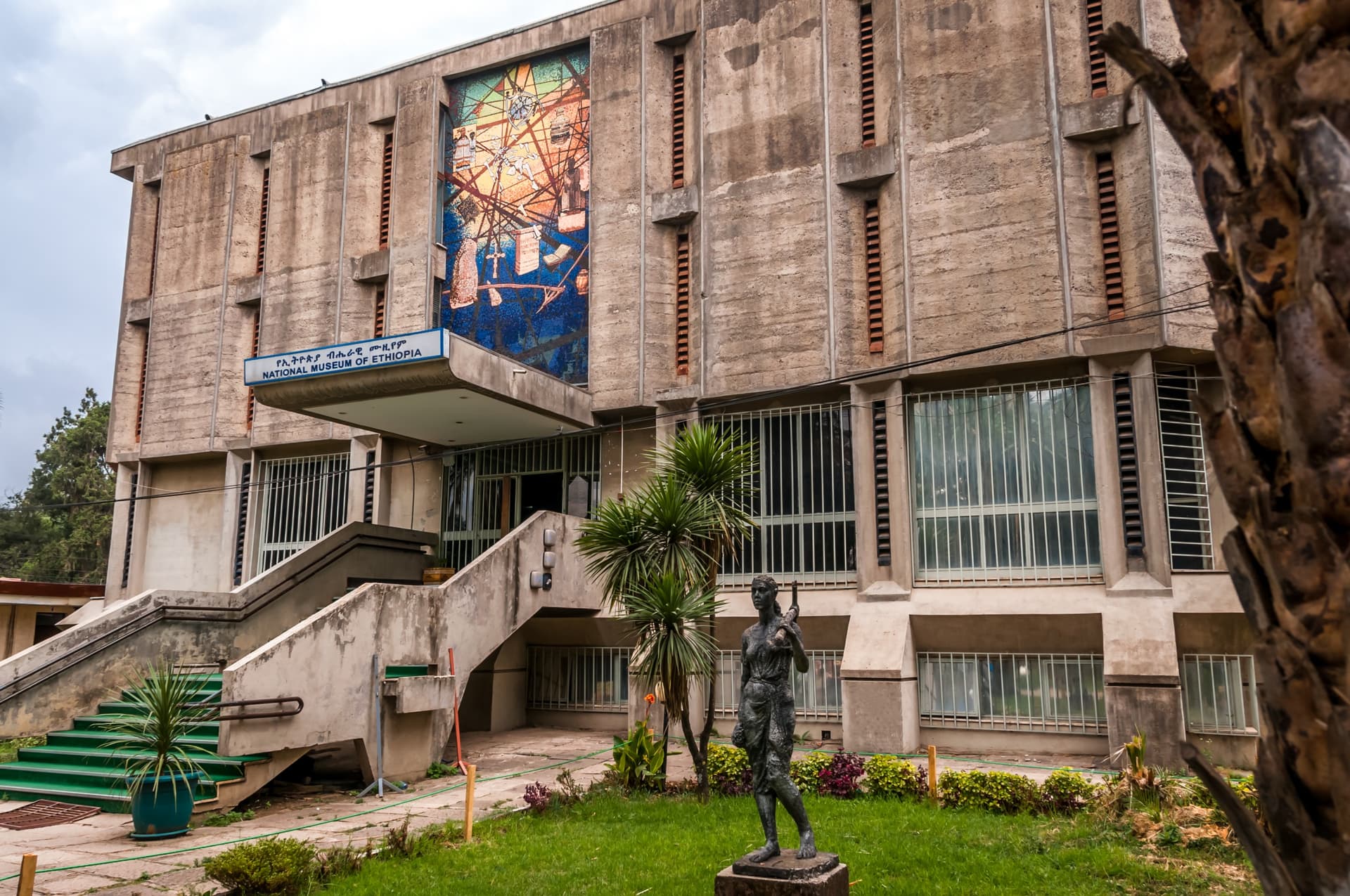
The National Museum of Ethiopia in Addis Ababa houses the cast of Lucy, 3.2 million years old, as well as unique imperial and ethnographic collections documenting Ethiopian civilization.
The National Museum of Ethiopia, located on the campus of Addis Ababa University, holds one of the world's most significant paleoanthropological collections. Here rests the cast of Lucy (Australopithecus afarensis), discovered in 1974 in the Afar Depression. The museum also spans imperial history, traditional arts, and regional cultures of Ethiopia, offering a comprehensive narrative of Ethiopian civilization spanning several million years.
Quick Facts
- Admission: paid (reduced rates for Ethiopian nationals)
- Recommended duration: 1.5 to 2 hours to explore all galleries
- Dress code: no particular restrictions
- Access: Sidist Kilo neighbourhood, reachable by minibus (Sidist Kilo line) or taxi from downtown
- Accessibility: partial wheelchair access; inquire on-site regarding upper floors
What to See
The museum unfolds across several thematic levels. The basement is entirely devoted to prehistory and paleoanthropology: human fossils, skull reconstructions, and the centrepiece—the Lucy cast accompanied by detailed explanations of her discovery and place in human evolution.
The upper floors present:
- Objects from the Axumite period: coins, inscriptions, ceramics
- Thrones, garments, and regalia from the Imperial period, including pieces linked to Haile Selassie
- Musical instruments, textiles, and ornaments of regional ethnic groups
- Traditional Ethiopian paintings on canvas and wood
History and Context
Founded in 1936 under Italian occupation, the museum was restructured after liberation and affiliated with Addis Ababa University. It is today jointly managed by the Ethiopian government and the university. The paleoanthropological collection gained international significance following the deposit of Lucy's fossils, whose originals are preserved under secure conditions; visitors see high-precision casts.
Highlights of Your Visit
Lucy and the Paleoanthropology Gallery
The basement concentrates the bulk of scientific interest. The Lucy cast, 3.2 million years old, is presented with clear explanatory panels. Other hominin fossils discovered in Ethiopia complement the gallery.
Imperial Regalia
Thrones, crowns, uniforms, and photographs from the imperial court recreate the atmosphere of Ethiopian monarchy until Haile Selassie's fall in 1974. These objects are rare and seldom displayed elsewhere.
Traditional Ethiopian Painting
Canvases and wooden icons illustrate biblical scenes and episodes from national history in a figurative style distinctive to Ethiopia, featuring characteristic profile faces. An excellent introduction before visiting churches elsewhere in the country.
Photography Tips
Photography is generally permitted in the galleries, but check for occasional prohibition signs, particularly around fossils. Natural light is dim in the basement; a modern smartphone or camera with good ISO sensitivity will yield better results. Avoid flash on ancient paintings.
Location and Access
The museum stands in the Sidist Kilo neighbourhood, north of downtown Addis Ababa, at the entrance to the university campus. Shared minibuses serving Sidist Kilo from Piazza or Meskel Square stop nearby. By taxi, expect a short ride from most central hotels. The neighbourhood also houses the Ethnological Museum (Institute of Ethiopian Studies), a few minutes' walk on the same campus.
Nearby Attractions
- Ethnological Museum — on the same university campus, dedicated to the cultures and traditions of Ethiopia's peoples.
- St. Mary of Zion Cathedral, Addis Ababa — major Orthodox church in the city centre, a short taxi ride away.
- Meskel Square — large central plaza, a landmark and gathering place during Orthodox festivals.
- Mercato — one of Africa's largest markets, west of the centre, for an immersion in Addis Ababa's daily commerce.
Frequently asked questions
No. Lucy's original fossils are preserved under secure conditions at the Authority for Research and Conservation of Cultural Heritage. The museum displays high-precision casts, scientifically equivalent for understanding the specimen.
Plan 1.5 to 2 hours to leisurely explore all galleries. If you focus solely on the paleoanthropology gallery, one hour suffices.
Yes, both museums are on the same university campus. Allocate half a day to comfortably visit both.
Photography is generally permitted in most galleries. Some areas may display restrictions; respect on-site signage and avoid flash on fragile artworks.
Guides are available on-site, often university students or staff members. A guided tour is recommended for the paleoanthropology gallery, which greatly benefits from contextual explanations.
The museum is open year-round. Avoid major Ethiopian public holidays when crowds may be heavier. The dry season (October to May) is the most favourable period for travel to Addis Ababa generally.

Interested in this visit?
We can include it in your personalised itinerary.