Geladas of the Ethiopian Highlands (Simien)
Geladas of the Ethiopian Highlands (Simien)
Endemic to Éthiopie, geladas live in herds of several hundred individuals on the high plateaus of the Simien Mountains. Unafraid and remarkably accessible from Gondar, they offer a rare and immersive wildlife experience.
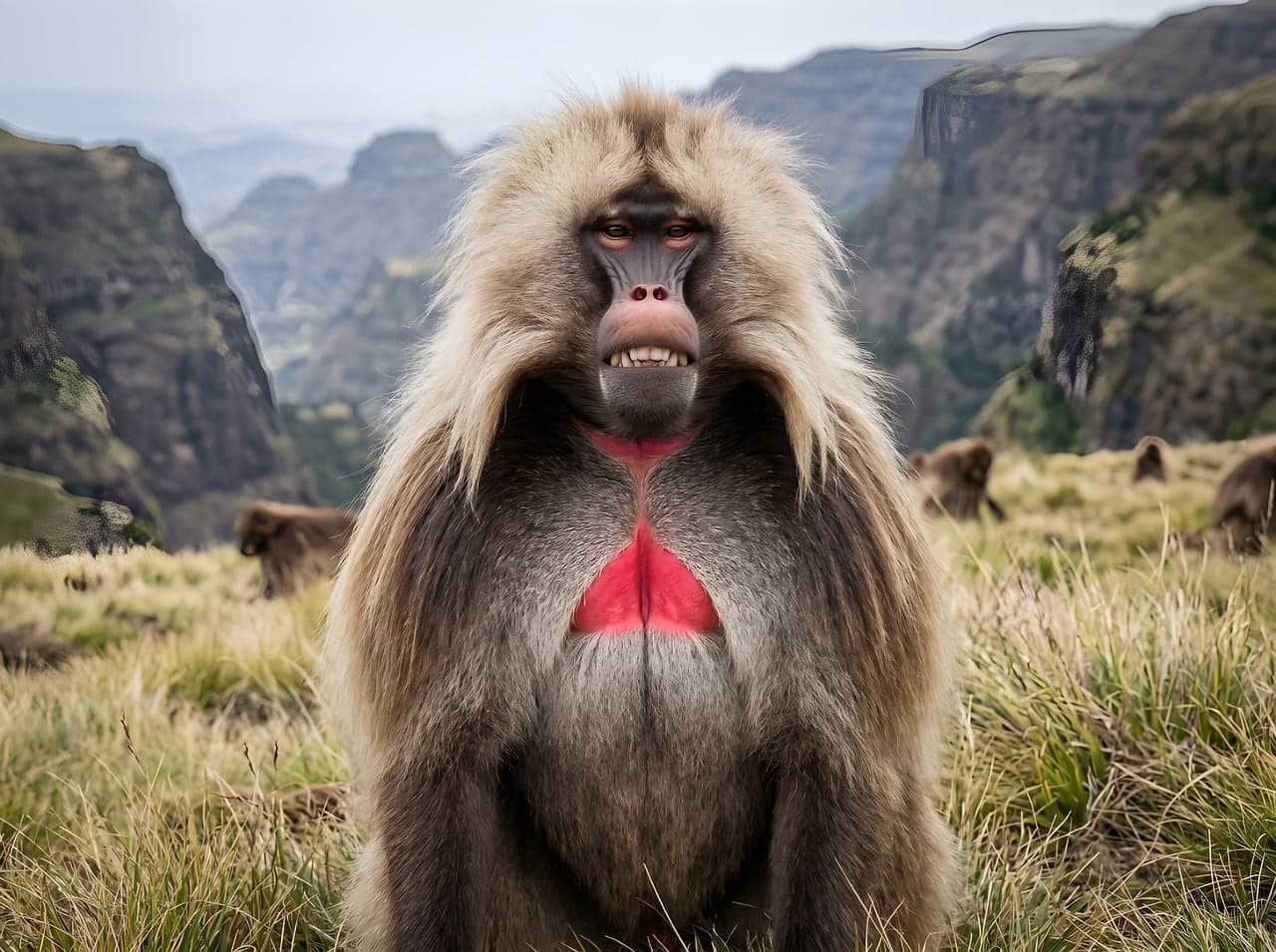
Geladas (Theropithecus gelada) are primates endemic to Éthiopie, found primarily in the Simien Mountains National Park, a UNESCO World Heritage Site. Recognisable by their vivid red chests and thick manes, they live in herds that can exceed several hundred individuals. Nowhere else in the world are these monkeys as accessible or as unafraid of visitors.
Practical Information at a Glance
- Entrance: National park access fees required (payable on-site)
- Access: from Gondar, road to Debark (park entrance); tracks thereafter to viewing zones
- Guide mandatory: an armed scout is required at park entry — he knows where herds congregate
- Suggested duration: 1 to 2 hours of observation on-site; allow half a day including internal travel
- Altitude: between 2,400 m and 4,500 m — acclimatisation recommended
- Attire: warm clothing essential, especially mornings; intense sun at altitude
What You'll See
Geladas spend nearly their entire day grazing on high-altitude grassland. Dominant males display a long mane and a distinctive hourglass-shaped red patch on their chests. Herds—called bands—can comprise multiple family units, forming spectacular gatherings at cliff edges.
The basalt cliffs of the Simien serve as their nocturnal roosts: geladas descend vertically with surprising agility. Within the same park, you may also encounter the mountain nyala and, more rarely, the Ethiopian wolf.
History and Context
The gelada is the sole living representative of the genus Theropithecus, once widespread across Africa and Asia. Its almost exclusively herbivorous diet is unique among primates. The Simien populations are the best preserved; other groups exist in the Guassa Mountains and on the Bale Plateau, but in smaller numbers.
Simien National Park was established in 1969 and inscribed as a UNESCO World Heritage Site in 1978, largely to protect these primates and the afro-alpine ecosystems they inhabit.
Highlights of Your Visit
Observation at the Cliff Edge
Early morning, geladas ascend from the cliffs to the grasslands. This transitional moment, with raking light and herds in motion, is most photogenic. Certain individuals approach within a metre of stationary visitors.
Social Interactions
Mutual grooming, characteristic guttural vocalisations, and confrontations between rival males unfold continuously. Observing the social hierarchy of a herd numbering several hundred is a rare privilege.
Sunset Over the Cliffs
As afternoon wanes, geladas return to the vertical rock faces for the night. Golden light washing the basalt escarpment and the silhouettes of the monkeys create powerful visual scenes, particularly from Sankaber camp or the Chenek environs.
Photography Tips
- Light: morning between 7 am and 9 am offers warm light and active subjects; avoid midday, which is too flat.
- Distance: geladas are unafraid—remain still and let them approach rather than advancing toward them.
- Focal length: a telephoto lens (200–400 mm) frames male portraits without disturbing the group; a wide angle captures herds within their landscape.
- Restrictions: no known photography restrictions, though flash is discouraged to avoid stressing the animals.
Location and Access
The best viewing zones lie within the Simien Mountains National Park, Amhara Region, in northern Éthiopie. Gondar is the customary starting point; from there, the road leads to Debark, where the park entrance office is located. Sankaber and Chenek camps are the most frequented bases for gelada observation.
A 4×4 vehicle is essential on internal tracks. No accessibility provisions exist on high-altitude trails.
Nearby Attractions
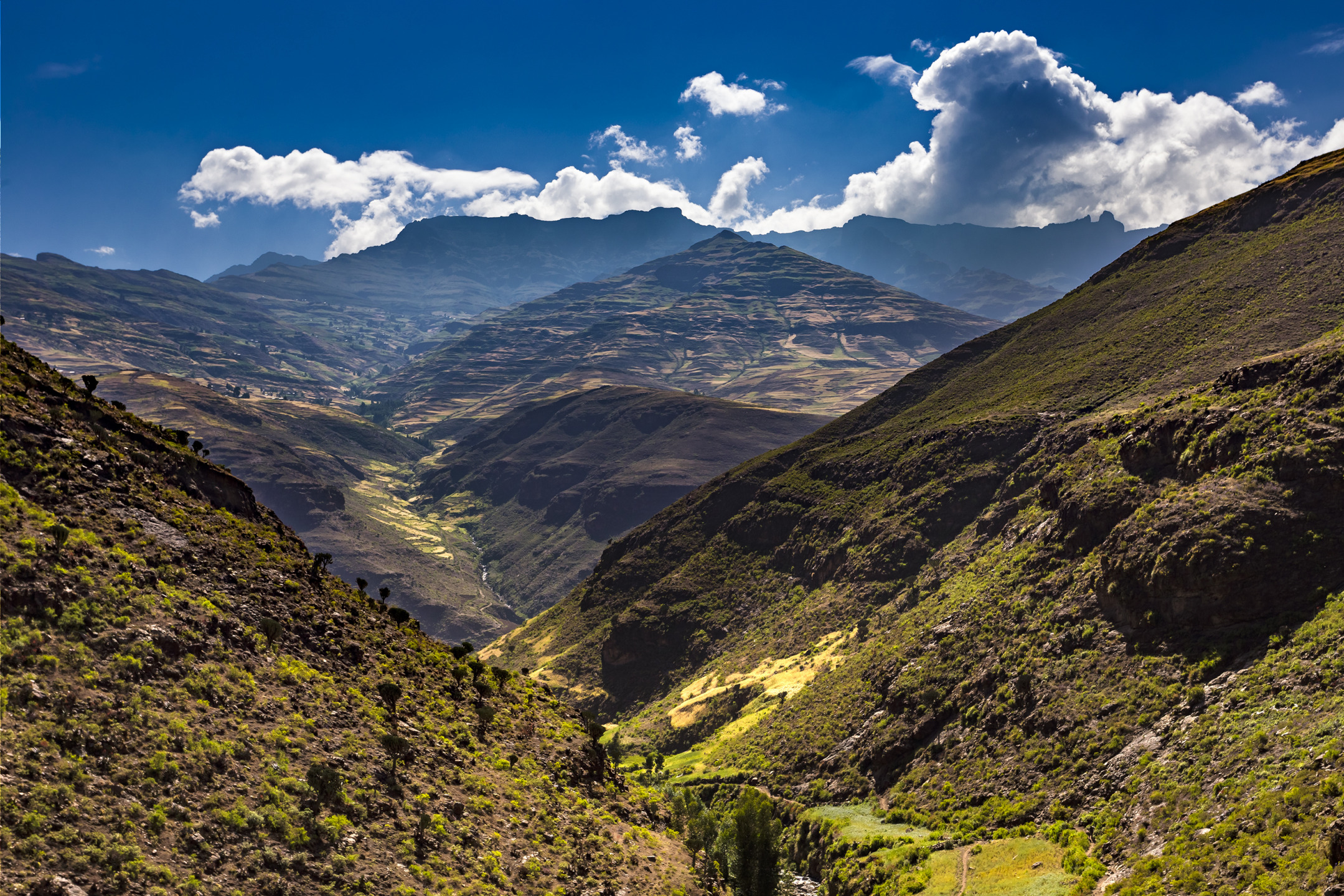
- Simien Mountains National Park — treks along basalt ridges, endemic fauna, and panoramic vistas across deep valleys.
- Royal Castles of Gondar — 17th-century palatial complex, approximately two hours' drive from Debark.
- Lake Tana and Its Monasteries — source of the Blue Nile, dotted with island monasteries adorned with medieval Éthiopien paintings.
- Blue Nile Falls (Tis Isat) — dramatic cascade in the rainy season, accessible from Bahir Dar.
Frequently asked questions
Geladas are present year-round. The dry season (October to May) facilitates access to park tracks and offers better visibility. The rainy season (June–September) renders some tracks challenging but vegetation is lusher.
Geladas are generally non-aggressive toward humans and readily approach. It is nonetheless advised not to feed them, to avoid abrupt gestures, and to heed the scout who accompanies you as mandatory.
Yes. Entry to Simien Mountains National Park requires an armed scout. He knows where herds congregate and optimises your chances of observation.
Yes, and it is the most common formula. Multi-day trekkers regularly encounter herds along trails between Sankaber and Chenek. A dedicated day suffices if you prefer not to trek.
The altitude of the Simien demands warm clothing, even in the dry season: mornings can approach freezing. Also bring effective sun protection, as UV radiation is intense at altitude.
Yes, the Guassa Mountains (Amhara Region) also harbour geladas in a wilder, less-frequented setting. Access there is more complex and requires specific arrangements.
Interested in this visit?
We can include it in your personalised itinerary.