Mekele
Mekele
Capital of Tigray at 2,100 meters altitude, Mekele blends imperial history, salt market from Danakil and Italian colonial architecture. The ideal departure point for the most spectacular sites in northern Éthiopie.
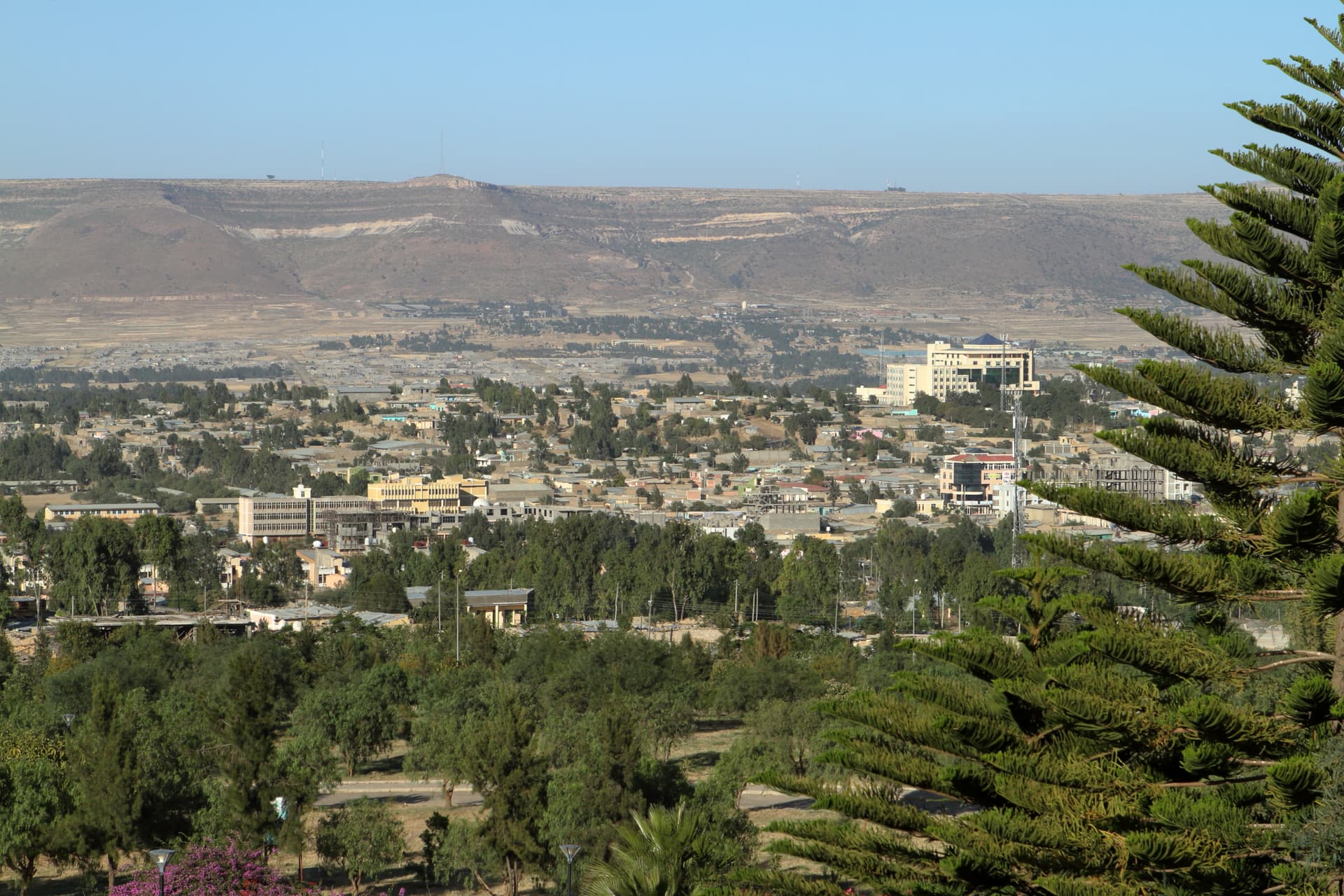
Mekele is the capital of Tigray, in northern Éthiopie, roughly 780 km from Addis Ababa. A commercial and administrative hub of the region, it serves as a base for venturing toward the rock-hewn sites of Tigray, the Danakil salt flats, and the Afar volcanoes. Its bustling market, museums, and Italian colonial architecture make it a destination in its own right, far more than a mere transit point.
Practical info at a glance
- Access: Regular flights from Addis Ababa (Ethiopian Airlines); paved road from Addis Ababa via Dessie.
- Recommended duration: 1 to 2 days for the city; plan longer if heading toward Danakil or Tigray churches.
- Altitude: around 2,100 m — cool nights, pleasant days.
- Currency: Ethiopian birr; ATMs available downtown.
- Language: Tigrigna primarily, Amharic and English-speaking staff in hotels and agencies.
What to see
The center of Mekele revolves around the main square and covered market, one of the most vibrant in northern Éthiopie. Rock salt from Danakil, spices, textiles, and Tigrayan handicrafts line the stalls. Downtown architecture blends Italian buildings from the 1930s with modern Ethiopian construction.
History and context
Mekele was the capital of Ras Alula, a Tigrayan general who resisted Italian expansion in the late 19th century. The city grew in importance under Emperor Yohannes IV, a native of Tigray, who made it a political center. During the Italian occupation (1936–1941), the Italians built roads, administrative buildings, and infrastructure that still shape the urban landscape today.
Highlights of your visit
The Palace of Emperor Yohannes IV
This 19th-century palace, now a museum, preserves the emperor's personal effects, court garments, weapons, and historical documents. It offers direct insight into Éthiopie's period of resistance against European colonial ambitions.
Mekele Market
The central market ranks among the largest in northern Éthiopie. On Saturdays, traders from across Tigray converge here. Blocks of halite salt, carried by camel from the Afar salt flats, sell much as they have for centuries.
The Martyrs Museum
This museum documents victims of the Derg regime (1974–1991) in Tigray. Collections include testimonies, photographs, and artifacts related to TPLF resistance. A sobering and educational visit to the region's recent history.
Mekele Cathedral
The Éthiopian Orthodox church dedicated to the Holy Trinity crowns a hillside in downtown Mekele. Its architecture marries traditional Tigrayan influences with modern elements. It remains an active place of worship, especially lively during religious festivals.
Etiquette and visiting rules
- Remove your shoes before entering the cathedral or any Éthiopian Orthodox church.
- Covered attire is mandatory (shoulders and knees) for both men and women.
- Avoid photographing church interiors without explicit permission.
- Sunday mornings draw many worshippers: maintain a respectful, discreet demeanor.
Photography tips
The market offers the best scenes early in the morning, before 9 a.m., when light is soft and activity peaks. For the Palace of Yohannes IV, late afternoon light beautifully illuminates the façade. Always ask permission before photographing people at the market.
Location and access
Mekele lies in northern Éthiopie, roughly 780 km from Addis Ababa by road. Alula Aba Nega Airport provides daily connections to the capital via Ethiopian Airlines. Within the city, bajaj (motorized tricycles) and shared taxis serve as local transport. Mekele is the logical departure point for excursions to the Danakil Depression and the rock-hewn churches of Tigray.
Nearby attractions
- Danakil Depression — among Earth's hottest and lowest places, with colorful hydrothermal springs and salt flats.
- Rock-hewn churches of Tigray — dozens of churches carved into red sandstone cliffs, often perched on precipices, dating from the 4th to 15th centuries.
- Axum — the ancient capital of the Aksumite kingdom, its obelisks and ruins lie a few hours' drive to the northwest.
- Adwa — a city symbolizing Éthiopie's victory over Italy in 1896, near Axum.
Want to discover this destination?
Our local advisors design your tailor-made trip.