Lalibela
Lalibela
A monastic city perched at 2,600 m, Lalibela is home to eleven Unesco-listed rock-hewn churches. Discover the 'Black Jerusalem' and plan your visit.
Perched at an altitude of approximately 2,600 m, Lalibela is a monastic city located 500 km from Addis Ababa, in the Amhara region, in Éthiopie. Known as the "Black Jerusalem," the city is renowned for its celebrated eleven churches built under the orders of King Lalibela. The holy city constitutes an unmissable pilgrimage site. Inscribed on the Unesco World Heritage List, the site ranks among the wonders of the world.
For lovers of culture and religious history, Lalibela is one of the most impressive Éthiopian sites not to be missed during your trip to Éthiopie.
History
Formerly called Roha, the city of Lalibela took its name from Emperor Gebre Meskel Lalibela (1181–1221). He was the most renowned king of the Zagwe dynasty.
According to tradition, King Lalibela saw Jerusalem in a vision and subsequently attempted to build a new Jerusalem as capital after Muslims invaded ancient Jerusalem in 1187. Lalibela thus remained the capital of Éthiopie between the late 12th and early 13th centuries.
As the route to Jerusalem became perilous and risks increased, King Lalibela sought to create their own holy land for Éthiopian Christians. Thus, he had eleven churches built, in symbolic fashion to Jerusalem, over the course of just 24 years (according to legend). Thus was born Lalibela, the holy city he nicknamed the "Jerusalem of Black Africa" or "Black Jerusalem." This "new Jerusalem" was said to have had its own Jordan and Mount Sinai.
Lalibela long remained an important pilgrimage site for Coptic Christians, and from 1960 onwards, its eleven churches began to become known to the outside world.
In 1978, the Lalibela site was subsequently inscribed and listed as a Unesco World Heritage site.
Lalibela Today
Lalibela is a monastic city built at approximately 2,600 m altitude and is located in the Amhara region 500 km from the capital, in northern Éthiopie. Nicknamed Black Jerusalem, with its magnificent eleven monolithic churches, it is classified as Unesco World Heritage and ranks among the wonders of the world.
The Eleven Monolithic Churches of Lalibela
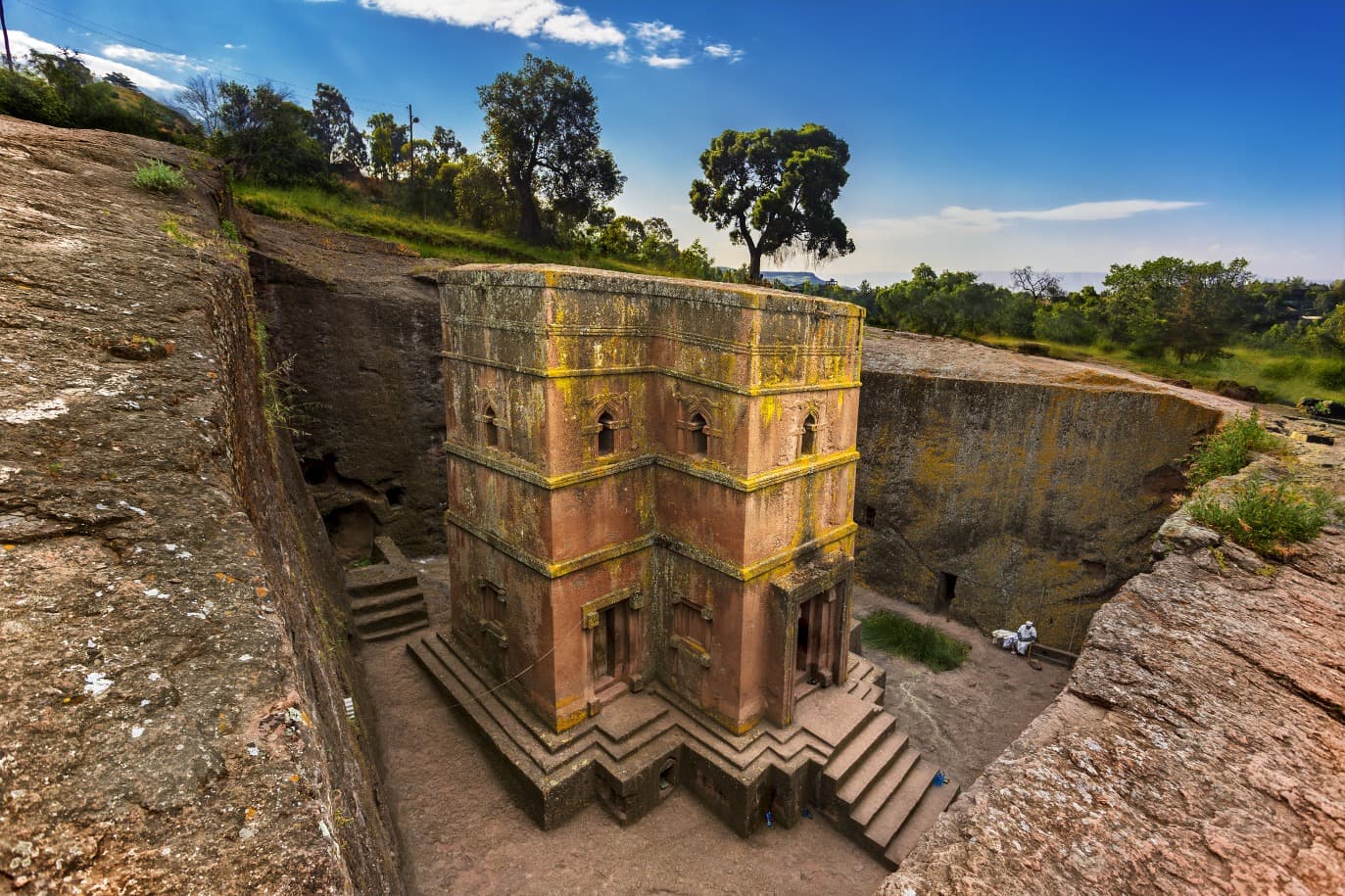
These exceptional churches display incredible architectural diversity and each possesses its own distinct character. Indeed, they are each carved from a single, unique block of stone, without any mixing with other construction elements such as brick. These are cut and hollowed directly from the rock. These religious buildings are what make the city famous, and they are the most impressive structures throughout all of Éthiopie.
The churches of Lalibela are divided into three groups. On one side, the northwestern group which includes Bete Debre Sina, Bete Mikael, Bete Gologota, Bete Maryam, Bete Meskel (or Church of the Cross), and Bete Medhan Alem (or Church of the Holy Savior). On the other side, the southeastern group which comprises Bete Gebriel Rufael, Bete Merqorewos, Bete Aba Libanos, and Bete Amanuel. Finally, Beta Gyorgis, which is the most famous, stands somewhat apart from the others and further away from the Lalibela site. These eleven churches symbolically represent the holy city of Jerusalem.
The churches of Bete Gyorgis, Bete Medhan Alem, Bete Amanuel, and Bete Maryam are the most striking and are truly worth visiting. It is essential to have a guide during your visit to show you all the corners and details of each church.
Bete Gyorgis is above all the most renowned of the churches on the site. Bete Medhan Alem is the most majestic with its rectangular architecture. Bete Maryam, for its part, is the most important and most beloved, and houses the royal treasure of Lalibela. Bete Gologota, meanwhile, houses the tomb of King Lalibela.
Lalibela, Holy City and Major Pilgrimage Site
Lalibela is also considered a holy city of Éthiopian Orthodox Christians and constitutes an important pilgrimage site and place of devotion for the faithful. Indeed, each of the churches celebrates numerous festivals including Timkat (or Epiphany), Genna (or Christmas), the saint's feast day, and more. The coffee ceremony is also a traditional institution that takes place at every Éthiopian meal.
Currently, the city of Lalibela is home to more than 17,000 inhabitants and has an airport, where Ethiopian Airlines flights ensure connections with the capital and with the cities of Gondar and Axum. Dwellings are traditional round huts, built of stone, and topped with thatch.
Beyond the magnificent churches on the site, the Saturday weekly market is also interesting to explore during your stay.
Climate
Lalibela has a humid subtropical climate with no dry season (Cfa) according to the Köppen–Geiger classification. Throughout the year, the average temperature stands at 25.5°C, while average precipitation is 650.5 mm.
Lalibela is a city suitable for tourism and can be visited almost year-round. However, given the risk of flooding during the rainy season in July and August, the site is closed between late June and early October.
To reach Lalibela, the most practical way is to fly directly from Addis Ababa for a flight lasting approximately one hour. For direct flights from Addis, only Sunday and Monday are available; otherwise, a stop in Gondar or Bahir Dar will be necessary.
You can also rent a car or travel by bus. The journey between Addis Ababa and Lalibela covers approximately 635 km and takes two days. You can also make stops in Woldiya and Kombolcha and enjoy the magnificent scenery along the way.
Attractions in Lalibela
See all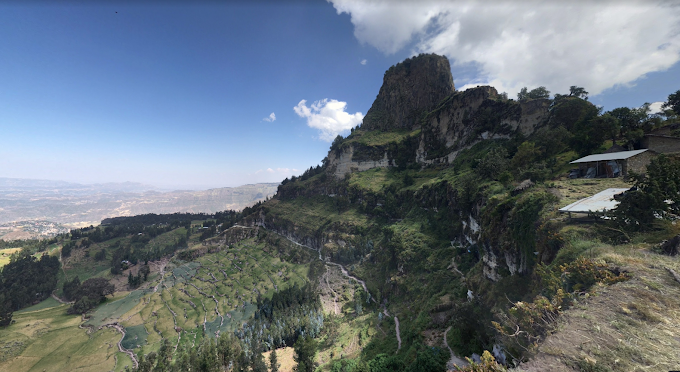
Monastère Asheton Mariam
À 3 000 m d'altitude au-dessus de Lalibela, le monastère rupestre Asheton Mariam conserve fresques, reliques et liturgie orthodoxe éthiopienne vivante.
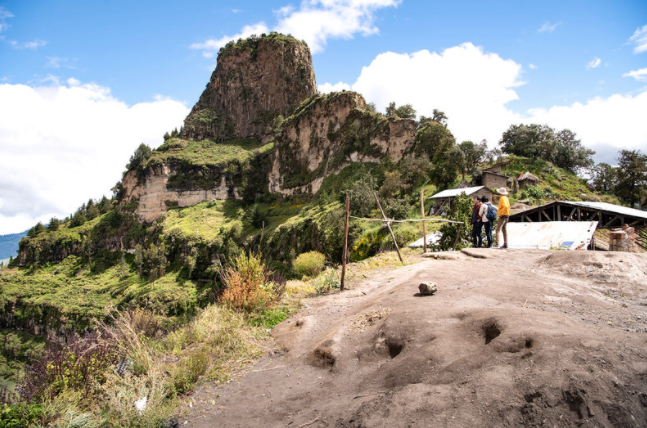
La montagne Abune Yosef
Sommet à 4260 m proche de Lalibela, Abune Yosef se parcourt en trek de plusieurs jours, entre églises rupestres médiévales, faune endémique et villages d'altitude.
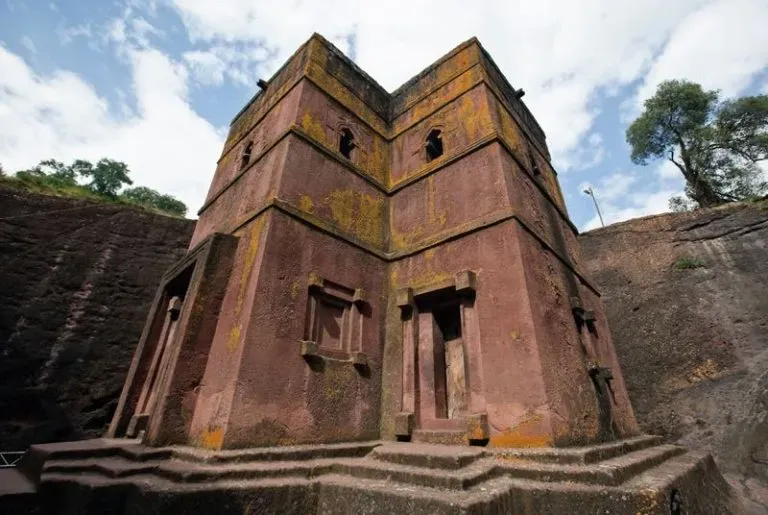
L'église de Beta Giorghis
Église monolithique en croix grecque taillée dans le tuf volcanique de Lalibela, Beta Giorghis est l'un des onze sanctuaires rupestres classés à l'UNESCO.
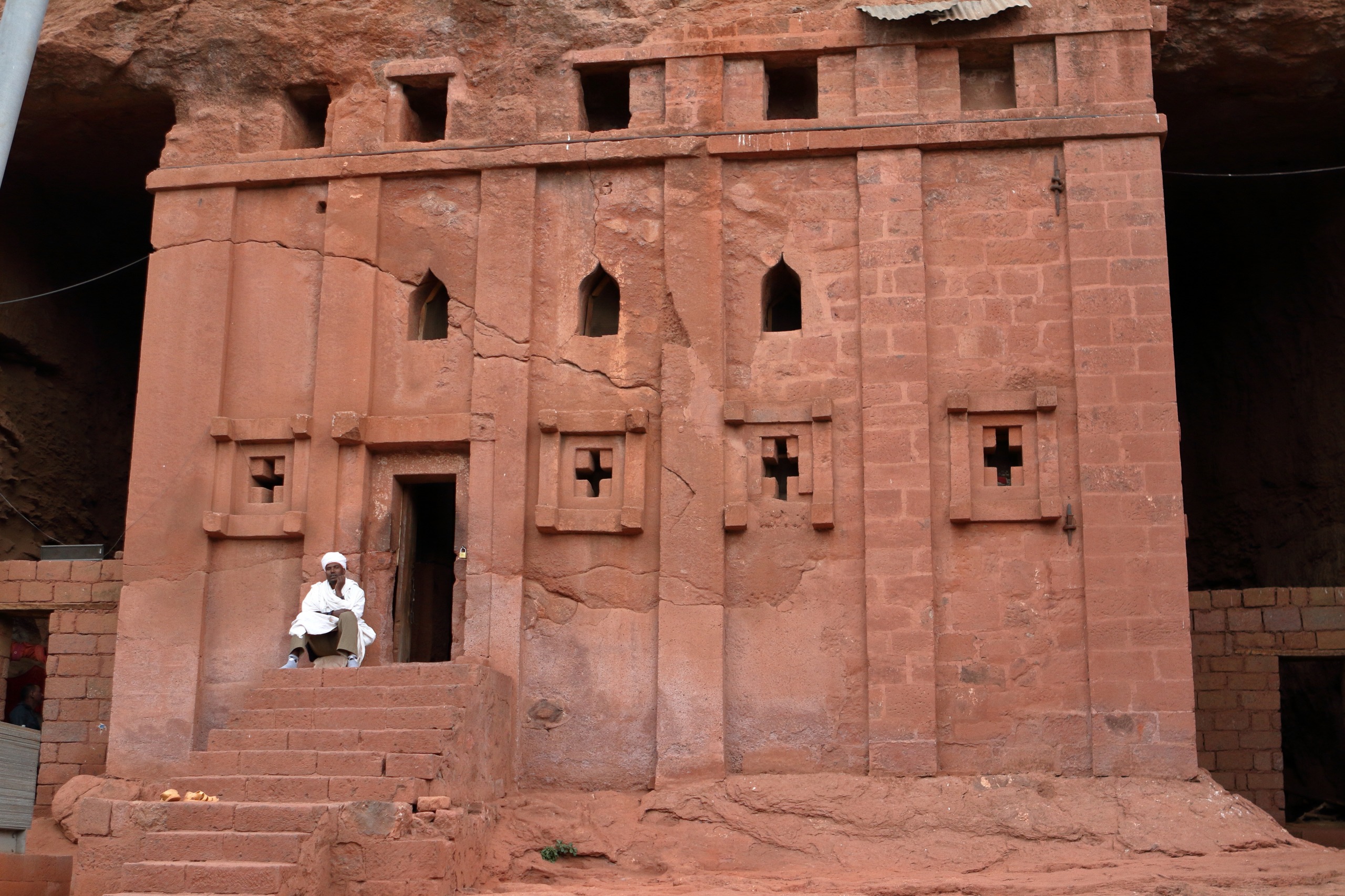
La Jérusalem noire
À Lalibela, onze églises monolithiques taillées dans la roche au XIIIe siècle forment la Jérusalem noire, site UNESCO et haut lieu du christianisme orthodoxe éthiopien.
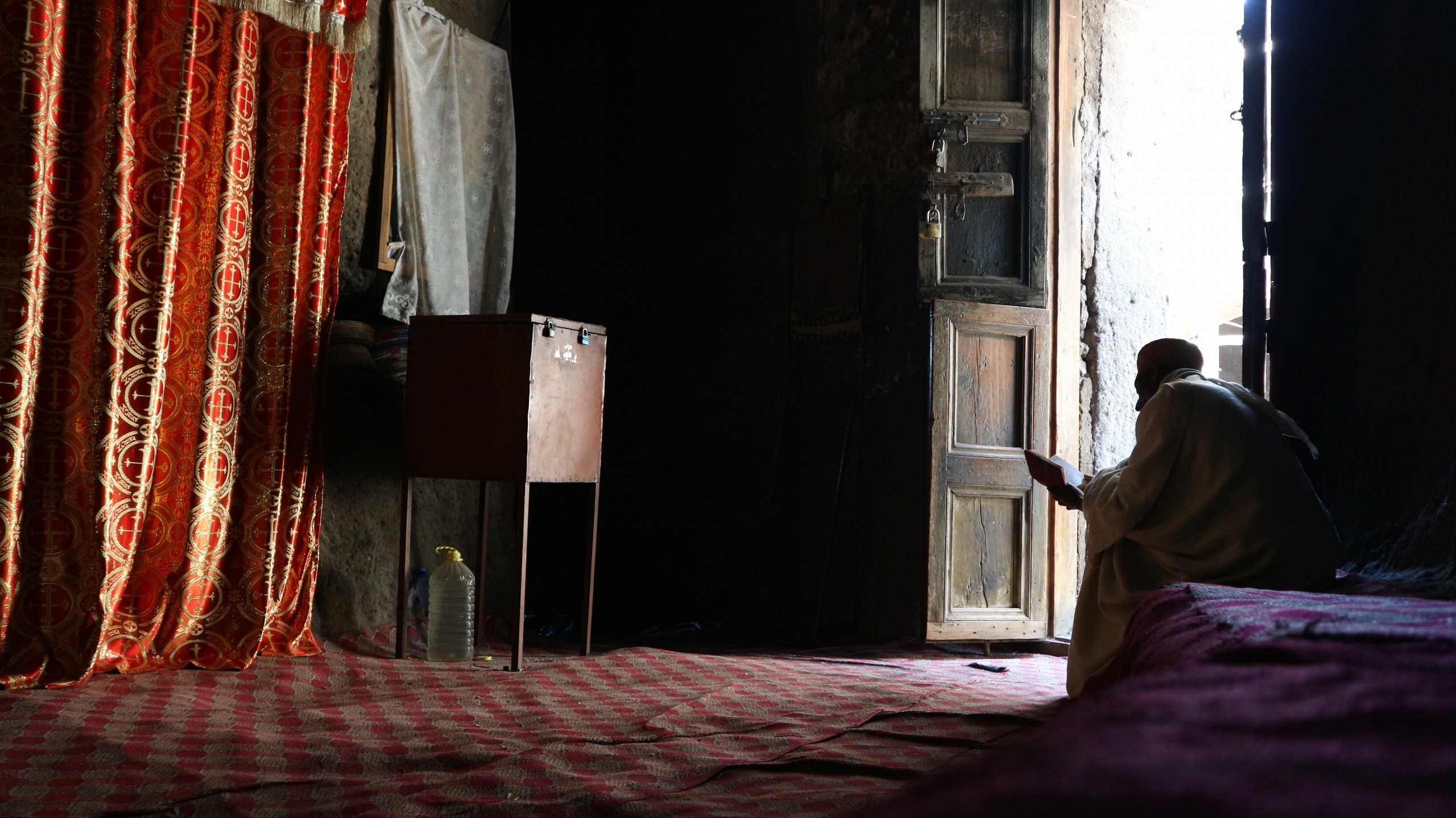
L'église d'Asheton Maryam
Monastère orthodoxe dédié à la Vierge Marie, perché à 3 130 m sur le mont Abune Yosef au-dessus de Lalibela, à rejoindre par une randonnée d'altitude.
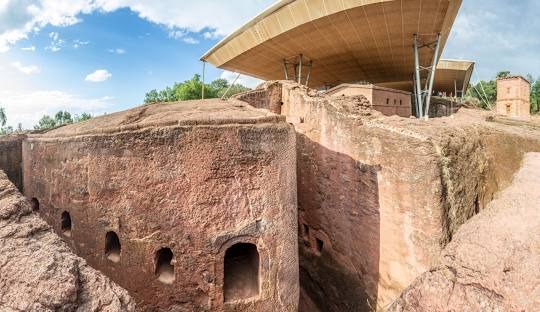
Eglise de Beta Maryam
Église rupestre du XIIe siècle à Lalibela, Bete Maryam abrite un pilier voilé inscrit en guèze, arabe et hébreu, au cœur du patrimoine UNESCO éthiopien.
Want to discover this destination?
Our local advisors design your tailor-made trip.