Awra Amba Community Village
Awra Amba Community Village
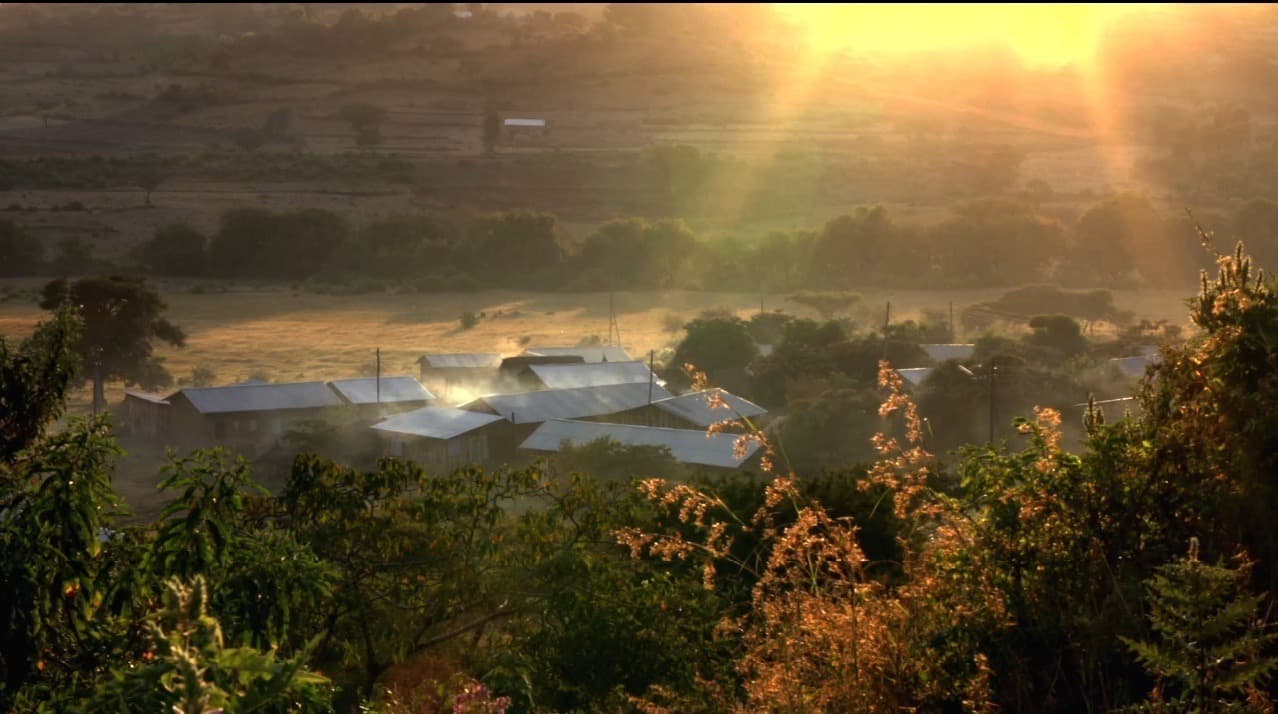
Located 74 km from Bahir Dar, Awra Amba is an Ethiopian village founded in 1972 on a singular egalitarian project: cooperative, elected committees, and mixed weaving.
Awra Amba is a village in Ethiopia known for its singular social organization: strict equality between men and women, cooperative ownership, rejection of established religions, and governance through elected committees. Located in the Amhara region, approximately 74 km east of Bahir Dar, it has welcomed researchers and travelers since the mid-2000s who come to observe a way of life designed in opposition to traditional Ethiopian norms.
Why Visit Awra Amba
Awra Amba appeals for three concrete reasons. First, its history: a community founded in 1972 by an illiterate peasant who persisted, despite persecution, in applying an egalitarian project. Next, its visible cooperative economy on-site, with weaving workshops, a mill, shops, and profit redistribution. Finally, visitor reception, which is structured and educational: residents explain their own functioning, making the visit more dialogued than contemplative.
Visitor numbers remain moderate and the village lives from its agricultural and artisanal activity, not tourism. You come here to understand, not to tick off a monumental site.
A Story of Rupture
The founder, Zumra Nuru Mohammad, is the son of a peasant and illiterate. As a child, he opposed several practices around him: inequality between men and women, mistreatment of the elderly, labor exploitation, and severe punishment of children. His family, embarrassed by his questions, eventually throw him out. At 13, he spends five years walking through surrounding villages, living modestly and seeking people willing to share his ideas.
In 1972, he convinces a dozen families, all illiterate, to settle with him on land of about 50 hectares in Awra Amba. Cohabitation with conservative neighboring villages deteriorates rapidly. Between 1989 and 1993, the community is persecuted and forced to flee, losing most of its land. Once they return, members recover only 17.5 hectares of the original 50, and only about twenty people come back. The village reconstructs slowly and counts approximately 400 to 500 inhabitants in the 2010 census; the current figure is probably higher, but varies by source.
The experiment remains little-known until 2006, when an interview with Zumra Nuru on Ethiopian national television attracts attention. Visits by political leaders, NGOs, and researchers multiply thereafter; by 2009, approximately 6,000 Ethiopian and foreign visitors travel there, a figure marking the beginning of regular attendance.
What You See On-Site
Founding Principles
The visit almost always begins with a guide from the village, who presents the five principles of the community:
- equality between the sexes, in household tasks as well as in economic decisions;
- respect and protection of children's rights;
- mutual aid toward elderly and sick people who can no longer work;
- condemnation of theft, lies, and disputes;
- universal brotherhood, without distinction of origin or belief.
Added to these are strict rules of life: prohibition of khat, cigarettes, and alcohol, ban on relationships outside marriage and adultery, rejection of forced marriage, and possibility of divorce in case of disagreement. Residents believe in a single creator God, without name or ritual; Zumra Nuru affirms there is neither paradise nor life after death, and that good must be built here.
The Weaving Workshop and Cooperative
The workshop houses about twenty looms, used without distinction by men and women—a notable point in a country where weaving remains highly gendered. It produces scarves, blankets, and clothing, sold on-site. The cooperative also includes a mill equipped with six electric mills serving nearby farmers, three shops, and a small truck for transport. Eleven committees elected every three years manage different domains (conflict resolution, support for elders, work distribution), under the supervision of a development committee of fifteen members.
The Library and School
The community library is open to adults and children alike. It offers works on agriculture, philosophy, and children's literature, and symbolizes the importance placed on education, a direct legacy of the founder's illiteracy. The school sometimes welcomes adults learning to read alongside children. It's one of the most telling places to understand how the village's values are transmitted.
Fields and Livestock
Agriculture occupies a secondary place due to limited land. Crops are mainly teff (Ethiopian staple grain), sorghum, and corn; a few cattle are raised for milk.
Practical Visit Information
Visits must be done with a village guide, as part of a tour organized by the community. Plan for 1.5 to 3 hours depending on your interest and conversations. A contribution is requested at entry and passed on to the cooperative; bring cash in birr, as card payments are not available. Buy something from the weaving workshop if possible: it's the main direct source of income for artisans.
Proper dress is recommended, as elsewhere in rural Ethiopia. Photographing residents is always done with permission first. A few words of Amharic are appreciated; English is spoken by designated guides.
When to Go
The dry season, from October to May, is most favorable: roads are passable and days are clear. The rainy season, from June to September, turns some tracks to mud, complicating access from Dangla. If you travel during this period, a 4x4 is strongly recommended. October and November are particularly pleasant, just after the rains, when the Amhara landscapes are lush.
How to Get There
By Public Transportation
The main entry points are Bahir Dar and Gondar, both served by flights from Addis Ababa. From Bahir Dar, take a minibus or shared taxi to Worera (about 1h30), then continue to Dangla, and finally another transport to Awra Amba (about 45 minutes). From Gondar, take a bus toward Bahir Dar, get off at Dangla, then connect with local transport.
By Private Vehicle
Renting a vehicle with a driver from Bahir Dar offers more comfort and allows you to combine Awra Amba with other stops on the same day. The cost is higher than public transportation but remains reasonable relative to the flexibility gained. During the rainy season, insist on a 4x4.
With an Agency
Several Ethiopian agencies include Awra Amba in circuits around Bahir Dar and Lake Tana. This is the simplest option if you want an English-speaking guide and prepared logistics.
To Combine in the Region
Awra Amba lends itself well to a day trip from Bahir Dar, a city set on Lake Tana and known for its island monasteries and Blue Nile Falls. Further north, Gondar and its imperial palaces, as well as the Debre Birhan Selassie Church and its frescoes, complement an itinerary on the historic northern circuit. For those pushing further into Tigray, the Abreha Atsbeha Church ranks among notable rock sanctuaries. On the opposite end of the country, in the Omo Valley, the villages of the Dorze and Dassenech offer another face of communal Ethiopia.
Frequently Asked Questions
Frequently asked questions
Include Awra Amba in Your Trip
Awra Amba fits naturally into a northern Ethiopian circuit around Bahir Dar, Lake Tana, and Gondar. To build an itinerary combining this community visit with the country's historical sites and landscapes, consult our Ethiopia travel suggestions.
Interested in this visit?
We can include it in your personalised itinerary.