Holy Trinity Cathedral of Addis Ababa
Holy Trinity Cathedral of Addis Ababa
Kidist Selassie Cathedral is the principal place of worship of the Ethiopian Orthodox Tewahedo Church in Addis Ababa. It houses the tombs of Haile Selassie, remarkable frescoes, and a unique liturgical museum.
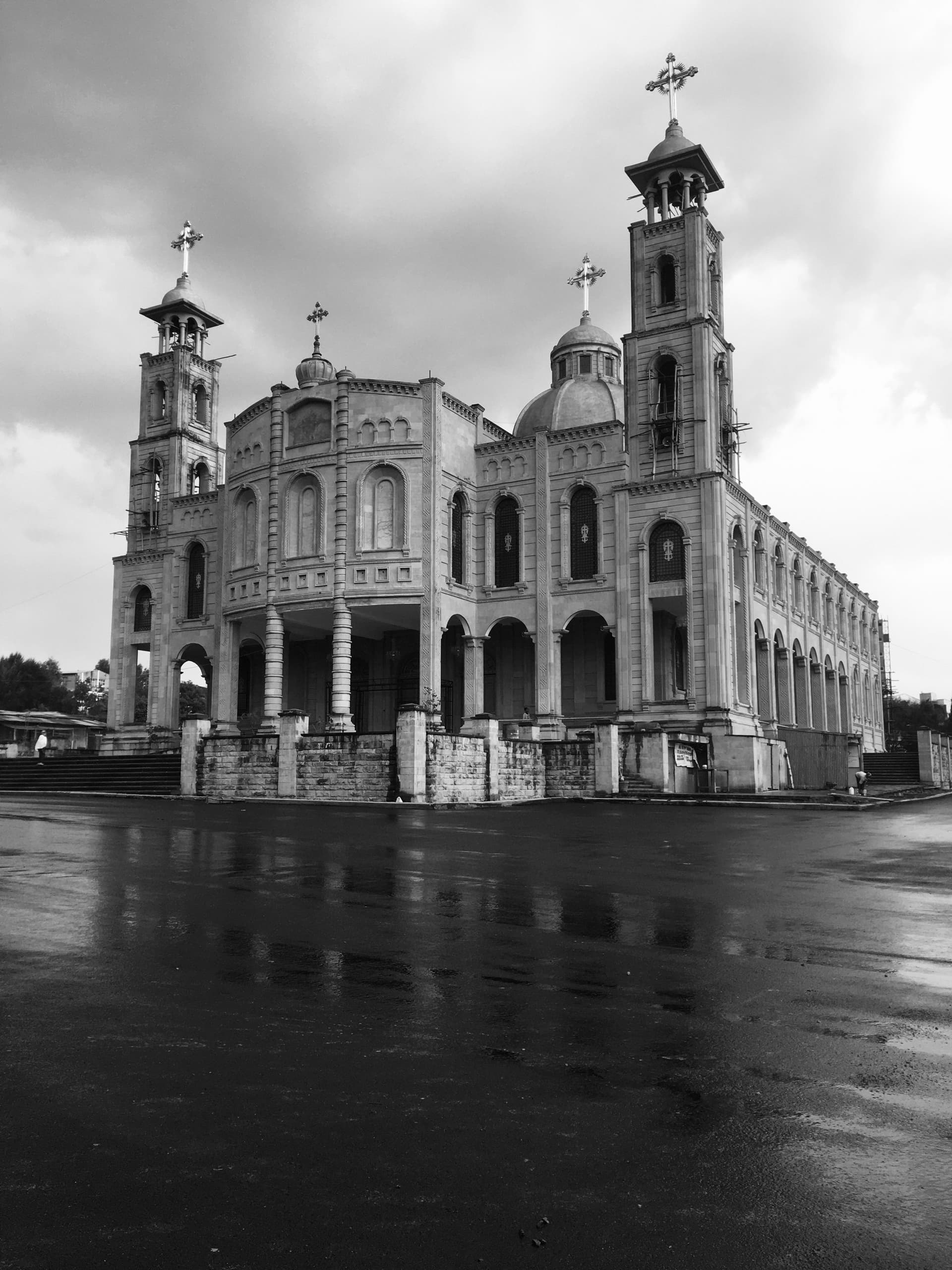
The Holy Trinity Cathedral (Kidist Selassie in Amharic) rises at the heart of Addis Ababa as the principal place of worship of the Ethiopian Orthodox Tewahedo Church. Built under Haile Selassie I, it houses the tombs of the emperor and Empress Menen, as well as those of several heroes of resistance against Italian occupation. Its architecture blends Byzantine influences with traditional Ethiopian elements.
Practical Information at a Glance
- Entrance : paid admission (different rate for foreign visitors)
- Dress code : shoulders and knees must be covered; shoes removed at the entrance to certain areas
- Recommended duration : 1 to 1.5 hours
- Peak visitor days : Sunday morning (services), Ethiopian Orthodox holidays
What You'll See
The cathedral strikes first with its dressed stone façade, coloured stained glass windows, and domes. Inside, the frescoes on the walls illustrate biblical scenes and episodes from Ethiopian history. The imperial mausoleum, accessible within the compound, contains the tombs of Haile Selassie I and Empress Menen, as well as those of dignitaries and anti-fascist resisters.
The adjoining museum displays embroidered liturgical vestments, crowns, processional crosses, and illuminated manuscripts — a dense overview of the heritage of the Ethiopian Orthodox Church.
History and Context
Construction began in the 1930s, following the Ethiopian victory at Adwa and the rise to power of Haile Selassie. The building was consecrated in 1944, after the expulsion of Italian forces. It quickly became a symbol of Ethiopian sovereignty and national Orthodox faith.
Haile Selassie was buried there in 2000, after decades of controversy surrounding his remains. The cathedral remains an active place of pilgrimage and a strong identity marker for Orthodox Ethiopians worldwide, particularly the Rastafarian diaspora.
Highlights of Your Visit
The Imperial Mausoleum
The tombs of Haile Selassie and Empress Menen occupy a sober and reverent side chapel. The faithful come daily to pay their respects. It is one of the few imperial mausoleums accessible to the public in sub-Saharan Africa.
The Stained Glass Windows and Interior Frescoes
The stained glass windows, created by Yugoslav artisans in the 1950s, depict Ethiopian saints and scenes from the Old Testament. The interior frescoes combine Byzantine iconography with the chromatic palette characteristic of Ethiopian art.
The Cathedral Museum
Small yet comprehensive, it preserves rare liturgical objects: tabots (replicas of the Ark of the Covenant used in processions), crosses in chiselled silver, robes of ceremony embroidered with gold. The visit illuminates the material richness of the Tewahedo Church.
Etiquette and Visiting Rules
- Cover shoulders and knees; a shawl may be lent at the entrance.
- Remove shoes before entering the main nave.
- Avoid crossing the prayer space during a service.
- Speak in a low voice; the cathedral is an active place of worship.
- Ask permission before photographing the faithful at prayer.
Photography Tips
The natural light filtered through the stained glass is most beautiful mid-morning. The exterior façades photograph well from the forecourt, head-on or from a slight upward angle to include the domes. Inside, photography is generally permitted outside services, but check with the guardian. The museum often prohibits photographs of the most precious objects.
Location and Access
The cathedral is located in central Addis Ababa, near the Ethiopian Parliament and within walking distance of the National Museum of Éthiopie. It is accessible by minibus (blue taxi) from the city centre or by conventional taxi. No tramway line serves the site directly. Wheelchair access is limited due to entrance steps.
In the Surrounding Area
- National Museum of Éthiopie — houses the fossil of Lucy (Dinknesh) and major archaeological collections.
- Jubilee Palace — former imperial residence visible from outside, symbol of the Haile Selassie era.
- Mercato — one of Africa's largest markets, a few kilometres to the northwest.
- St. George's Cathedral — another historic Orthodox cathedral in Addis Ababa, site of Haile Selassie's coronation.
Frequently asked questions
The cathedral is generally open on weekdays and weekends. On Sunday mornings, services occupy the main nave; tourist visits are then restricted. Opt for a weekday morning for a peaceful visit.
Shoulders and knees covered is mandatory for all visitors. Wear shoes that are easy to remove. A light shawl in your bag is sufficient if you wear light clothing.
Yes. The imperial mausoleum is accessible within the cathedral compound, included in the entrance ticket. It is open to visitors and pilgrims outside of services.
It is generally permitted outside and in parts of the interior outside services. The museum may restrict photographs of certain pieces. Always ask for confirmation on site before photographing.
Yes, the two sites are close and can easily be visited in the same half-day. Start with the cathedral in the morning, then head to the National Museum on foot or by taxi.
Timkat (Ethiopian Epiphany, in January) and Meskel (True Cross Festival, in September) feature spectacular processions from and around the cathedral. Crowds are very heavy on these days.
Interested in this visit?
We can include it in your personalised itinerary.