The atse Yohannes IV Museum
The atse Yohannes IV Museum
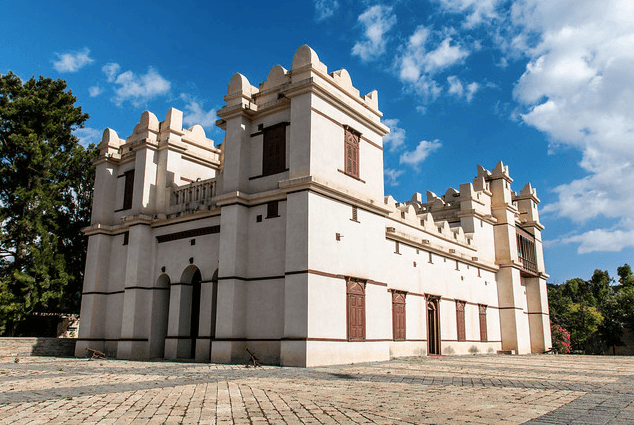
Former imperial palace in Mekele, the Yohannes IV Museum displays the royal throne, furnishings and manuscripts from 19th-century Tigray.
The atse Yohannes IV Museum occupies the former palace of the Ethiopian emperor of the same name, in Mekele, the historic capital of Tigray. Built under the influence of Italian architecture during his reign (1872-1889), the building today preserves furniture, court objects and manuscripts from the imperial era.
Why visit the Yohannes IV Museum
This stop is for those who want to understand Ethiopia in the second half of the 19th century, a pivotal period between the end of the Age of Princes and resistance to colonial powers. The museum offers access to a relatively intimate imperial palace, easier to grasp than the grand complexes of Gondar or Addis Ababa. The collection highlights the daily life of a court, technical exchanges with Europe, and Tigray's particular role in building the modern Ethiopian state. Allow 1 to 1.5 hours for your visit, ideally with an English-speaking guide to fully appreciate the historical references.
History of the palace and Yohannes IV
For nearly a century, between 1769 and 1855, Ethiopia went through the Age of Princes (Zemene Mesafint: no emperor managed to unite the territory and the ras of the various provinces constantly clashed, amid religious tensions within the Orthodox Church and with Muslim communities. It was Theodore II (Téwodros II) who ended this fragmentation in 1855 by recentralizing power.
Theodore II appointed Yohannes IV governor of Tigray, his native province. After the emperor's death in 1868—in the context of the British Napier expedition—Yohannes IV prevailed over his rivals and officially took power on January 21, 1872, his links with the British having influenced this rise.
His reign was marked by defending the borders against the Egyptians and then the Mahdist Sudanese. He died in combat in 1889 at Metemma, in the northwest of the country, during a battle against these same Mahdists. His successor, Menelik II, would continue this work of consolidation and lead Ethiopia to victory at Adwa against Italy in 1896. For many Ethiopians, Yohannes IV remains the figure of a patriotic sovereign who died for his country.
What to see in the museum
The palace was built in Mekele under Italian influence, testimony to the technical relations that some European nationals then maintained with the court, apart from political tensions. Several rooms are visited successively.
- The royal throne of Yohannes IV: a masterpiece, fashioned by Italian engineer Giacomo Nareri (around 1874, to be confirmed on site), it illustrates the stylistic blending between European craftsmanship and Ethiopian imperial symbolism.
- Furnishings and court objects: furniture, tableware, clothing and weapons appear as fragments of the palace's daily life.
- Manuscripts from the imperial era: religious texts and administrative documents, some in Ge'ez, offer insight into Tigray's learned culture in the 19th century.
- Photographs and portraits: representations of the emperor, his family and the court, useful for placing the figures mentioned by the guide.
Practical information
- Duration of visit: 1 to 1.5 hours are sufficient to tour the rooms.
- Admission: moderate entry fee, payable in birr on site. An additional fee may apply for photography.
- Opening hours: daytime opening, usual closure one day a week. Check the day before with your accommodation, as hours vary by season and religious holidays.
- Guide: highly recommended. Explanatory panels are limited and the museum's richness largely lies in the historical context provided verbally.
- Dress code: respectful attire, shoulders and knees covered, as the site maintains a respected heritage character.
How to get to the museum
Mekele is located in northern Ethiopia, approximately 780 km from Addis Ababa. The city has an airport (Alula Aba Nega) served by domestic flights from the capital in about 1 hour 15 minutes; this is the fastest option. The road is possible but long (two days with stops), often combined with a circuit through Lalibela or the rock-hewn churches of Tigray.
Once in Mekele, the museum is located in the center, accessible on foot from most hotels or by bajaj (tuk-tuk) for a few birr. As the security situation in Tigray has evolved recently, check official recommendations before departure.
What to see in the region
Tigray and northern Ethiopia offer several natural extensions to this visit:
- The rock-hewn churches of Tigray, carved into the cliffs and accessible on a day trip from Mekele.
- The Erta Ale volcano and the Dallol depression, in the Danakil desert, for which Mekele is the main departure base.
- The Dorze villages and meeting with the Mursi in the south, for those extending the journey beyond the north.
- The Menagesha national forest near Addis Ababa, on the way back.
Frequently asked questions
Frequently asked questions
Integrate Mekele into your trip
The Yohannes IV Museum works well as a half-day stop combined with departure to the Danakil or the rock-hewn churches of Tigray. To build a coherent itinerary in northern Ethiopia and beyond, consult our tailor-made journeys in Éthiopie.
Interested in this visit?
We can include it in your personalised itinerary.