The Dorze
The Dorze
North of Arba Minch, the Dorze cultivate enset, weave cotton and inhabit beehive-shaped huts twelve meters high on the Gamo highlands.
The Dorze form an agricultural and weaving community on the Gamo highlands in southern Éthiopie. Their villages, perched approximately 35 km north of Arba Minch, are known for their beehive-shaped huts reaching twelve meters, their colorful textiles and comprehensive use of enset, the false banana tree that structures their diet and habitat.
Why visit the Dorze villages
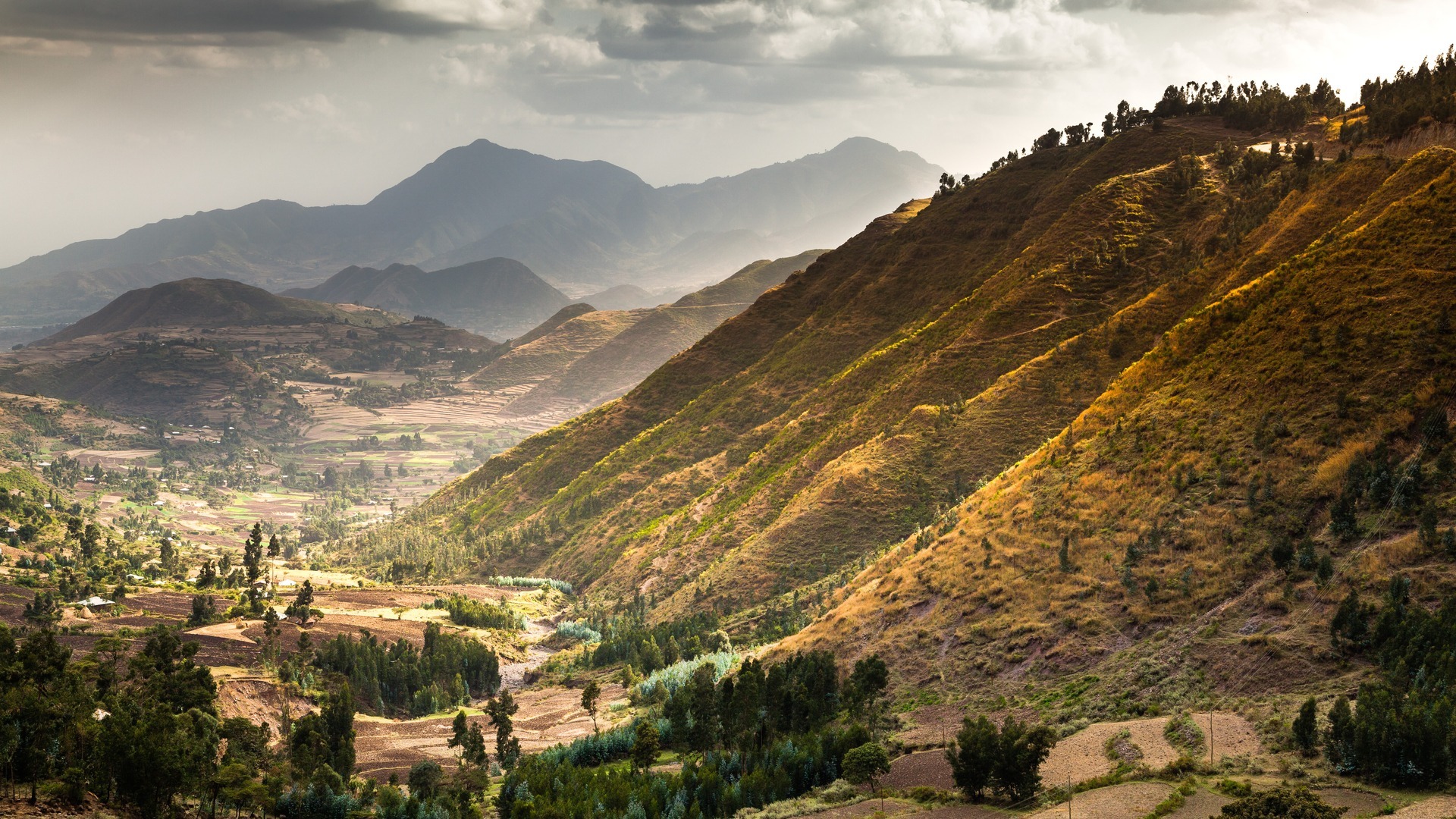
The visit combines three interests rarely brought together: spectacular vernacular architecture, active textile craftsmanship and an agricultural economy based on a little-known plant, enset. Unlike other groups in southern Éthiopie whose tourist presentation has sometimes frozen practices, the Dorze of Chencha continue to live, weave and cultivate within the framework you observe. The region also offers a remarkable viewpoint over Lake Abaya, from an average altitude of 2,740 meters.
History and cultural identity
The Dorze are one of the groups of the Gamo highlands, on the eastern border overlooking Lake Abaya. Their language, Dorze, belongs to the family of Omotic languages spoken in the southwest of the country. Historically renowned as warriors, they wove a network of structuring regional exchanges: they obtained ostrich feathers and phallic-symbol brass objects from the Konso necessary for initiation rites, procured bottles and glasses from the Wollaita, and in return supplied them with textiles.
Christianity gradually took root in the region, attested by a church dating from the 16th century. Its lasting anchorage dates, however, to Menelik II's conquest at the end of the 19th century. Today, the Dorze are predominantly Tewahedo Orthodox, while neighboring Gamo are mostly Protestant.
Ancient beliefs
Before Christianity, the Dorze venerated a supreme being named Tawa, considered as creator and just. The maro, diviners, played the role of intermediaries between humans and Tawa. The system of social norms still rests partly on Woga (traditional rule) and the notion of Gome, which designates violation of this rule, supposed to cause illness, loss of cattle or financial difficulties.
What you will see on-site
Beehive-shaped huts
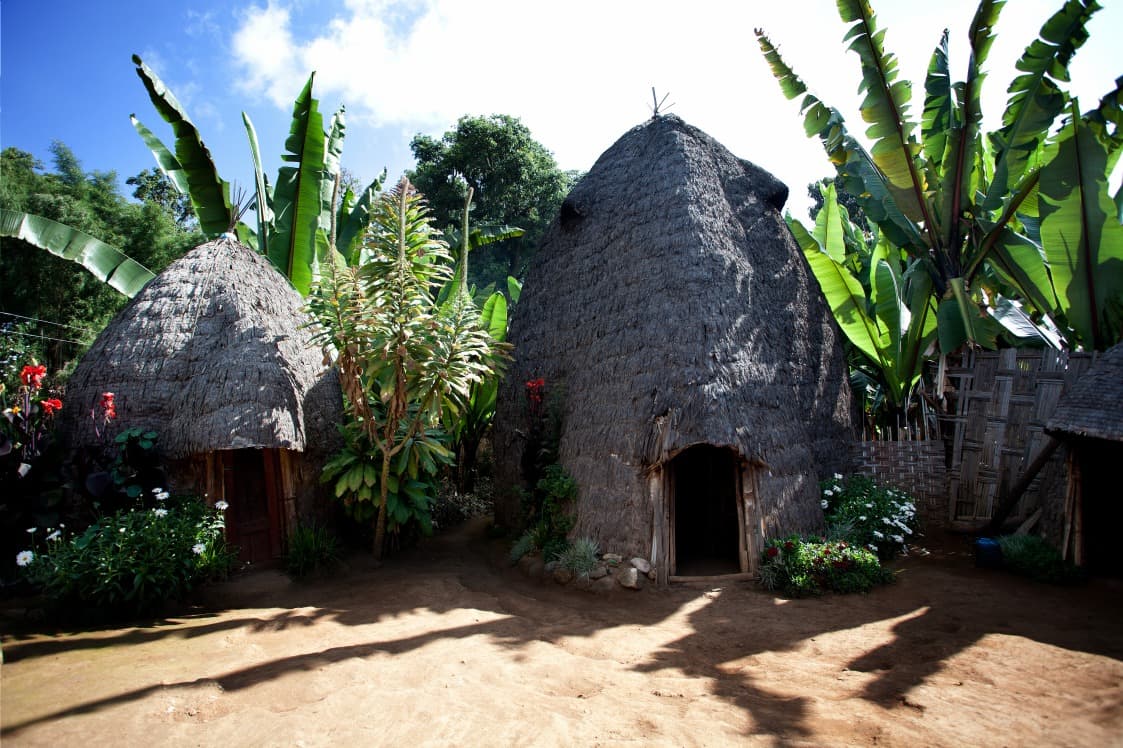
The most spectacular element remains the habitat. Dorze huts can reach twelve meters in height. According to tradition, the bamboos that form the frame are harvested under moonlight. The roof is insulated by an assembly of enset leaves, grasses and bamboo stems. On the south side, an extension shaped like a "nose" serves as a reception room. Inside, the space is organized around a central open fire, with low benches and integrated enclosures for animals.
These huts generally last 60 to 80 years. When termites attack the base, the family cuts away the damaged part and moves the entire hut to a new location. Each move slightly reduces the height — which explains why it is built very tall in the first place.
Enset, a plant for everything
The false banana or enset is at the center of the domestic economy. Several dozen edible varieties are cultivated: the roots provide the material for kotcho, a fermented flatbread; the leaves are used to insulate huts; the fibers become ropes. Around dwellings, gardens also produce barley, wheat, maize and cardamom.
Weaving
Weaving is the artisanal signature of the Dorze. On traditional looms, they produce in cotton the shammas (light stoles worn over the shoulders) and heavy blankets called bulluko. You will be able to observe the artisans at work in village workshops and buy their pieces directly.
Visiting in practice
The majority of visitors depart from Arba Minch for a day excursion to Chencha and surrounding Dorze villages. Allow half a day to a full day depending on the program: visit to a traditional hut, demonstration of kotcho preparation, tasting of areke (local alcohol) and weaving workshop.
- Prioritize an English-speaking guide from Arba Minch, who also handles translation.
- Bring local currency in small denominations for purchases of textiles directly from artisans.
- Ask permission before photographing people; a small tip is customary.
- Dress warmly: at 2,700 m altitude, mornings and evenings are cool even in the tropics.
When to go
The best period covers the dry season, from October to February, when mountain tracks to Chencha remain passable and panoramas over Lake Abaya are clear. The major rainy season, from June to September, complicates access and makes walking between hamlets slippery. Temperatures remain cool throughout the year due to altitude: plan for a fleece and waterproof jacket.
How to get there
Arba Minch is the gateway. The city is connected to Addis Ababa by approximately 8 hours of road (505 km via the classic route) or by a daily domestic flight of approximately one hour. From Arba Minch, allow 1.5 to 2 hours of mountain track to reach Chencha, on the highlands. A 4x4 vehicle with driver is recommended, especially after rain. The Dorze villages are then visited on foot, over short distances between dwellings.
Nearby
A stay in Arba Minch naturally combines with several sites in the south:
- Lake Chamo and its crocodiles, in a boat trip departing from Arba Minch.
- Nechisar National Park, which separates Lakes Abaya and Chamo, to observe Burchell's zebras, Grant's gazelles and water birds.
- The Omo Valley further south, and notably the Mursi villages, accessible from Jinka.
- Further east, you can extend the Éthiopie itinerary towards the Erta Ale volcano and Dallol in the Danakil, or return north for the sources of the Blue Nile.
Frequently asked questions
Frequently asked questions
Include the Dorze villages in your journey
The Dorze villages fit naturally into an itinerary in southern Éthiopie combining Rift lakes, Nechisar park and the Omo valley. To build a tailor-made route, consult our trips to Éthiopie.
Interested in this visit?
We can include it in your personalised itinerary.