The Ethnological Museum of Addis
The Ethnological Museum of Addis
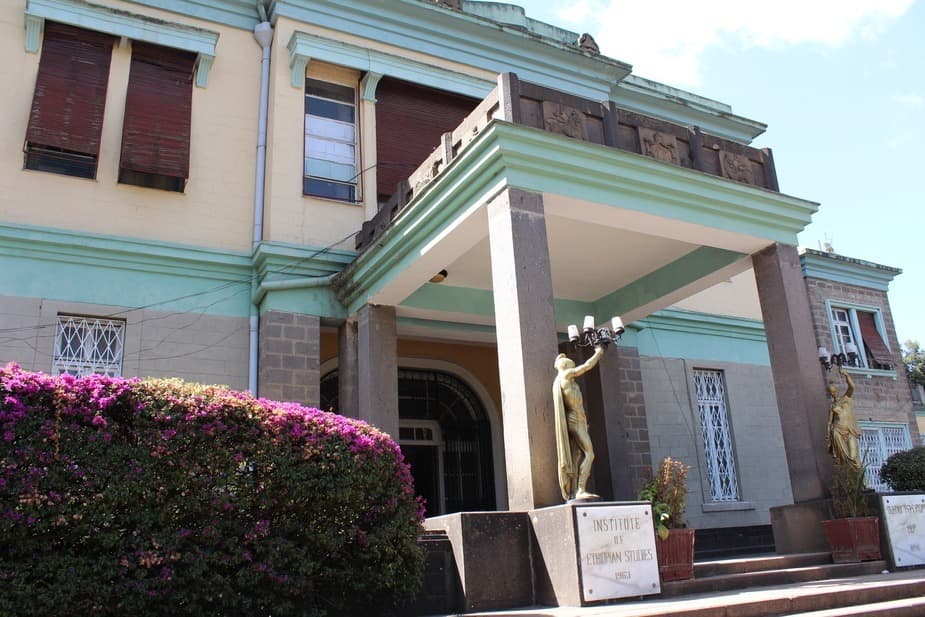
Housed in the former palace of Emperor Haile Selassie, the Ethnological Museum of Addis Ababa traces Ethiopia's history through 13,000 objects and a life cycle narrative journey.
The Ethnological Museum of Addis Ababa occupies the former palace of Emperor Haile Selassie, at the heart of Addis Ababa University's campus. Founded in 1955, it houses more than 13,000 objects tracing Éthiopie's history and the diversity of its peoples, from the Aksumite period to naïve paintings of the twentieth century.
Why visit the Ethnological Museum
Three reasons make this museum compelling for travelers. First, its original museographic approach, organized around the stages of Ethiopian life (birth, childhood, marriage, death), which serves as a cultural introduction to the country. Second, the building itself: the imperial apartments of Haile Selassie and his wife, preserved as they were, offer insight into the daily life of Ethiopia's last monarchy. Finally, the site houses a powerful political symbol, the 13-step staircase, witness to the confrontation between Italian occupation and Ethiopian sovereignty.
A visit of 1.5 to 2 hours is enough to explore both floors. The museum provides excellent context before a circuit through the historic north (Lalibela, Gondar, Aksum) or a journey through the Omo Valley.
History of the museum and palace
Inaugurated in 1955, the museum emerged from a dual mission: to preserve Éthiopie's material and immaterial heritage, and to support the research and teaching activities of Addis Ababa University, to which it remains attached. Collections have been built through successive donations, purchases, and bequests from the institution's benefactors.
The building housing it has its own story. Constructed as a residence for Emperor Haile Selassie, it navigated the political upheavals of twentieth-century Éthiopie: the 1930 coronation, Italian occupation from 1936 to 1941, the imperial restoration, then the fall of the monarchy in 1974. The decision to transform the palace into a museum rather than an administrative seat made it possible to preserve its architecture and interior design.
What to see in the collections
The life cycle journey
At the heart of the museum's narrative, this thematic circuit presents Ethiopian rites and customs through the major stages of human existence: birth and early care, childhood, initiation rites marking passage to adulthood, marriage and matrimonial traditions, funerals. Ritual objects, garments, jewelry, and reconstructions guide visitors from room to room.
Remarkable pieces
- Naïve paintings from the nineteenth and twentieth centuries, particularly representative of Ethiopian religious iconography.
- Objects from the Aksumite period, bearing witness to the earliest centuries of the country's written history.
- Collections of Ethiopian stamps, displayed in the antechamber of the former palace.
- Ethnic musical instruments, presented in a dimly lit room with a labyrinthine layout.
- Manuscripts, processional crosses, traditional garments, and domestic furnishings.
The imperial apartments
Part of the visit passes through the former apartments of Haile Selassie and Empress Menen. Bedrooms and bathrooms have been preserved with their original furniture, offering direct glimpse into the lifestyle of the imperial court.
The 13-step staircase
A few meters from the building stands a spiral staircase of 13 steps, constructed during the Italian occupation (1936–1941) to symbolize fascist domination over Éthiopie. After liberation, rather than destroy it, authorities placed a Lion of Judah on the final step, a sign of Ethiopian victory over the occupier. Today it is one of the most discussed elements of the visit.
The London bus
At the entrance to Addis Ababa University stands a double-decker bus of London type, brought to Addis by Haile Selassie. Converted into a student bar, it serves as a meeting point on campus and complements the museum visit well.
Practical information
- Location: Addis Ababa University campus (former Guenete Leul palace), Sidist Kilo district.
- Visit duration: 1.5 to 2 hours for the entire circuit.
- Admission: moderate entrance fee, possible surcharge for photography.
- Opening hours: Monday to Saturday, closing in early evening. Verify current hours with your agency or hotel before visiting.
- Languages: panels in Amharic and English. An English-speaking guide significantly enhances understanding of the life cycle journey.
How to get there
The museum is located approximately 5 km north of central Addis Ababa and 8 km from Bole international airport. Several options are available:
- Taxi: the simplest option from the airport or city center hotels. Agree on the fare beforehand or ask your hotel to arrange the ride.
- Ride-hailing apps (Ride, Feres): available in Addis Ababa, they eliminate the need for negotiation.
- Tuk-tuk (bajaj): practical for short distances in some districts, but not widely available in the city center.
- On foot from Sidist Kilo if your hotel is nearby: the museum entrance is signposted within the campus.
Combining with other visits
Addis Ababa is typically the starting point for Éthiopie circuits. After the museum, several destinations complement the visit nicely:
- The Menagesha national forest, approximately one hour's drive to the west, for a nature break.
- The monastery of Asheton Mariam, near Lalibela, a spiritual stage of the historic north.
- The Mursi villages in the lower Omo Valley, an ethnographic extension of what the museum presents.
- The Erta Ale volcano and the Danakil depression, for travelers seeking volcanic landscapes.
Frequently asked questions
Frequently asked questions
Allow 1.5 to 2 hours to explore the entire collection and imperial apartments. Add a bit more if you take time to observe the naïve paintings and musical instruments in detail.
Yes. The life cycle journey, well-structured and concrete, appeals to children from age 8–10 onwards, especially when accompanied by a guide able to share the rites, anecdotes, and stories related to the palace.
It's not mandatory, but it's far more rewarding. An English-speaking guide illuminates the historical context, the 13-step staircase episode, and the customs presented in the collections.
Access is partial. The building is historic, has two floors connected by stairs, and some rooms are narrow. Inquire in advance if accessibility is a criterion for you.
Photography is generally allowed for a fee, without flash. Rules may change: confirm at the ticket office at the time of your visit.
Planning your trip to Éthiopie
The Ethnological Museum of Addis Ababa naturally integrates into a broader circuit combining imperial heritage, religious sites of the north, and ethnographic encounters in the south. To build an itinerary that suits your pace and interests, explore our Éthiopie travel suggestions.
Interested in this visit?
We can include it in your personalised itinerary.