Yeha Temple
Yeha Temple
Built around the 7th century BC in Tigray, Yeha Temple is one of Africa's oldest standing structures. Dry stone masonry, Sabaean inscriptions, and an ancient Orthodox church form an extraordinary archaeological site.
Yeha Temple stands in the village of the same name, in the Tigray region, approximately 50 km northeast of Axum. Built around the 7th century BC, it is considered one of the oldest standing structures in sub-Saharan Africa. Its masonry of finely dressed stone blocks, laid without mortar, bears witness to a pre-Islamic South Arabian civilization—the kingdom of D'mt—whose influence extended across both shores of the Red Sea.
Practical Information at a Glance
- Access: Yeha village, reachable from Axum by asphalt road then track; plan for a 4×4 vehicle or local transport.
- Recommended duration: 1 to 2 hours on site, longer if visiting the adjacent museum.
- Dress code: modest dress recommended; the site adjoins an active Orthodox church.
- Guidance: a local guide or caretaker is usually present to provide access to the temple.
What to See
The temple presents itself as a rectangular tower of perfectly fitted limestone blocks, several meters high. The outer walls retain their original courses to a remarkable height. Immediately nearby stands the Orthodox church of Abuna Aftse, constructed in part with materials salvaged from the ancient site. A small museum houses objects uncovered during excavations: Sabaean inscriptions, statuettes, ceramics.
History and Context
Yeha was the political and religious center of the D'mt kingdom, a proto-state entity that preceded the Axumite kingdom. Sabaean inscriptions found on site attest to close ties with ancient Yemen. The temple was likely dedicated to Almaqah, the moon god and major deity of the South Arabian pantheon. Excavations conducted by Ethiopian and European teams since the 20th century have progressively revealed the extent of occupation at the site.
Highlights of Your Visit
The Temple Walls
The dry stone masonry, without binding agent, is strikingly precise. Some blocks exceed one meter in length. Observing the almost invisible joints provides a concrete sense of the D'mt builders' craftsmanship.
The Site Museum
Small but rich in content, it displays the most significant finds from excavations: fragments of Sabaean inscriptions, bronze ex-votos, pottery. The labels place the temple within its regional and chronological context.
The Abuna Aftse Church
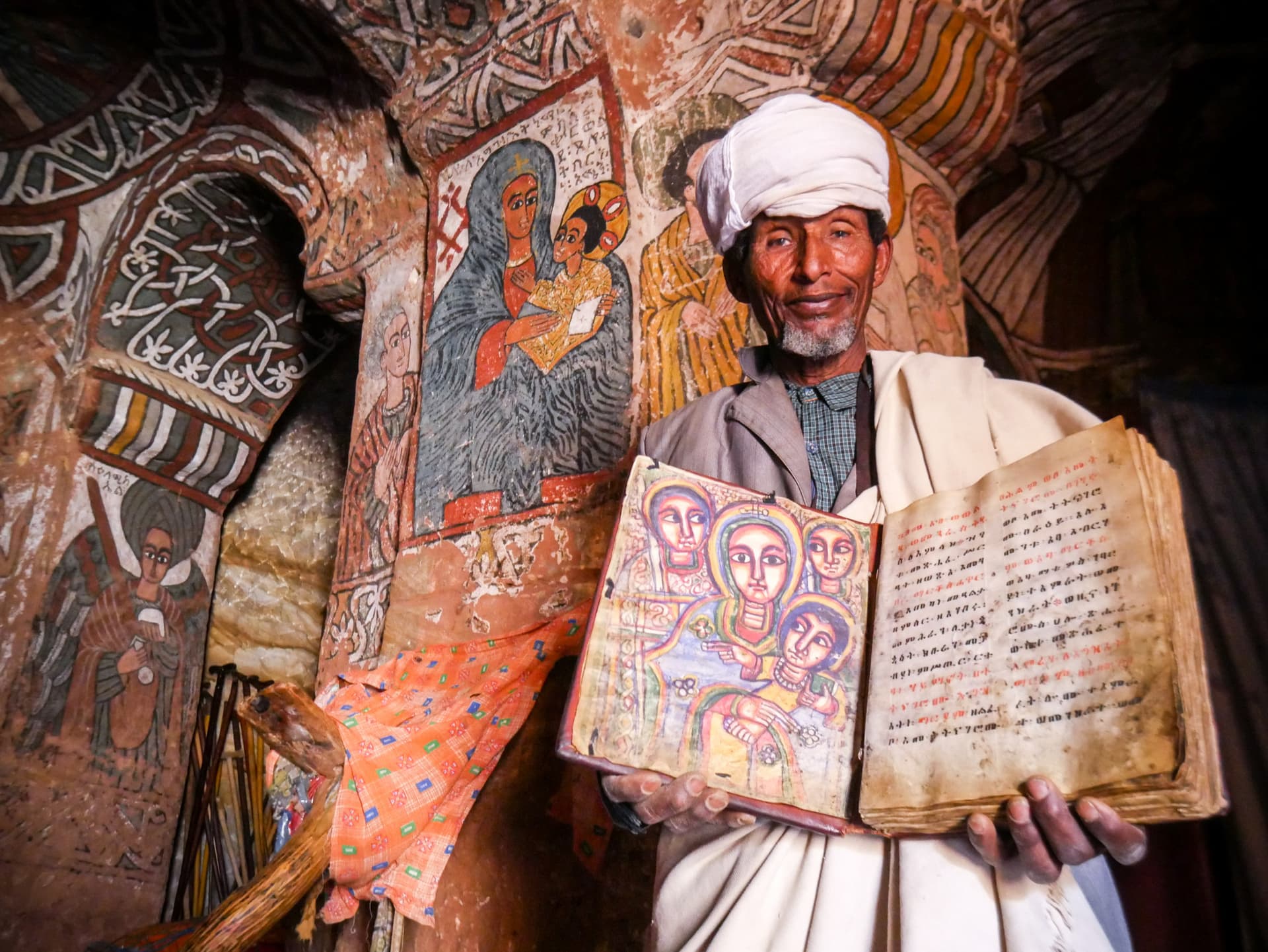
Adjoining the temple, this Tigrayian Orthodox church remains active. It incorporates ancient columns and lintels into its structure, making the boundary between the two eras nearly imperceptible.
Etiquette and Visitor Guidelines
- Abuna Aftse Church is an active place of worship: adopt a respectful demeanor and speak softly.
- Ask permission before photographing the interior of the church or worshippers.
- Do not touch the stone blocks of the temple; certain areas may be marked off by the caretaker.
- Dress covering shoulders and knees is advised when entering the religious precinct.
Photography Tips
Morning light, before 9 am, raking across the limestone blocks, brings out the texture and mortar joints of the masonry. In late afternoon, the western façade takes on a golden hue. Avoid midday: overhead light flattens the relief. Sabaean inscriptions in the museum photograph best with side artificial lighting.
Location and Access
Yeha lies within the administrative zone of Tigray, approximately 50 km northeast of Axum. The main road is asphalt for most of the journey; the final kilometers may require a suitable vehicle depending on season. From Axum, minibuses serve the area, but service is irregular: a privately arranged vehicle through a local agency is more reliable. No accessibility infrastructure is reported on site.
Nearby Attractions
- Axum — monumental stelae, royal tombs, and archaeological museum of Axumite civilization.
- Rock-Hewn Churches of Tigray — dozens of churches carved into rock, some dating to the 4th century.
- Debre Damo — monastery perched on an amba, accessible only by rope, one of Ethiopia's oldest.
Frequently asked questions
The dry season, October to May, offers the best road conditions and light. Avoid the rainy season (June-September): tracks to Yeha may become difficult.
Yes, the distance allows a day trip from Axum. Start early in the morning to enjoy the light and avoid afternoon heat.
A caretaker is usually present and can provide access to the temple. An English-speaking guide from Axum greatly enriches the visit, particularly in deciphering Sabaean inscriptions.
Photography of the temple and museum is generally allowed. Inside Abuna Aftse Church, always ask permission from the priest or caretaker.
Covered shoulders and knees are recommended, particularly when entering the adjacent Orthodox church precinct, an active place of worship.
Interested in this visit?
We can include it in your personalised itinerary.