Gondar
Gondar
An ancient imperial capital perched at 2,200 m, Gondar unveils UNESCO castles, angel frescoes and the Timkat festival — a must-see on Éthiopie's historic route.
Gondar is an ancient imperial city perched at over 2,200 meters above sea level on the Simien massif overlooking Lake Tana, 400 km from Addis Ababa. Its turbulent past has left it with significant architectural remnants and remarkable fortifications that earned it a place on the UNESCO World Heritage list in 1979.
The City's History
Capital of Éthiopie from 1632 to 1855, Gondar endured numerous Muslim and Turkish invasions, which partly explain the many fortification structures surrounding the imperial city built by King Fasil.
Fasilades ascended to the throne during the most tumultuous period in the city's history. Zarsa Dengel, as well as his son Susenyos, attempted to pledge allegiance to the Church of Rome. This destabilized the imperial power, already threatened by popular uprisings. Fasilades then expelled the Jesuits and restored traditional religion. This action allowed his kingdom to flourish culturally. He championed artistic practices, fostering music, song, dance, and poetry to the delight of scholars. He also initiated the construction of imperial residences to showcase the talents of local, Indian, and Portuguese artists.
Unfortunately, this prosperity did not endure. Plagued by plots and conspiracies, the city entered a period of decline at the end of the 18th century. With Emperor Théodoros's rise to power in 1855, Gondar lost its capital status, replaced by Magdala.
Dervishes from Sudan pillaged the city in 1880, and English bombardments during the liberation campaign in 1941 caused further devastation. Despite the ravages, the city has preserved the buildings and castles of the imperial city, bearing witness to this eventful history.
In 1979, Gondar and its fortifications were inscribed on the UNESCO World Heritage list.
Gondar Today
Gondar is an essential stop on the route through Éthiopie's history. Birthplace of emperors and princesses who shaped Éthiopie between the 12th and 20th centuries, Gondar has successfully preserved its ancient architectural treasures and stands today as a destination in its own right.
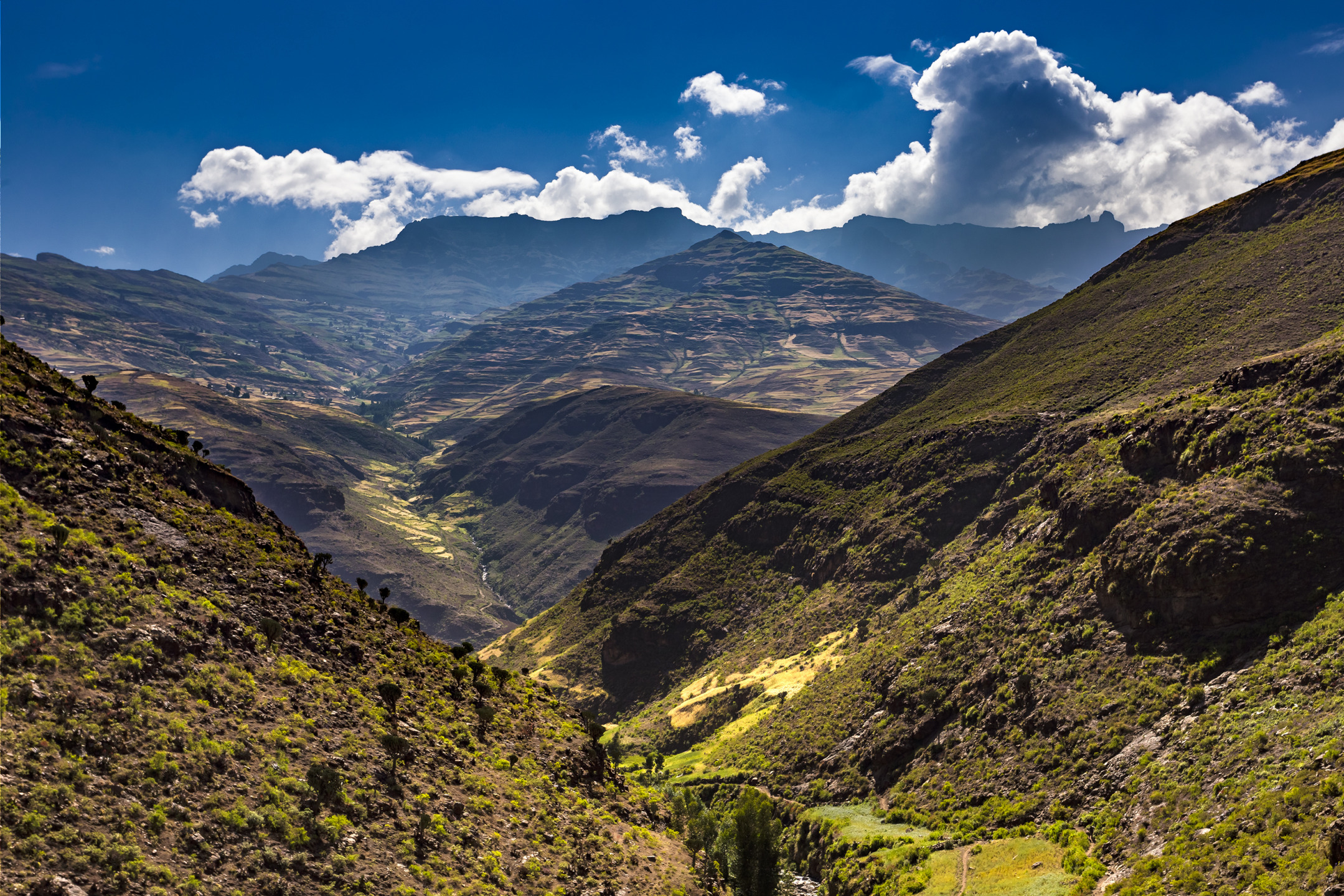
Nestled in the foothills of the Simien mountains, Gondar comprises four quarters: Addis Alme, Kayla Meda, Abun Bet, and Qagn Bet. Overlooking the magnificent Lake Tana, it comes as no surprise that numerous waterways run through the city before descending into the lake below.
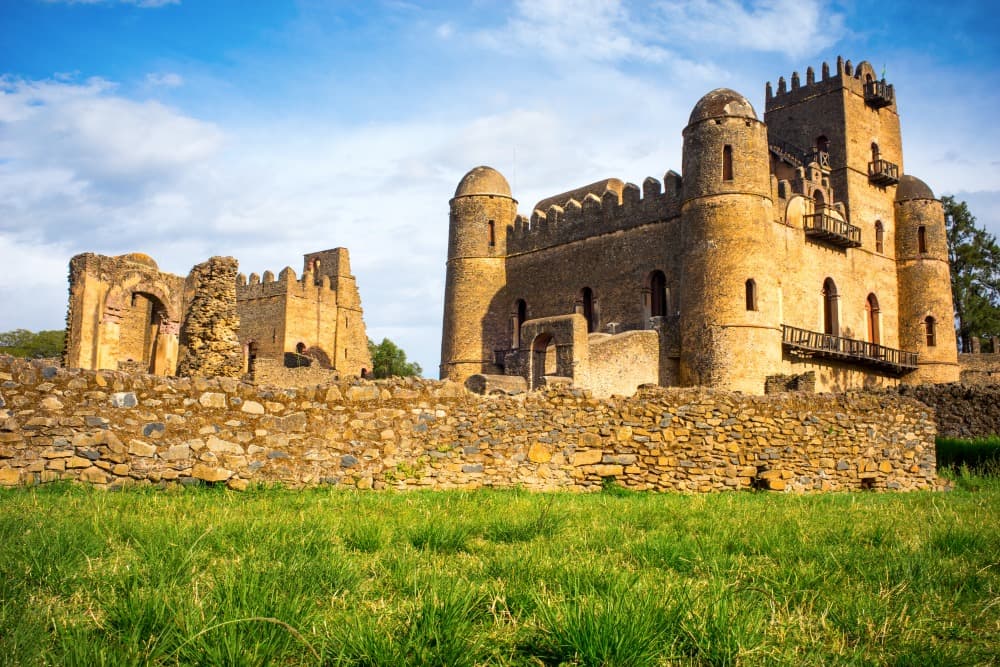
The imperial city is undoubtedly the highlight to discover during a stay in Gondar. Covering an area of 7.7 hectares, the Royal Enclosure houses five castles connected by several stone tunnels. Fasilades Castle is the oldest of these structures and reflects Axumite, Portuguese, and Indian influences. Its balcony offers breathtaking views of Lake Tana. Built during the 17th century, the castle has undergone several restorations to maintain its majestic and elegant appearance. Nearby stands the castle of his grandson Lyasu the Great, far more impressive than that of his grandfather, adorned with ivory, gold, and precious stones.
The picturesque ruins of Fasil Ghebi are also impressive points of interest. They are protected by a 900-meter rampart with 12 entrance gates. Among the ruins, you will find the Pavilion of Rejoicing, the palace of the Empress Mentouan, the chancellery of Yohannès, as well as the Elfign Giyorgis.
More than twenty royal buildings and some thirty churches, including the Kiddush Yohannes, the Qusquam, the Gorgora monastery, and the Guzara palace, also merit a visit.
Beyond its medieval structures, Gondar is renowned as the most important ecclesiastical training center of the Éthiopie Orthodox Church and currently houses nearly 40 Orthodox churches.
The city also presents itself today with more modern buildings in the town center, lending it a pleasant air of renewal.
The city is served by Atsé Tewodros Airport, located approximately 18 km south of the city.
The best way to explore the city and visit all the imperial remains is to use minibuses and auto-rickshaws that can accommodate up to four passengers.
Climate
Gondar enjoys a humid subtropical climate, conditioned by the limits of subtropical mountains. Its average annual temperature hovers around 21.2 degrees with average annual precipitation of 328 mm.
Attractions in Gondar
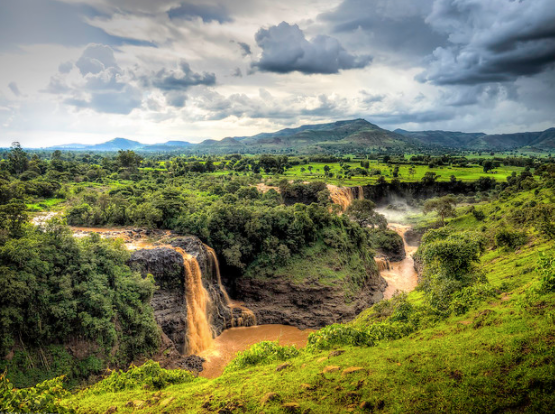
Les chutes du Nil bleu
À 30 km de Bahir Dar, les chutes Tis Abay marquent la naissance du Nil bleu, avec un pont en pierre de 1626 toujours debout à proximité.
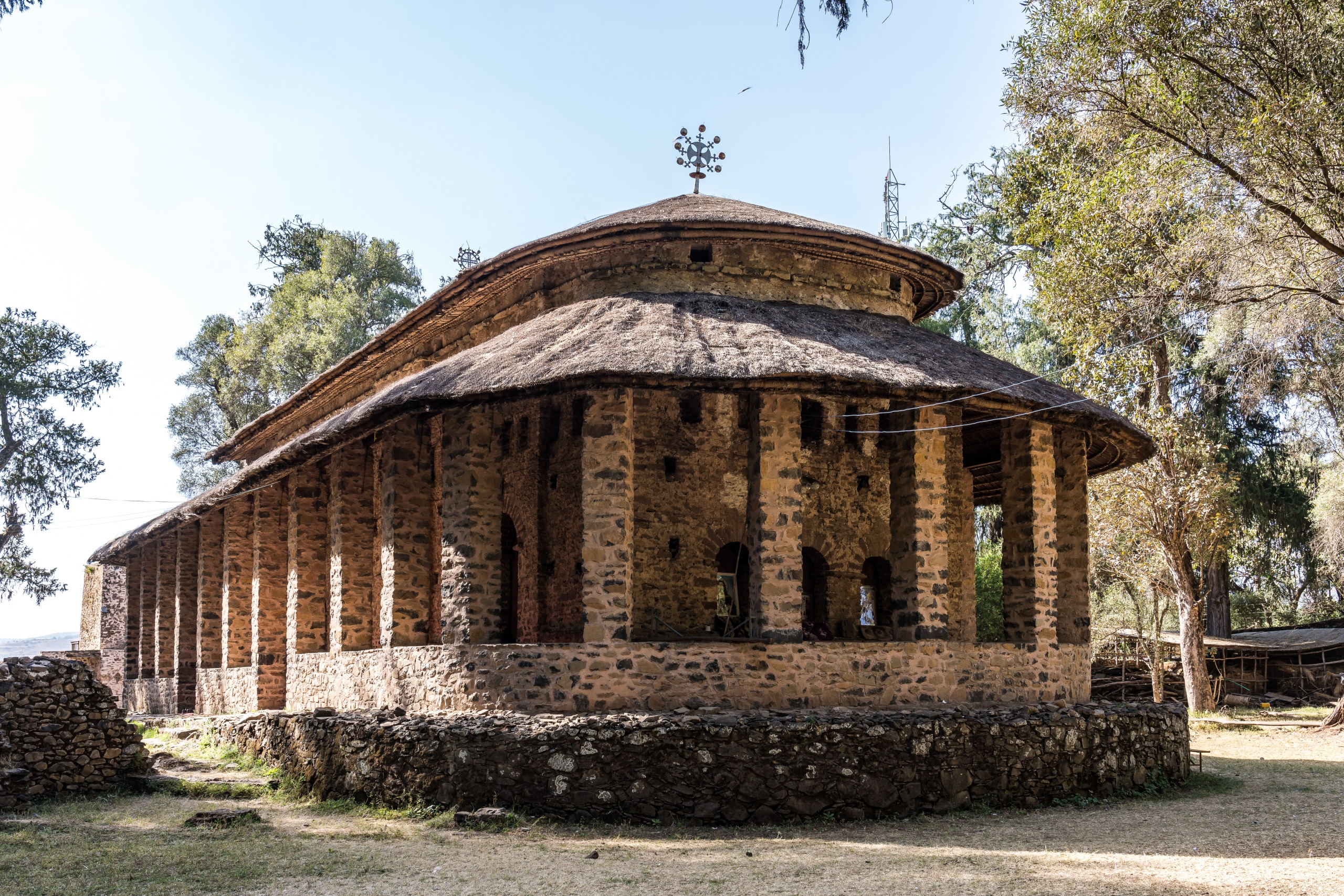
Eglise Debre Birhan Selassie
À Gondar, l'église Debré Berhan Sélassié conserve un plafond peint de 135 chérubins et un mur d'enceinte aux 12 tours symboliques. Guide de visite.
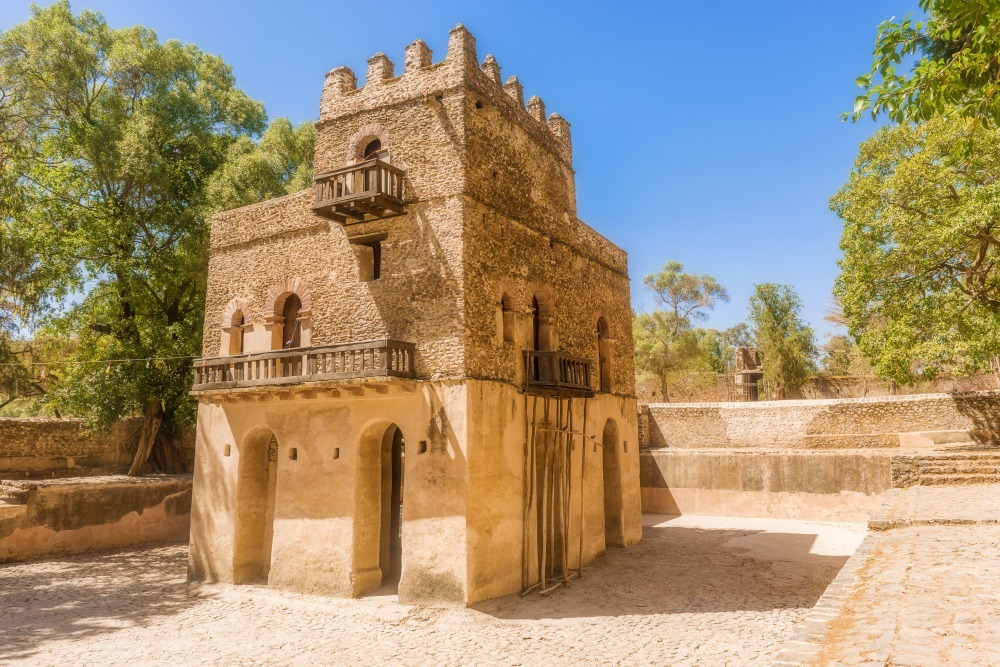
Fasilidas castle
Forteresse impériale du XVIIe siècle au cœur de Gondar, le château de Fasilidas ouvre les portes du Fasil Ghebbi, ensemble royal inscrit à l'UNESCO depuis 1979.
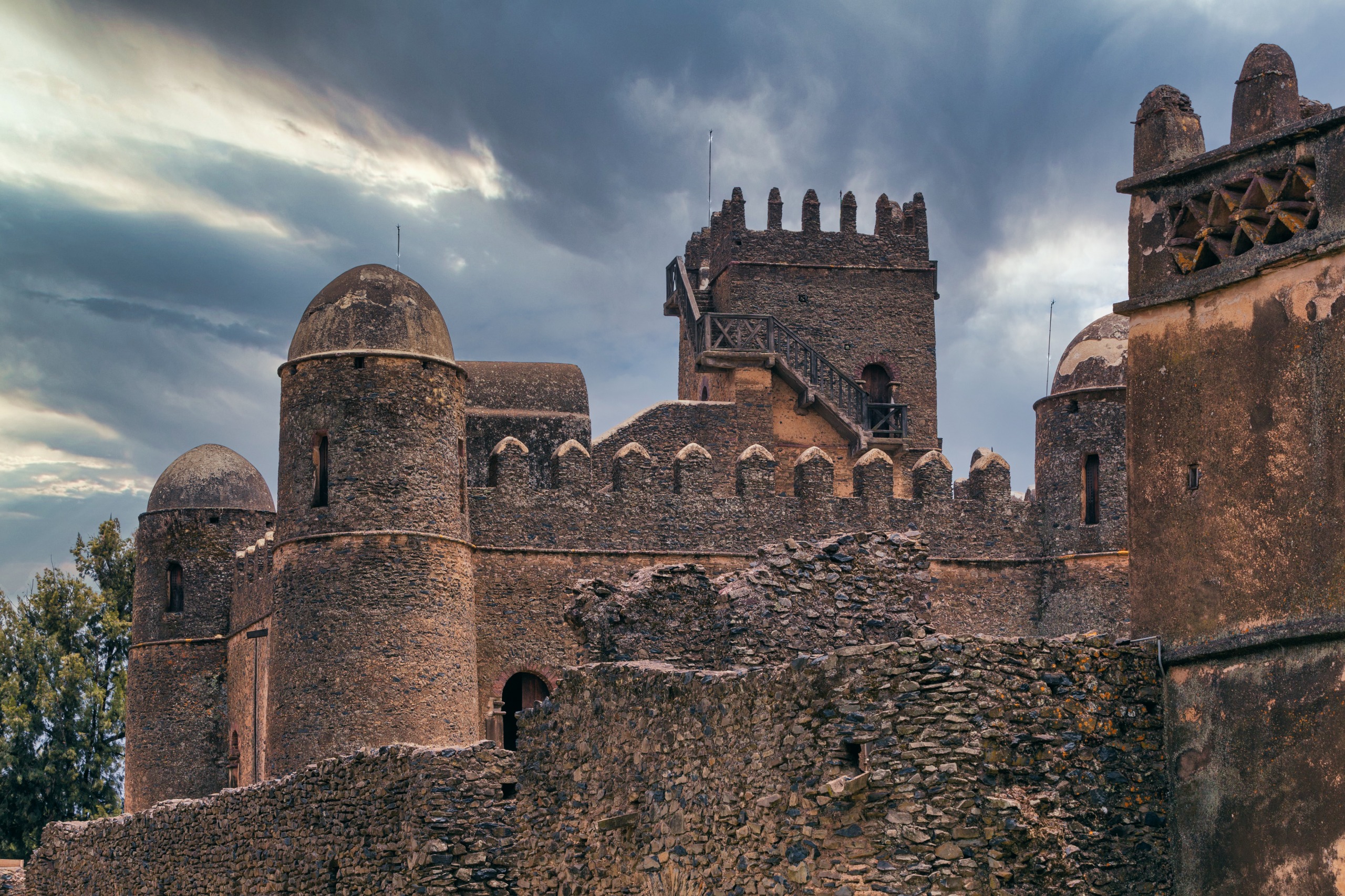
Fasil Ghebbi (Enceinte royale de Gondar)
Fasil Ghebbi, l'enceinte royale de Gondar, regroupe six palais impériaux éthiopiens du XVIIe siècle classés UNESCO. Un site majeur qui mêle influences éthiopiennes, portugaises et arabes.
Want to discover this destination?
Our local advisors design your tailor-made trip.