Fasil Ghebbi (Royal Enclosure of Gondar)
Fasil Ghebbi (Royal Enclosure of Gondar)
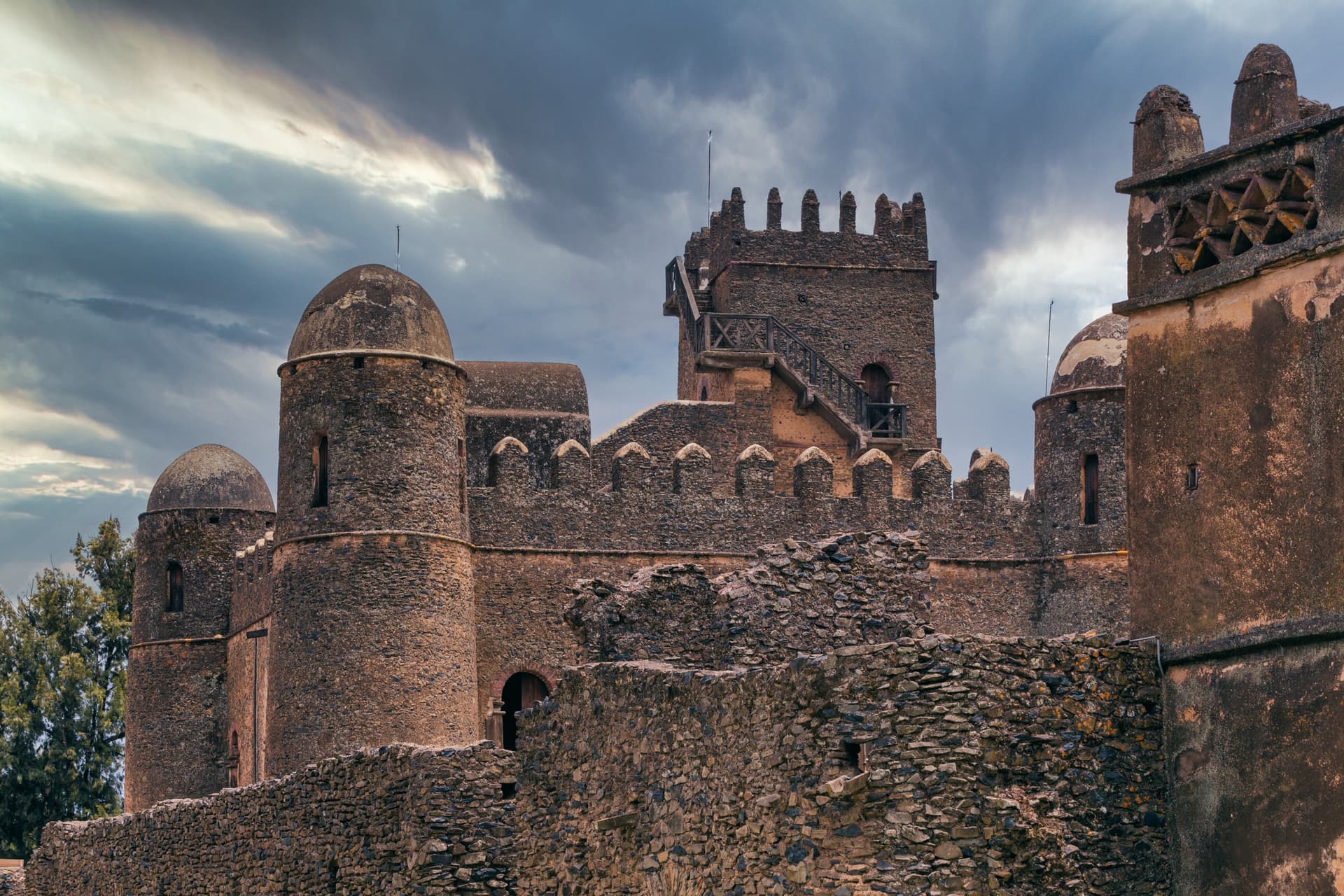
Fasil Ghebbi, the royal enclosure of Gondar, encompasses six imperial Ethiopian palaces from the 17th century, UNESCO-listed. A major site blending Ethiopian, Portuguese and Arab influences in the heart of the city.
At the heart of Gondar, the royal enclosure of Fasil Ghebbi contains a complex of palaces, castles and royal buildings erected between the 17th and 18th centuries. Listed as a UNESCO World Heritage site since 1979, this fortified complex testifies to a period when Gondar served as the imperial capital of Éthiopie. The architecture blends Ethiopian, Portuguese, Indian and Arab influences in a way unique to the African continent.
Practical information at a glance
- Admission: paid (combined ticket site + museum available on-site)
- Recommended duration: 1 h 30 to 2 h to explore the entire complex
- Dress code: no strict dress restrictions, but neat attire recommended
- Access: located in downtown Gondar, accessible on foot from most central hotels
- Guides: accredited local guides available at the site entrance
What to see
The enclosure spans approximately 70,000 m² and comprises six main palaces as well as royal baths, a library, stables and places of worship. The stone perimeter walls reach several meters in height in places. Each sovereign left their own architectural imprint, making the site readable as a built chronology.
History and context
The enclosure was founded by Emperor Fasilides around 1636, when he established Gondar as the permanent capital of the Ethiopian Empire, ending the tradition of the itinerant court. His successors — Iyasu I, Dawit III, Bakaffa — enlarged the complex. Italian bombardments in 1941 damaged several structures; restoration work has been carried out since, notably with UNESCO support.
Highlights of the visit
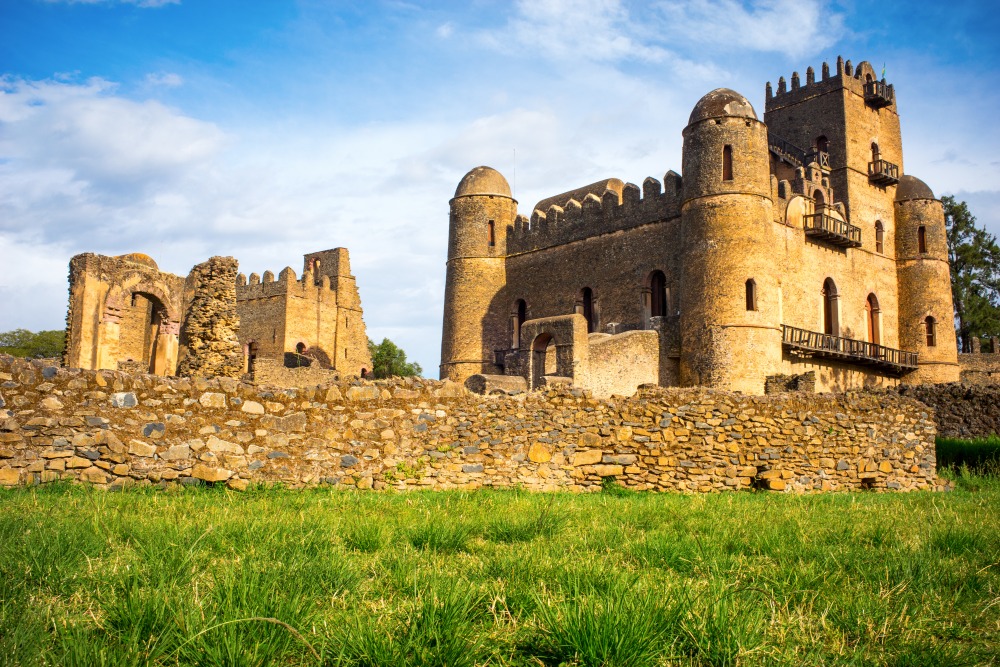
Palace of Fasilides
The founding building of the complex, three stories tall, dominates the enclosure. Its crenellated corner towers and rounded arch windows illustrate the stylistic synthesis characteristic of Gondar. This is where a visit naturally begins.
Palace of Iyasu I
Considered the most elaborate on the site, this palace was renowned for its interior decorations in ivory and gold, now disappeared. Its structure remains the most imposing after that of Fasilides.
Audience Hall of Dawit
A more austere building, it served for official ceremonies. Its rectangular plan and ground-floor arcades reflect marked Arab influence.
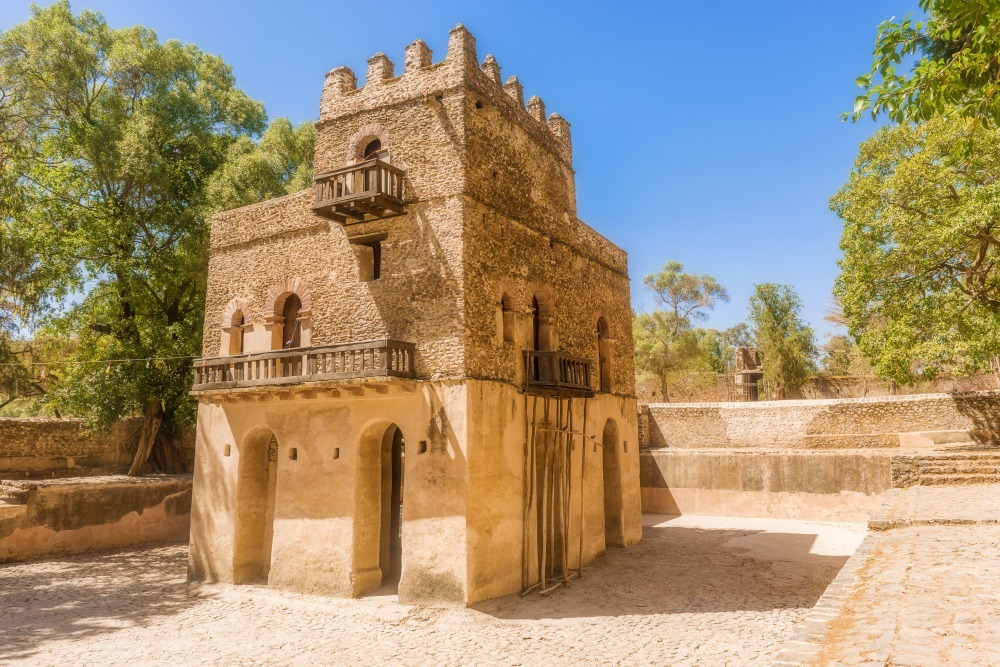
Baths of Fasilides
Located a few minutes' walk from the main enclosure, these royal baths are flooded each year during the Timkat celebration (Ethiopian Orthodox Epiphany). The central basin surrounded by vegetation offers a striking setting, particularly in January.
Photography tips
Morning light (before 9 am) is ideal for photographing the Palace of Fasilides without backlighting. In late afternoon, the ochre stones take on a warm hue. Avoid midday: harsh shadows flatten architectural detail. No photography restrictions have been noted within the site.
Location and access
Fasil Ghebbi is located in the heart of Gondar, a few hundred meters from the main square. The city is served by Gondar Airport (Atse Tewodros Airport), with regular flights from Addis Ababa. Minibuses and tuk-tuks connect the airport to the center. The site is accessible on foot from most downtown accommodations. Accessibility for visitors with reduced mobility remains limited due to cobblestones and internal elevation changes.
Nearby attractions
- Debre Berhan Selassie Church — famous for its murals depicting angel faces, less than 2 km from the enclosure.
- Baths of Fasilides — royal bath complex flooded during Timkat, a few minutes' walk away.
- Gondar Market — bustling market where residents shop, a reflection of the city's daily life.
Frequently asked questions
The dry season (October to May) is most favorable. In January, the Timkat festival brings the Baths of Fasilides to life and offers an exceptional cultural spectacle. Avoid the rainy season (June-September) if possible, as internal pathways can become slippery.
Allow 1 h 30 to 2 h to explore the main enclosure at your own pace. If you combine it with the Baths of Fasilides and Debre Berhan Selassie Church, plan for a full half-day.
The site can be visited without a guide, but explanatory signage remains limited. An accredited guide available at the entrance considerably enhances understanding of each palace and its history.
Yes, photography is permitted throughout the complex. No camera-restricted areas have been noted. Prioritize morning hours for softer light.
Accessibility for visitors with reduced mobility is limited: the walkways are cobbled and palace levels have no elevators. The ground floor of certain buildings remains accessible, but much of the site involves stairs and uneven surfaces.
Start with the royal enclosure in the morning, then walk to the Baths of Fasilides. Spend the afternoon at Debre Berhan Selassie Church. All three sites can be comfortably visited in one day.
Interested in this visit?
We can include it in your personalised itinerary.