History of the Ethiopian Flag
The Ethiopian empire, also known as Abyssinia, founded around the 11th century, has seen many flags throughout its history, but let us focus on the recent history of this nation.
The Ethiopian empire, also known as Abyssinia, founded around the 11th century, has seen many flags throughout its history, but let us focus on the recent history of this nation. The various peoples of the territory, aided by certain Catholic powers, successfully repelled Arab and Turkish armies during the 18th and 19th centuries and forged solid ties with the West to avoid colonization. Alongside Liberia, Ethiopia was one of only two African nations in this position. Nevertheless, the struggle was fierce, particularly after refusing Italy's request for a protectorate. Italian forces were driven out of Ethiopia following the celebrated Battle of Adwa in 1896, and the negus negest, or King of Kings, Menelik II took the opportunity, a year later, to introduce a new flag bearing pan-African colors.
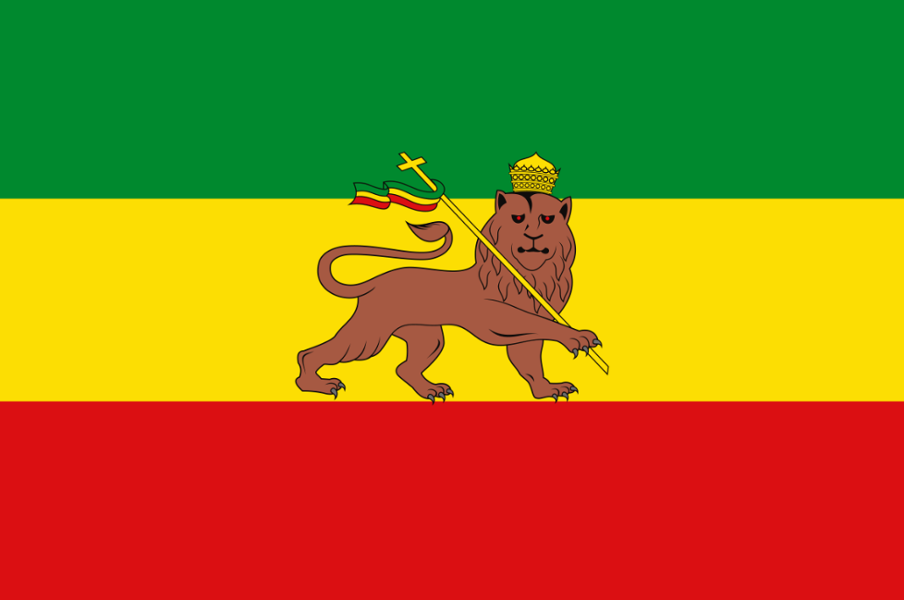
Since 1897, the flag has evolved considerably through the various regimes that have succeeded one another in Ethiopia, but the colors have remained unchanged. The three horizontal bands, each representing one-third of the flag, are adorned with the colors green, yellow, and red. These respectively symbolize the fertility of the land and hope, justice and peace, and the bravery of the Ethiopian people. These three colors, later adopted by many African nations that gained independence, are above all symbols of pan-Africanism, a movement for Africa's emancipation, independence, and solidarity among African peoples worldwide.
A Secularized Emblem
Despite maintaining the same color background since 1897, the Ethiopian flag has nonetheless seen its emblem transform on numerous occasions, notably around a national symbol that no longer appears on it today: the Lion of Abyssinia. The animal, endemic to the country, which takes its name from the Ethiopian empire, is smaller than certain other African species and displays, in males, a black mane.
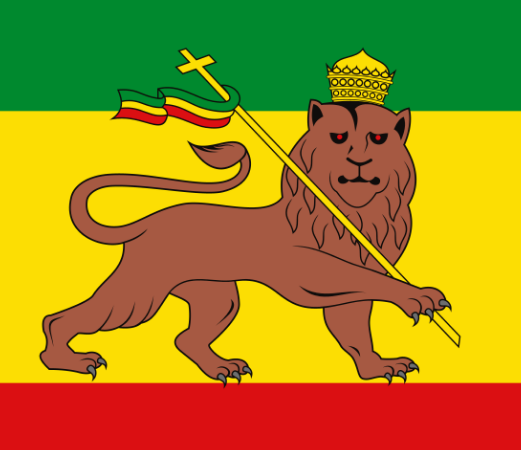
Throughout its existence, the Ethiopian empire was represented by a purely Christian monarchy and nobility. This was precisely what earned it the favor of crusaders and Europeans in general when its soldiers repelled Turkish and Arab armies. The country's coat of arms was formed by its symbol, the Lion of Abyssinia. For centuries, this lion was presented on the nation's coats of arms as the Lion of Judah, a symbol of the tribe of Judah and thus of King Solomon and the Queen of Sheba, reputed to be the ancestors of each Ethiopian King of Kings. Menelik revived it in 1897 at the center of the flag, naturally having it wear a crown, a symbol of royalty, and hold a Christian cross in its right front paw.
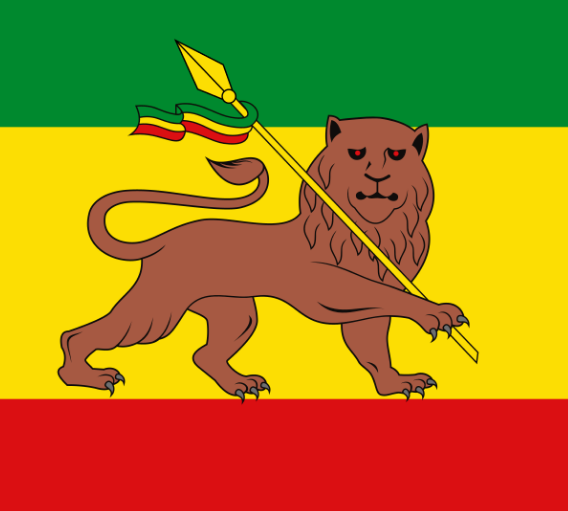
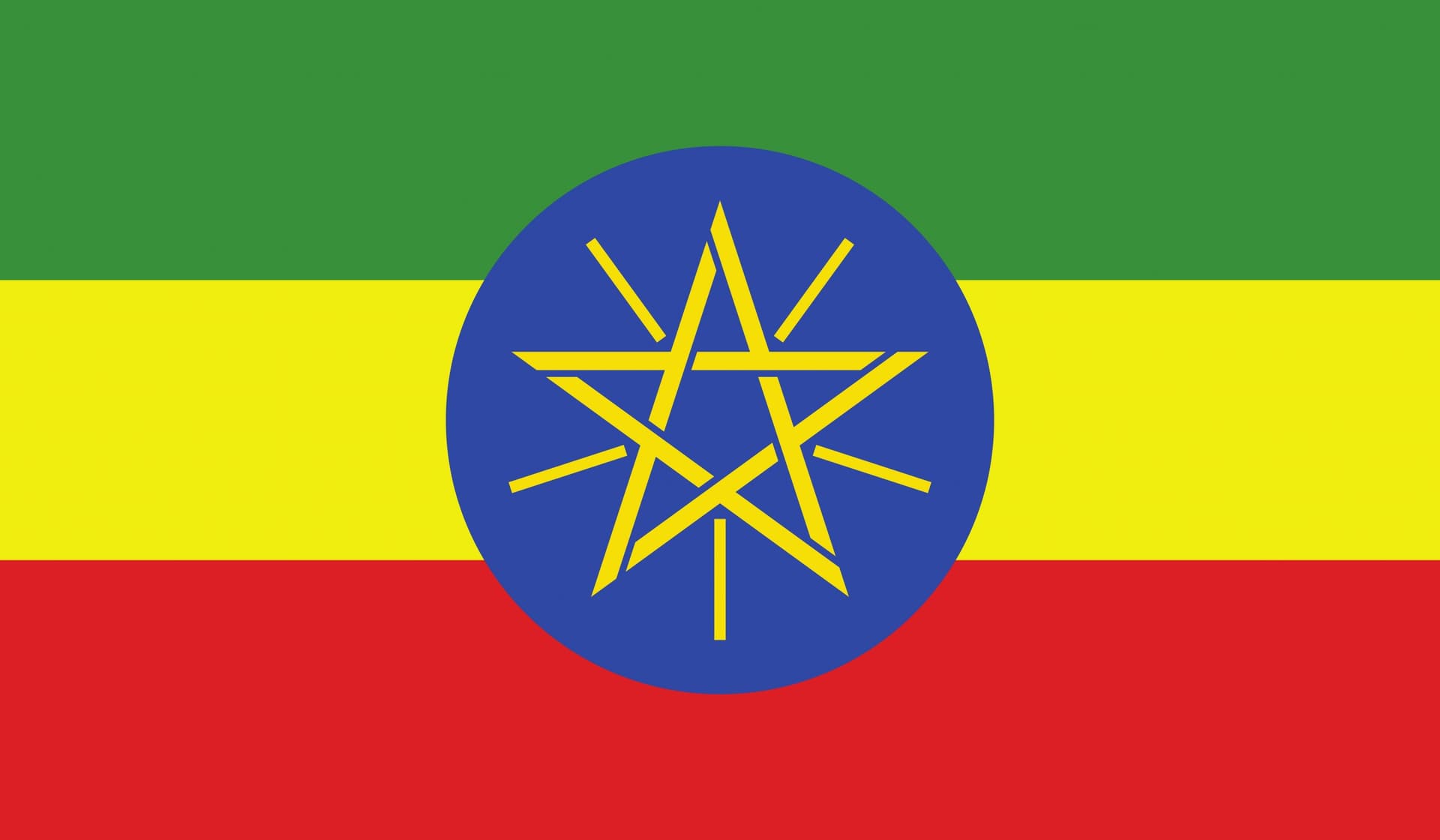
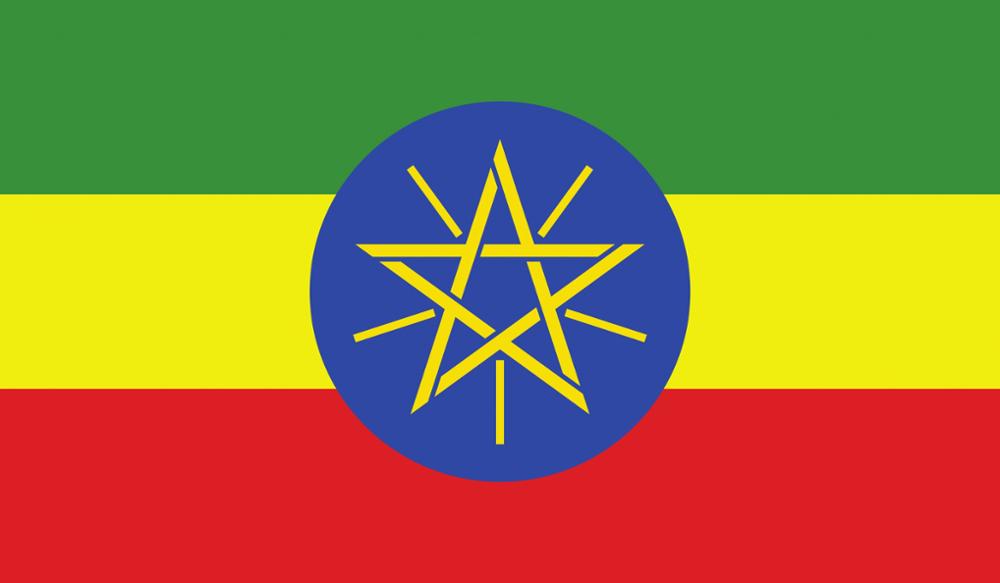
Following the fall of the empire in 1974, the Provisional Military Government of Socialist Ethiopia (DERG) retained the Lion of Abyssinia at the center of the flag for one year, but removed its crown and cross, replacing the latter with a spear. This period marked the beginning of Mengistu's genocidal regime, which ended in 1991. The new flag then kept its original three colors and saw added at its center Ethiopia's new emblem, a blue disc symbolizing peace with within it a pentagram accompanied by five branches representing the unity and equality of the peoples of the country.
Frequently asked questions
The three colors of the Ethiopian flag each carry a specific meaning: green symbolizes the fertility of the land and hope, yellow represents justice and peace, and red embodies the bravery of the Ethiopian people. These colors are also symbols of pan-Africanism.
These three pan-African colors were adopted on the Ethiopian flag in 1897, at the initiative of the King of Kings Menelik II, one year after the victory at the Battle of Adwa against Italian forces.
The Lion of Abyssinia is the former symbol of the Ethiopian empire. Present on the coat of arms for centuries, it was represented as the Lion of Judah, a symbol of Ethiopian Christian royalty. It was removed from the flag following the fall of the empire in 1974.
The current Ethiopian flag bears at its center a blue disc symbolizing peace. Within this disc is a pentagram accompanied by five radiating branches, representing the unity and equality of the different peoples of Ethiopia.
Ethiopia is one of the few African nations to have resisted European colonization. Its flag with the colors green, yellow, and red became a symbol of pan-Africanism and emancipation. Many African nations adopted these colors upon independence as a tribute to this resistance.