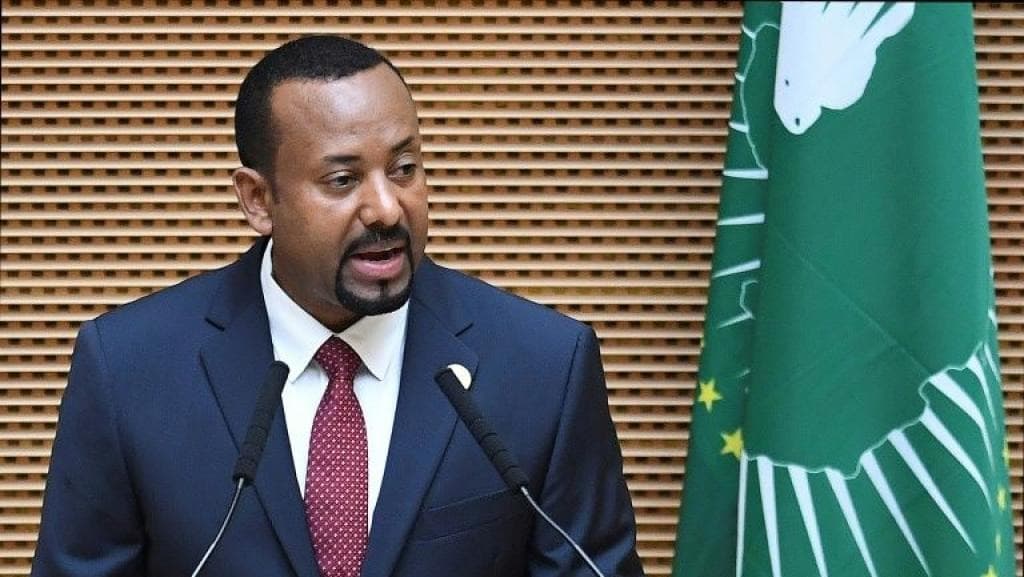
Ethiopian Prime Minister Abiy Ahmed, Nobel Peace Prize 2019
Following Congolese gynecologist Denis Mukwege, known as "the healer of women," and Yazidi activist Nadia Murad, a former sex slave of ISIS, it is now the turn of Abiy Ahmed…
Following Congolese gynecologist Denis Mukwege, known as "the healer of women," and Yazidi activist Nadia Murad, a former sex slave of ISIS, Abiy Ahmed, Prime Minister of Éthiopie, has received the Nobel Peace Prize this year. Here's a closer look at this decision made by the Norwegian Nobel Committee on October 11th in Oslo.
Restoring peace between Éthiopie and Eritrea
After years of anti-government protests, Abiy Ahmed came to power in April 2018. From that moment on, this craftsman from a humble background has worked tirelessly to shake the foundations of a repressive and authoritarian regime. One of his top priorities? Ending the border conflict between Éthiopie and Eritrea.
A historic meeting even brought the two leaders together on July 9, 2018. These exchanges led to several key actions: the reopening of embassies and border crossings, more frequent meetings and exchanges between the two countries, and the restoration of air links… This meeting with Eritrean President Isaias Afwerki could help end more than 20 years of conflict…
It was therefore to recognize "his efforts to achieve peace and promote international cooperation, in particular his decisive initiative to resolve the border conflict with Eritrea ," that the Ethiopian Prime Minister was awarded the Nobel Peace Prize, declared Berit Reiss-Andersen, Chair of the Norwegian Nobel Committee. It is also a way to "breathe new optimism into the Horn of Africa" as emphasized by UN Secretary-General Antonio Guterres.
A reconciliation still fragile…
"The Norwegian Nobel Committee hopes that the Nobel Peace Prize will strengthen Prime Minister Abiy in his important work for peace and reconciliation ," Ms. Reiss-Andersen declared. Nevertheless, reconciliation between the two neighboring countries is still far from concrete.
Following the announcement of the Nobel Peace Prize, Éthiopie expressed its pride. This award is certainly welcome in a context where legislative elections are scheduled for 2020. But on the Eritrean side, it's a very different story. The day after the Nobel Peace Prize announcement, no Eritrean media or state representatives mentioned it. Only Eritrea's chargé d'affaires acknowledged the award on his Twitter account.
Since then, the border between the countries has been closed again, as have access to Eritrean ports. This doesn't facilitate the signing of commercial agreements for Éthiopie, which, despite being Africa's second most populous country, remains landlocked and isolated. This is why Amnesty International is calling on the laureate to pursue new human rights reforms. One thing is certain: the path to lasting peace remains long.
Frequently asked questions
Abiy Ahmed, Prime Minister of Éthiopie, received the 2019 Nobel Peace Prize for his decisive efforts to bring about reconciliation between Éthiopie and Eritrea, after more than 20 years of border conflict. The Norwegian Nobel Committee also recognized his commitment to international cooperation in the Horn of Africa region.
On July 9, 2018, Abiy Ahmed and Eritrean President Isaias Afwerki held a historic meeting that resulted in the reopening of embassies and border crossings, the restoration of air links, and regular diplomatic exchanges, ending more than 20 years of war between the two countries.
No, reconciliation remains fragile. Since the announcement of the 2019 Nobel Peace Prize, the border between the two countries has been closed again, as has access to Eritrean ports. Amnesty International is calling on Abiy Ahmed to continue human rights reforms to consolidate this peace.
In 2018, the Nobel Peace Prize was shared between Denis Mukwege, Congolese gynecologist known as 'the healer of women,' and Nadia Murad, Yazidi activist and former sex slave of ISIS, both recognized for their efforts against sexual violence used as a weapon of war.
The 2018 peace agreement has renewed interest in the region, but the situation remains evolving. It is advisable to consult the latest travel advice from your country's foreign affairs ministry before planning a trip to Éthiopie or Eritrea.