The Banna
The Banna
An agro-pastoral people of the lower Omo Valley, the Banna are known for the Ukuli rite, their ceremonial Tewa stilts walkers and craftsmanship sold at Jinka and Key Afer markets.
The Banna, also called Banya, Bena or Benna, form an ethnic group in southwestern Éthiopie, settled in the lower Omo Valley between the Omo and Weyto rivers. Their territory extends around the towns of Gazer, Kako and Dimeka, accessible from Jinka. Less publicized than their Hamar or Mursi neighbors, the Banna distinguish themselves through their Ukuli rite (bull-jumping), their ceremonial stilts walkers and craftsmanship sold at regional markets.
Why visit the Banna
Encounters with the Banna appeal to travelers interested in ethnography and East African agro-pastoral societies. Three elements give this community its distinctive character:
- The Ukuli rite, a still-practiced male initiation ceremony that punctuates the group's social calendar.
- The Tewa stilts walkers (or Beshitas), a rare tradition in East Africa, blending balance, dance and ritual function.
- Living craftsmanship (pottery, basketry, beads, metalwork) found at Jinka and Key Afer markets.
A visit fits naturally into a broader itinerary across the Omo Valley, one of the continent's most ethnically diverse regions.
Origins and history
The Banna belong to the Sidamo cultural group. Linguistic and ethnographic research traces their origins to those of the Hamar, from whom they are believed to have separated following internal conflicts and migrations in search of more fertile pastures for livestock. The two groups still share a closely related language today, comparable social structures and several common rituals.
Their settlement in the lower Omo Valley became organized around the climatic constraints of this semi-arid zone: alternating dry and wet seasons, constant search for water sources, livestock mobility. This history of displacement explains the current dispersal of settlements between Gazer, Kako and Dimeka.
What you can see and experience
Settlements and agro-pastoral life
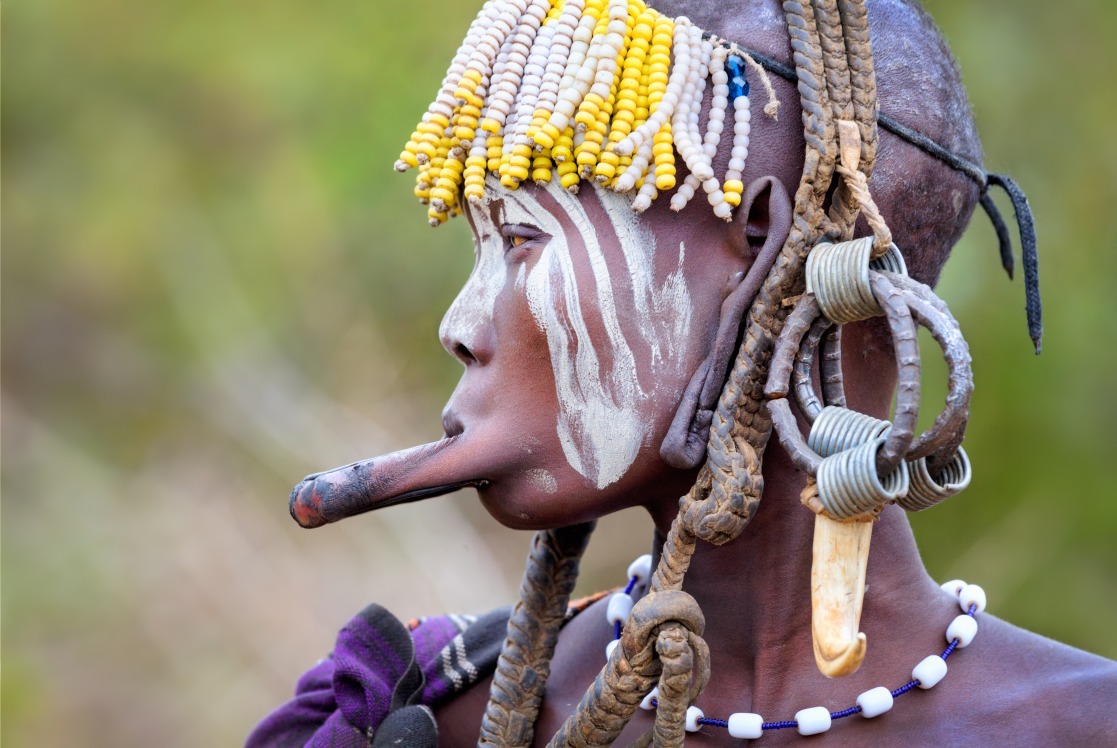
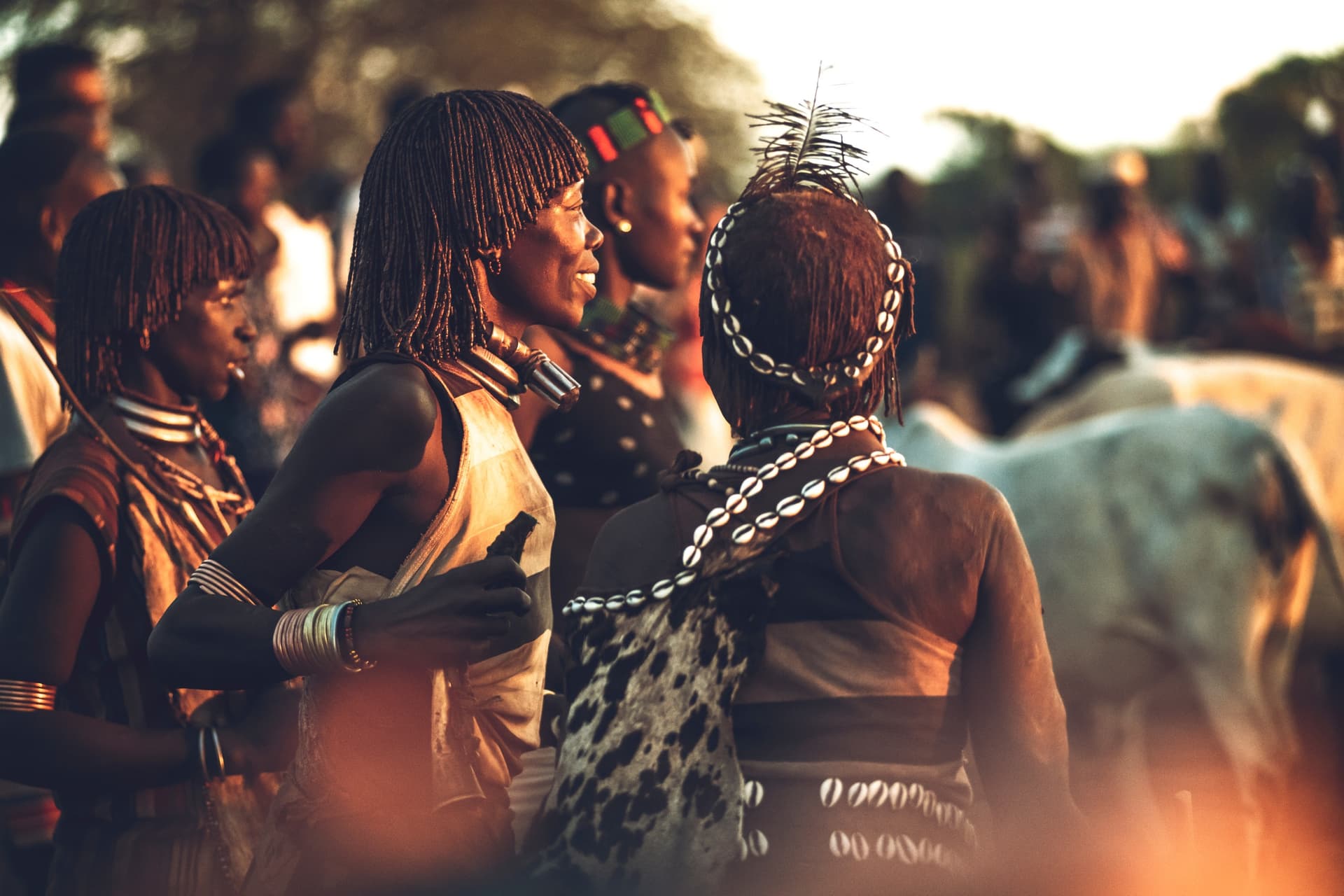
The Banna live in settlements grouping several related families. Tents are arranged in a circle with herds gathered in the center at night for safety. The economy is built on cultivation of sorghum, maize, sesame, beans and various cereals, supplemented by raising cattle, goats and sheep. During the dry season, wild honey collection becomes an important activity alongside animal herding.
Task distribution remains highly gendered: women practice weaving and beadwork, men craft weapons, tools and metal jewelry. Pottery, woven baskets and wooden sculptures are produced for domestic use and sale at regional markets.
The Ukuli rite (bull-jumping)
Ukuli marks the passage to adulthood for young men. The candidate must leap, naked, across the backs of a line of aligned bulls — according to sources, the ordeal is repeated several times (often four passages) without falling. Success opens access to marriage and full participation in community life. The ceremony brings together the extended family, mixing songs, dances and body paintings with lime, clay and natural pigments. It takes place mainly in the dry season and is not staged for visitors: witnessing an Ukuli depends on the chance timing of the local calendar.
The Tewa stilts walkers
Stilt-walking is one of the most visually recognizable markers of the Banna. The stilts, made of wooden poles held together by leather straps and ropes, can reach nearly two meters. Originally practical — to traverse marshy zones and muddy terrain, to protect against wild animals — the practice has taken on a ritual dimension. The Tewa (or Beshitas) appear at ceremonies, accompanied by bells and rattles fixed to their ankles, and perform rhythmic dances.
Beliefs and religion
The spirituality of the Banna rests on an enduring animist foundation: worship of natural elements, veneration of ancestors, belief in protective spirits capable of inhabiting rocks and trees. The figure of the Djinnis (or Jinnis) — spirits capable of adopting human or animal form — holds a central place. Contact with Sunni Islam and, to a lesser extent, Christianity have introduced new elements, but traditional ritual practices remain dominant at major events (harvests, weddings, initiations).
Marriage and social organization
Marriages are arranged and involve a bride price in livestock paid by the suitor's family. Polygamy is permitted, but only within the tribe. Elders play a decisive role in transmitting rules and resolving conflicts.
Visiting the Banna: ethics and practical advice
Meeting a community in the Omo Valley requires special preparation. A few points to keep in mind:
- Photography: each photograph of a person is negotiated individually, generally for a small sum per photo. Always ask permission before shooting.
- Local guide essential: ensures translation, negotiates visits with the settlement chief and prevents misunderstandings.
- Respect for community rhythm: do not stage ceremonies for visitors; adapt to the local calendar.
- Modest clothing, closed-toe shoes, water and sun protection: the Omo Valley is hot and dusty.
- Conduct: avoid distributing candy or pens to children, a practice that disrupts social relationships and encourages begging.
When to go
The dry season, from June to September and then December to February, offers the best travel conditions: the Omo Valley tracks quickly become difficult after rains. It's also when Ukuli rites and major regional markets are concentrated. Key Afer (Thursday) and Dimeka (Tuesday and Saturday) markets are prime meeting points to observe the Banna interacting with neighboring groups.
How to get there
Access is from Arba Minch, the classic starting point for circuits in the Omo Valley. From there, you reach Jinka or Key Afer, which serve as bases for exploring Banna territory around Dimeka and Kako.
- By 4x4 with driver-guide: essential, as some tracks are unpaved and particularly difficult during the rainy season.
- Via a local agency: in Addis Ababa, Arba Minch or Jinka, operators offer circuits including transport, accommodation and cultural mediation with communities.
To combine in the region
A visit to the Banna fits naturally into a broader circuit across southern Éthiopie:
- The Dassenech, people of the Omo Delta near the Kenyan border.
- The Danakil, volcanic depression in the northeast, to extend the ethnographic experience with geological contrast.
- Mount Abune Yosef, in the northern highlands.
The Banna are also immediate neighbors of the Hamar, Mursi and Karo, often included in the same itineraries.
Frequently asked questions
Frequently asked questions
In the lower Omo Valley, in southwestern Éthiopie, between the Omo and Weyto rivers, in territory around Gazer, Kako and Dimeka. Jinka is the nearest town serving as a starting point.
The two groups share a common origin and closely related language. They separated following internal conflicts and migrations. The Banna are fewer in number and less publicized, but also practice the Ukuli rite.
Yes, but the rite is not staged for visitors: it depends on family calendars, mainly in the dry season. A local guide well-connected to communities can alert you to ongoing ceremonies.
Yes. Individual photography is negotiated case by case, generally for a small sum per shot. The guide facilitates these exchanges so they remain correct and respectful.
From June to September and from December to February, in the dry season, when tracks remain passable and most ceremonies and markets take place.
Planning a trip to the Omo Valley
Meeting the Banna takes on full meaning within a broader ethnographic circuit across southern Éthiopie, guided by someone who knows the communities. To build a custom itinerary, consult our Éthiopie travel suggestions.
Interested in this visit?
We can include it in your personalised itinerary.