Addis Mercato
Addis Mercato
Africa's largest open-air market, in the heart of Addis Ababa: spices, coffee, textiles and Ethiopian crafts in the Addis Ketema district.
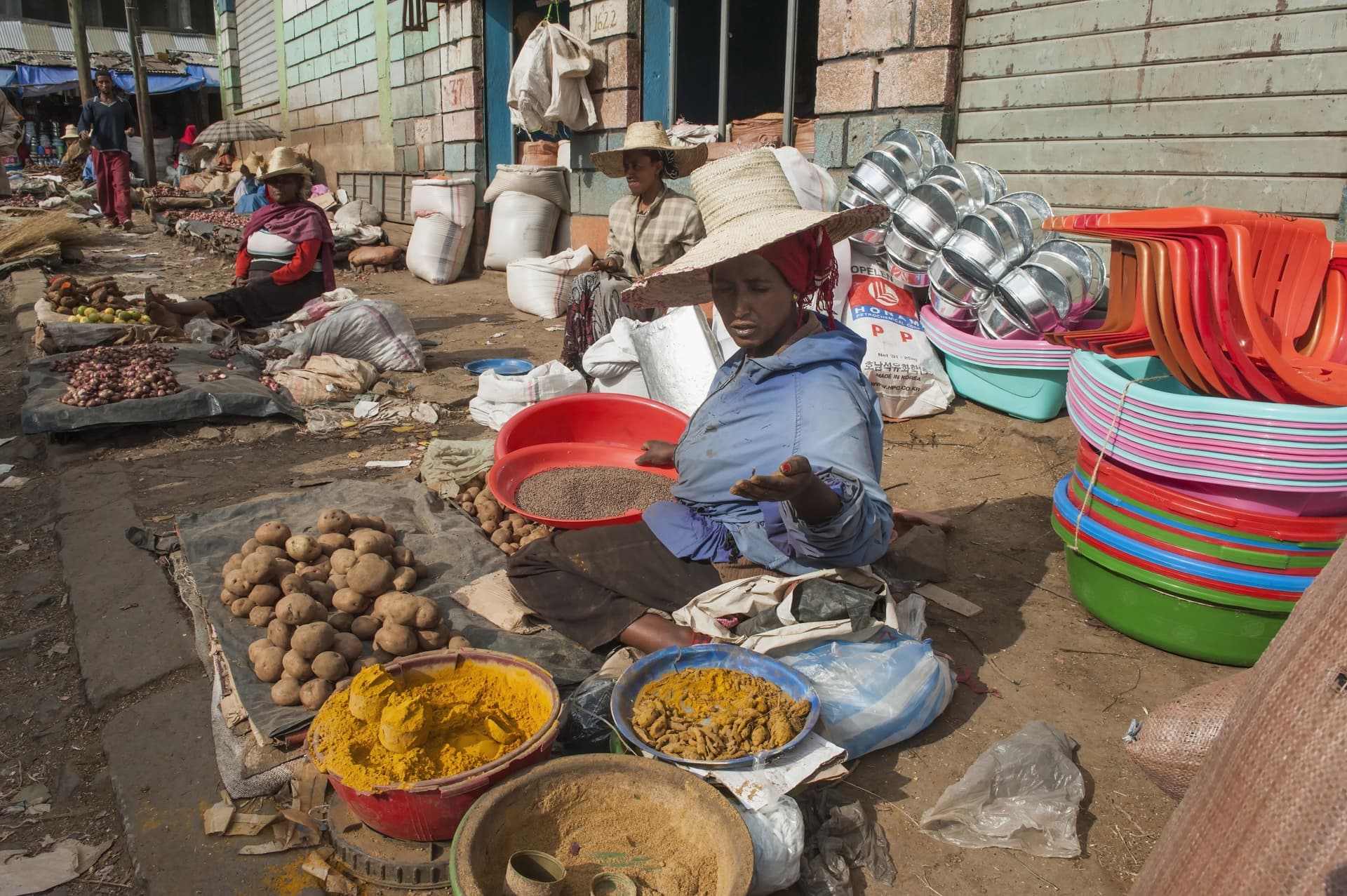
Located in the Addis Ketema district, approximately 3 km from the center of Addis Ababa, Addis Mercato is considered the largest open-air market on the African continent. Its narrow alleys span an entire neighborhood where spices, textiles, coffee and crafts sit side by side. For locals, it is an essential cog in the capital's daily economy; for travelers, it offers a window into Ethiopian urban life.
Why visit Addis Mercato
The appeal of Mercato lies in its density: within the same perimeter, you encounter nearly every product circulating in Éthiopie. The market reflects the country's ethnic and religious diversity, bringing together merchants from all regions. It's also a place of observation: informal logistics, porters in motion, the scents of incense and berberé provide a concrete reading of Ethiopian material culture, more vivid than any museum.
The visit suits those who enjoy bustling African markets. If you're seeking tranquility, this isn't the place; if you want to understand how an East African capital sources its goods, it's one of the best vantage points.
Market history
Mercato was created in the 1930s during the Italian occupation. The original market was held near the Church of Saint George, at the site of the current city hall. Italian authorities relocated it westward, to its present location, following the spatial segregation logic typical of colonial urban planning at the time.
Despite its imposed origins, the market quickly became an identifying landmark for Addis Ababa and has continued to expand ever since. It now concentrates a significant share of the capital's retail trade and employs thousands of people, from wholesalers to porters to restaurateurs and artisans.
What to see and do
Spices and berberé
The spice section is arguably the most photogenic. Berberé, the iconic Ethiopian spice blend (chili pepper, garlic, ginger, cardamom, fenugreek, among others), is sold in bulk here, alongside turmeric, incense and local seeds. It's a good place to pick up a useful souvenir, provided you ask for hermetic packaging.
Textiles and the habesha kemis
The textile section concentrates traditional garments, including the habesha kemis, an embroidered white dress worn at religious festivals, as well as cotton scarves (netela), fabrics with Orthodox motifs, and everyday clothing. Some of the production is artisanal, but quality varies: take time to compare several stalls.
Coffee
Éthiopie is the birthplace of coffee, and Mercato is one of the city's finest showcases for it. Here you'll find raw and roasted beans from different regions (Yirgacheffe, Sidamo, Harrar), as well as the implements of the Ethiopian coffee ceremony: jebena (earthenware coffee pot), small cups, incense burners.
Crafts, jewelry and religious symbols
Silver and brass jewelry, often adorned with Orthodox Christian symbols (Lalibela crosses, Gondar crosses, Axum crosses), are among the most striking purchases. You'll also find carved wood, paintings on parchment and liturgical objects.
Metals, recycling and food
Other sections, less geared to tourists, deserve a detour to grasp the scale of the place: building materials, recycled metal parts, sacks of cereals, fruits and vegetables, meats. Food stalls serve classic dishes (injera, wat, tibs) at very low prices.
Practical information
The market is open during daylight hours daily, though activity is concentrated in the morning. Plan 1.5 to 3 hours for a first visit, longer if you wish to shop. A few useful tips:
- Come in the morning: less crowded, cooler temperatures, stalls fully stocked.
- Negotiate systematically: prices quoted to foreigners are rarely final prices.
- Leave papers and large sums at your hotel; keep money in a secure pocket. Pickpocketing exists in crowds.
- Photographing people: ask permission first. For stalls, a smile usually suffices.
- In narrow alleys, cross paths with porters called Shemaki in Amharic: they carry considerable loads, give them priority.
- For a first visit, an English-speaking local guide saves time and minimizes pricing mistakes.
How to get there
Mercato is about 3 km west of Addis Ababa's center. Several options depending on your preference:
- Private taxi: simplest option. Negotiate the fare before getting in; few taxis use meters.
- Shared minibuses: economical and ubiquitous, they follow fixed routes. Ask for "Mercato" when boarding.
- Public buses: Anbessa (yellow) and Sheger (blue and white) serve the neighborhood for modest fares. Long and crowded journeys.
- On foot from Piazza: about 30 minutes' walk, interesting for observing the city en route.
- Bajaj (tuk-tuk): available on the outskirts, practical for the final kilometers.
What to see in the region
A Mercato visit naturally fits into a broader trip to Éthiopie. If you extend your journey northward, several major sites justify the detour:
- The Abreha Atsbeha Church, a gem carved into rock in Tigray.
- The Debre Birhan Selassie Church in Gondar, famous for its angel frescoes.
- The Abune Yosef mountain, near Lalibela, for high-altitude trekking.
- The Danakil Depression, one of the world's most extreme volcanic landscapes.
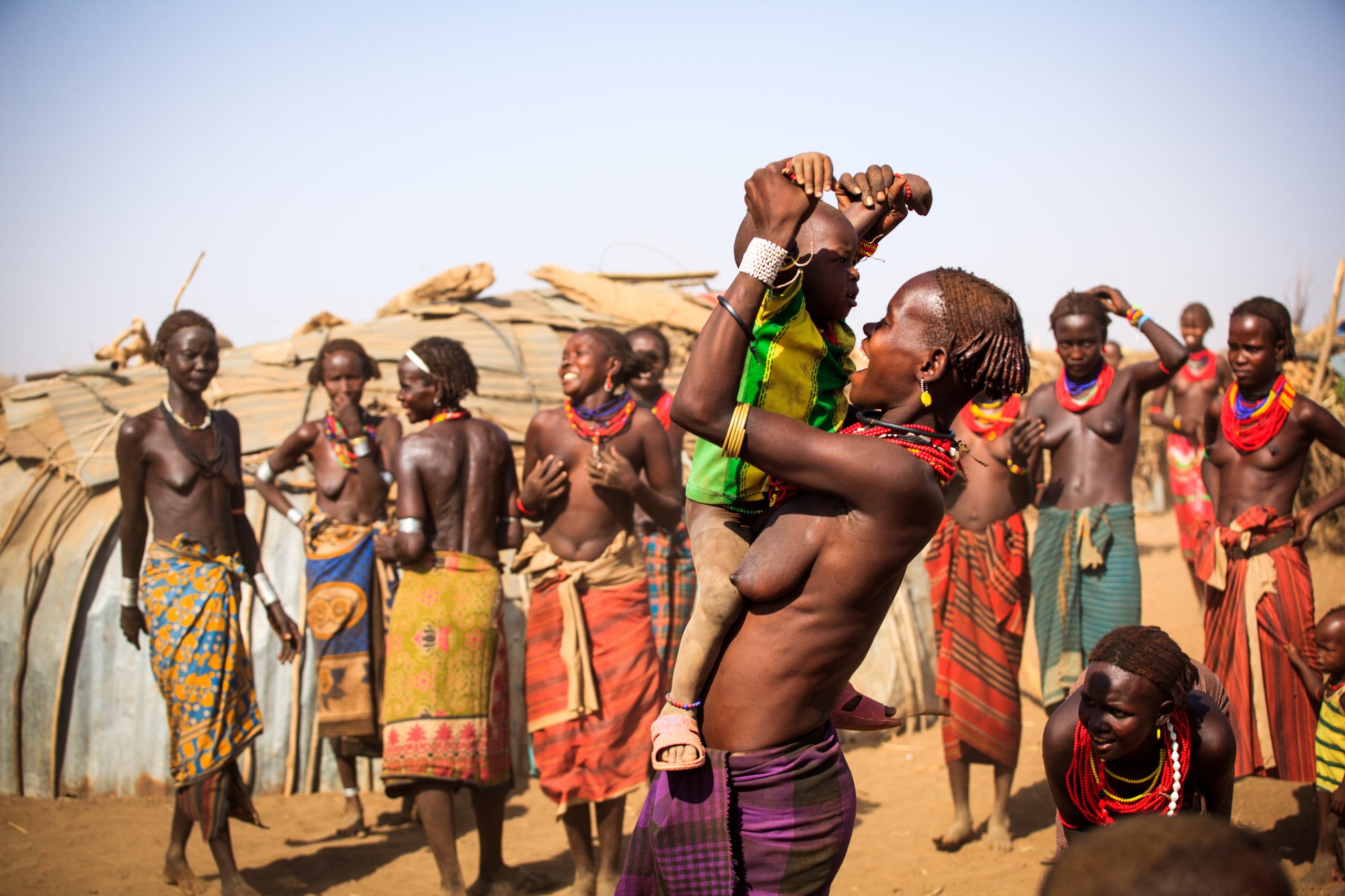
- The Dassenech of the Omo Valley, for encounters with southern peoples.
FAQ
Frequently asked questions
Prepare your trip
Addis Mercato is a natural stop on an Éthiopie itinerary, often placed at the beginning or end of a tour, around arrival in Addis Ababa. To build a complete itinerary including the highlands, rock-hewn churches and the Omo Valley, consult our custom Éthiopie trips.
Interested in this visit?
We can include it in your personalised itinerary.