Asheton Maryam Church
Asheton Maryam Church
Orthodox monastery dedicated to the Virgin Mary, perched at 3,130 m on Mount Abune Yosef above Lalibela, reached by an altitude trek.
The Asheton Maryam monastery, dedicated to the Virgin Mary, stands on the slopes of Mount Abune Yosef, at approximately 3,130 metres altitude, above the town of Lalibela, in the Amhara region. Among the oldest active Christian worship sites still functioning in the region, it combines religious interest, high-altitude trekking and the chance to observe endemic wildlife of the Ethiopian highlands.
Why visit Asheton Maryam
The site's appeal lies less in its architecture, modest compared to the famous rock-hewn churches of the town below, than in the rare combination it offers: an active Orthodox monastery, ancient relics, sweeping highland views and the opportunity to observe endemic wildlife. The climb itself, from Lalibela, traverses agricultural landscapes and crosses villagers heading down to market.
Asheton Maryam is also written as Ashetan Maryam or Asheten Maryam depending on transliteration.
History and foundation
The monastery's precise dating remains uncertain. Oral tradition attributes its founding to King Nakuta La'ab (sometimes transcribed Nakatu La'ab), nephew of King Lalibela and the last sovereign of the Zagwe dynasty, who ruled briefly in the early 13th century. The founder king was allegedly buried there: an interior chapel still houses his tomb.
Asheton Maryam is among the sanctuaries associated with Lalibela that extended, at altitude, the religious vocation of the "Black Jerusalem" built by the Zagwe.
What to see on site
The monastery and its relics
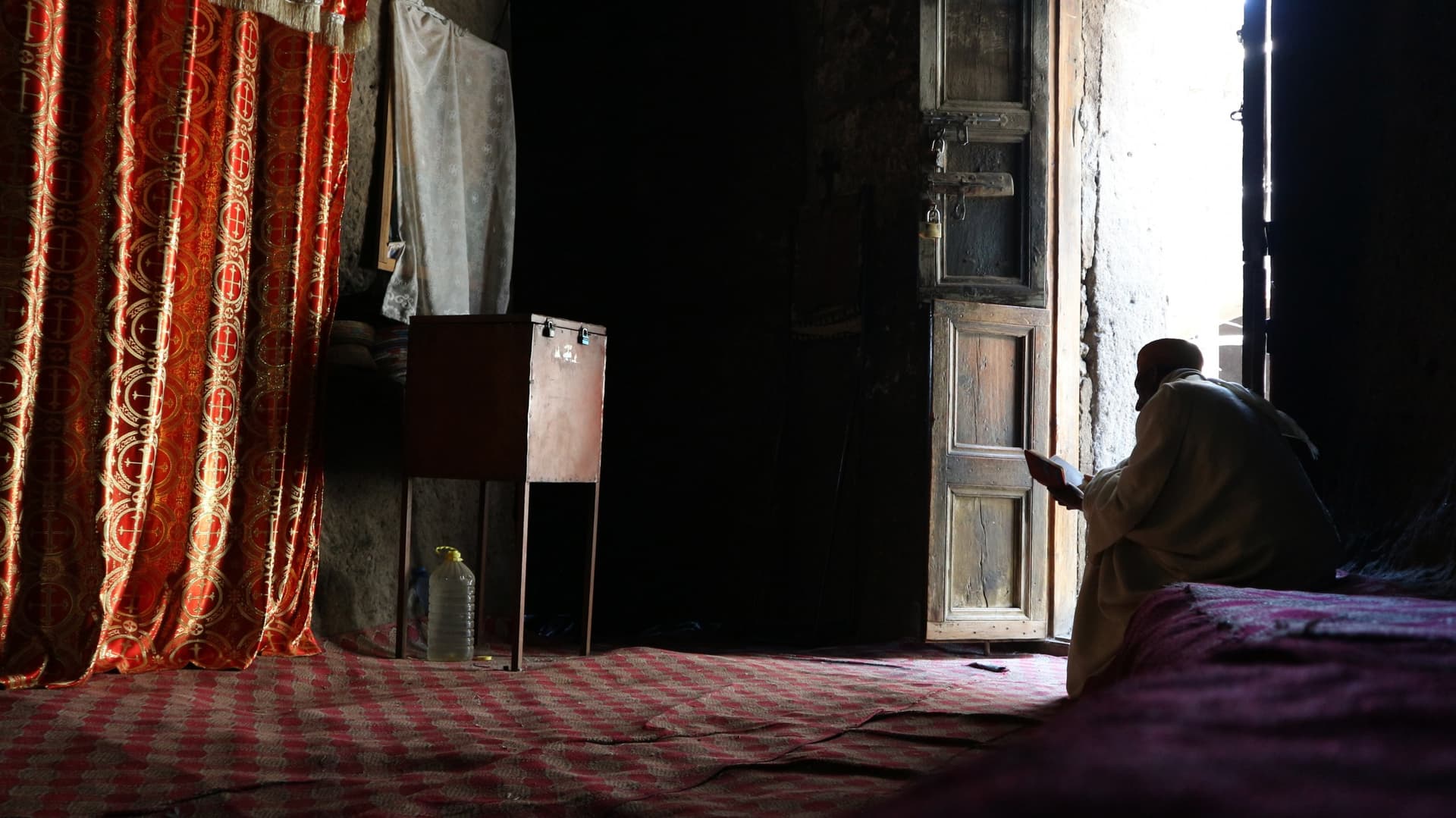
The building is partly carved into the cliff face. Inside, resident monks show visitors a small collection of liturgical pieces:
- ancient icons
- ceremonial metal crosses
- handwritten prayer books
- the chapel housing the tomb attributed to King Nakuta La'ab
The monastery also provides religious training for young boys, who learn Ge'ez, the liturgical language of the Ethiopian Orthodox Church, still used by priests and monks.
The panorama and wildlife
The trail leading to the monastery runs along a rocky ridge and opens onto a sweeping panorama of the Lalibela valley and the Abune Yosef massif. The region is home to several emblematic species you may encounter on the heights:
- the Ethiopian wolf, an endangered endemic canid
- the gelada baboon, recognizable by its red chest patch
- the lammergeier and other high-altitude raptors
Wolves and geladas share the same habitat without direct interaction; the former hunt mainly high-altitude rodents.
When to go
Lalibela enjoys a temperate highland climate, with average temperatures around 20°C and approximately 650 mm of annual rainfall. The rainy season concentrates in July and August, which remain the wettest months and make trails slippery.
The most favorable period runs from October to May, with dry days and clear skies ideal for trekking. The Orthodox feast of Genna (Ethiopian Christmas, early January) attracts many pilgrims to Lalibela: sites are then very busy but the atmosphere is worth the visit.
How to get there
The starting point is the town of Lalibela, accessible by:
- plane from Addis Ababa international airport (direct flight, the fastest option)
- road from Addis Ababa for travellers with several days available, with possible stops in the north
From Lalibela, three options to reach the monastery:
- on foot: the trek along the ridge is challenging due to altitude
- by mule: the traditional option, arranged with a local guide
- by 4x4: a track leads to a parking area, followed by approximately 15 minutes' walk to the monastery
Practical information
- Monastery altitude: approximately 3,130 m
- Duration of visit: allow a half-day to a full day depending on access method
- Fees: a modest entrance fee is requested on site, payable in birr; a tip for the monk guide is customary
- Equipment: hiking boots, water, sun protection, warm clothing (wind on the ridge), rainwear during wet season
- Dress code: cover shoulders and legs out of respect for the place of worship; shoes are removed at the church entrance
- Guide: recommended for the trek and interpretation of the relics
Nearby
Asheton Maryam fits naturally into a collection of sites to combine during a stay in Lalibela:
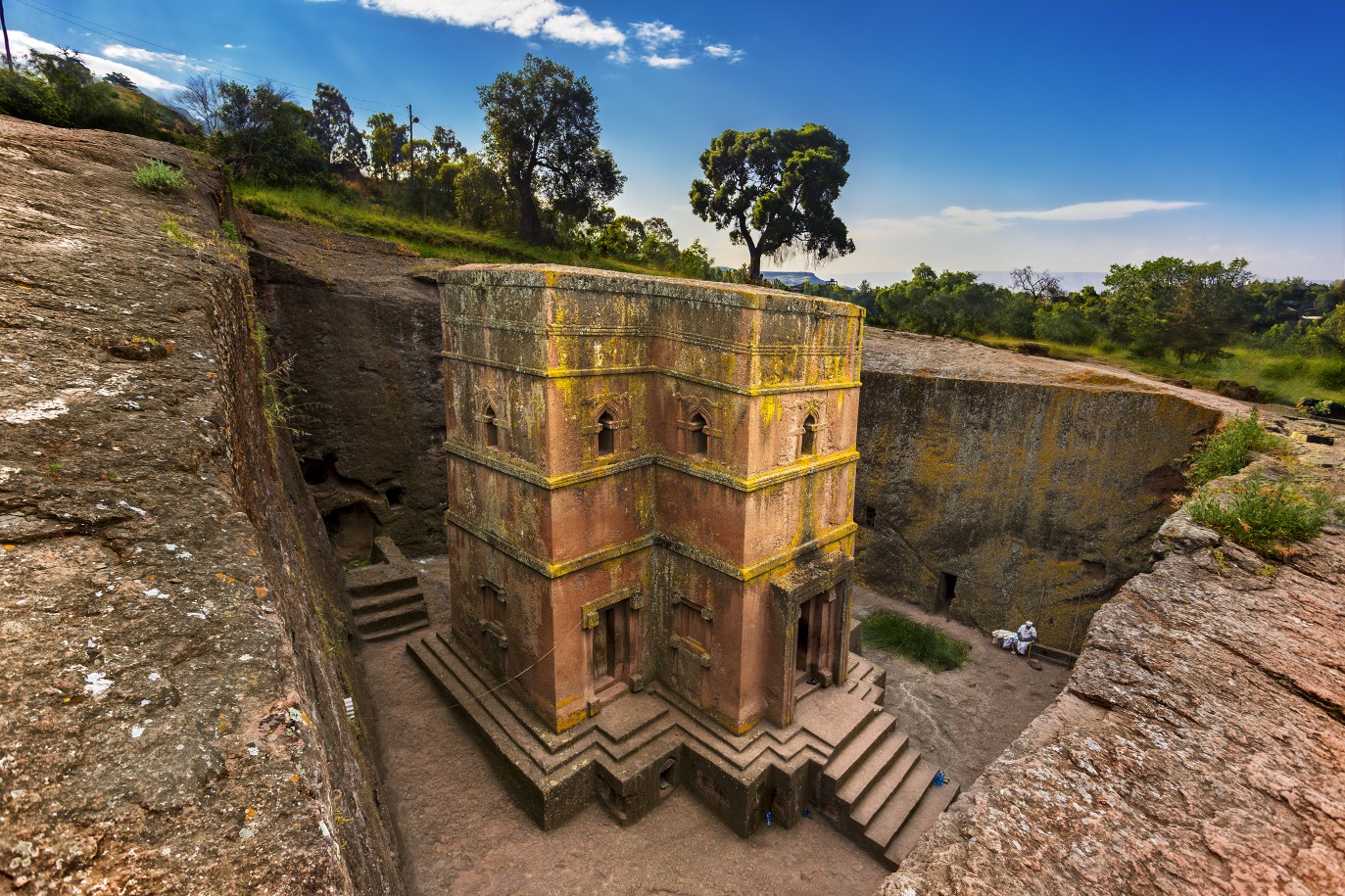
- Lalibela and its eleven rock-hewn churches carved into stone
- the Abune Yosef mountain, for longer treks and endemic wildlife observation
- the Abreha Atsbeha Church, another rock sanctuary of northern Éthiopie
- the Debre Birhan Selassie Church, famous for its frescoes of angels
Frequently asked questions
Frequently asked questions
Allow a half-day if you go by 4x4 to the parking area then walk for 15 minutes, and a full day if you go on foot or by mule from Lalibela.
Yes, but the rains in July and August make the trail slippery. October to May is more comfortable for trekking.
A local guide is recommended for the trekking trail and for interpretation of the relics presented by the monks, who rarely speak English-speaking languages.
The highlands are home to the Ethiopian wolf, the gelada baboon and several large raptors including the lammergeier. Good binoculars are useful.
The eleven churches of Lalibela are carved from volcanic tuff below and form an exceptional architectural ensemble. Asheton Maryam is more modest but offers the experience of an active high-altitude monastery in a remarkable natural setting.
Include Asheton Maryam in your trip
The monastery combines naturally with visits to Lalibela's rock-hewn churches and a trek in the Abune Yosef massif. To build an itinerary combining religious sites of the north, highlands and endemic wildlife, consult our trips to Éthiopie.
Interested in this visit?
We can include it in your personalised itinerary.