Ethiopian Cuisine
Ethiopian cuisine is renowned among discerning food lovers worldwide for its simplicity and originality. The dishes prepared are predominantly vegetarian, though meat-based options also exist.
Ethiopian cuisine is renowned among discerning food lovers worldwide for its simplicity and originality. The dishes prepared are predominantly vegetarian, though meat-based options also exist. In Éthiopie, food is eaten with one's hands. Meals are considered precious moments by locals, as they allow families and friends to communicate and strengthen their bonds.
Injera, the symbol of Ethiopian cuisine
This is a thick, spongy flatbread made from teff flour, a local cereal grain. It is the hallmark of local cuisine and is always used to accompany dishes at breakfast, lunch, or dinner. Its distinctly tangy flavor comes from fermenting the dough over 1 to 3 days.
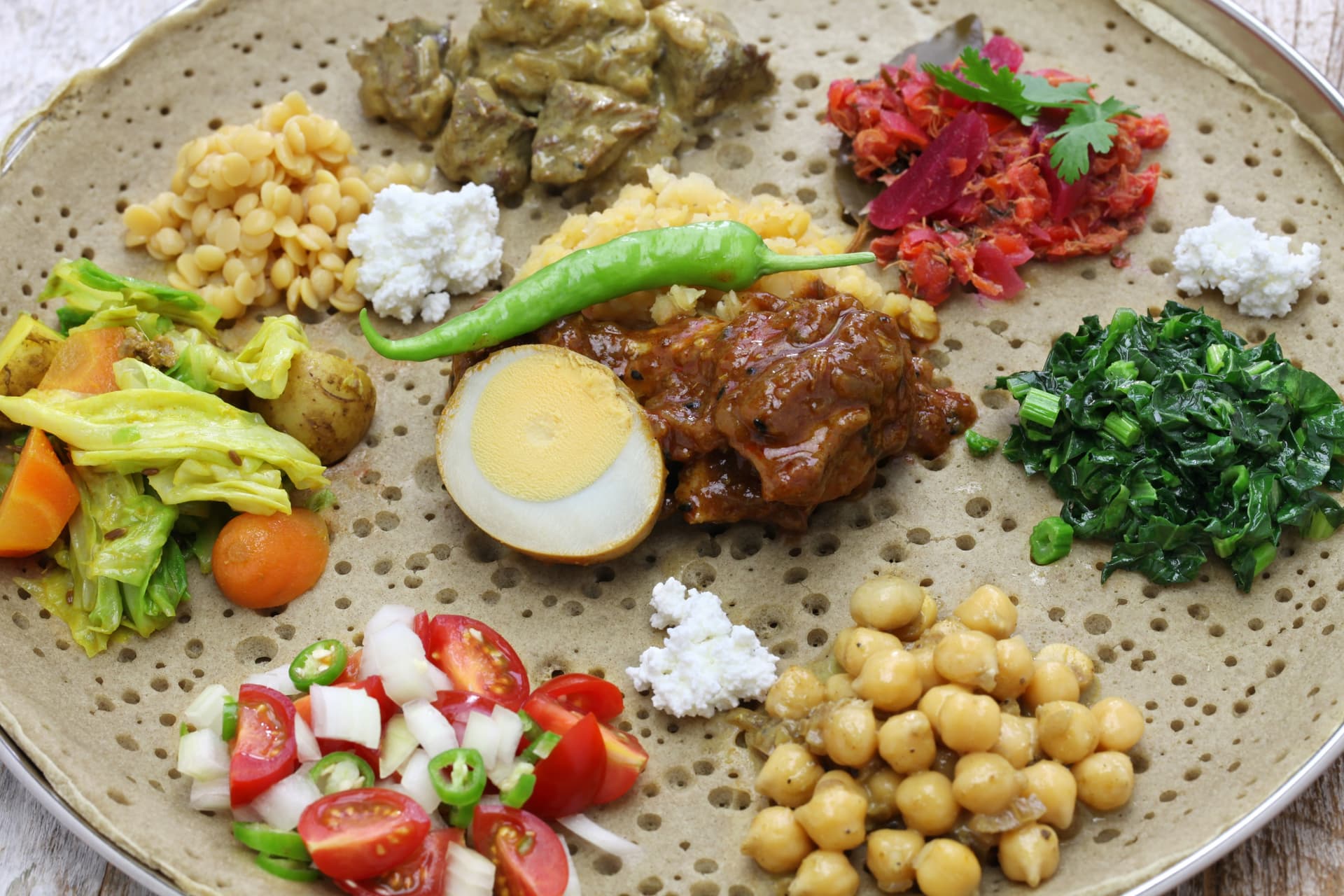
How it's presented
Injera is completely unrolled onto the plate when served at table. It is on top of this that the dishes called "wat" are placed.
Once everything is ready, pieces can be torn off with the fingers (of the right hand) and the feast can begin!
As you can imagine, injera serves here as both a platter and a tool to replace cutlery.
A closer look at wat
Wat is a kind of stew placed on top of injera. It comes in 2 variations: the meat-based version, also called "siga wat", and the vegetable-based version.
For meat-based wat, chicken is the most common version. However, goat meat, beef, or lamb can be used. For people living near a lake, they often replace the meat with fish.
The vegetable-based wat, on the other hand, is more commonly served on fasting days (Wednesdays and Fridays). It is made with pureed beans, carrots, lentils, fava beans, and spinach.
Wat is often seasoned with berbéré, a preparation that blends spices and aromatics. This includes, among other ingredients, dried chili pepper, cinnamon, ginger, clove, cardamom, garlic, cumin, and coriander.
Other delights of Ethiopian cuisine to discover
Tere sega
This dish is for carnivorous travelers, as it features raw red meat. This meat is often eaten raw with a sauce that blends mustard and chili called "awazi". Another spicy sauce named "mitmita" is also served as an accompaniment.
Enjoying a "tere sega" is a luxury for most Éthiopians, as this dish is generally only served during special or important events such as weddings.
Ketfo
This hearty dish is actually minced meat seasoned with berbéré. You could say this is Ethiopian steak tartare. To bring out even more flavor, local cooks add niter kibbeh. This is clarified butter infused with various spices, including cardamom, cumin, cinnamon, turmeric, and coriander.
Siga teps
Siga teps is nothing more than grilled meat (beef, goat, or lamb) that has been marinated in niter kibbeh.
Beverages
Coffee
Éthiopie is recognized worldwide as the leading producer of Arabica coffee on the African continent.
When you are in Éthiopie, you will hear about "buna", the local coffee. Many tourists have already tasted it and have become hooked. Éthiopians prefer to drink it sweet and piping hot. Served alongside it are bread, popcorn, and peanuts.
Tella, Ethiopian craft beer
This beer made from teff grains and barley is flavored with gesho leaves. Éthiopians consume this beverage regularly.
Tedj
Like tella, this Éthiopian mead is consumed throughout the country. It is often served in a sort of carafe called "bérélé". Its amber color is obtained through a blend of honey, gersho, and water. The alcohol content in this beverage can range from 6 to 15%. It should therefore be consumed in moderation.
Harar sofi
The taste of this fizzy drink is similar to Coca-Cola. Produced in the Harar region, it was primarily created for Muslim populations.