Currency in Éthiopie
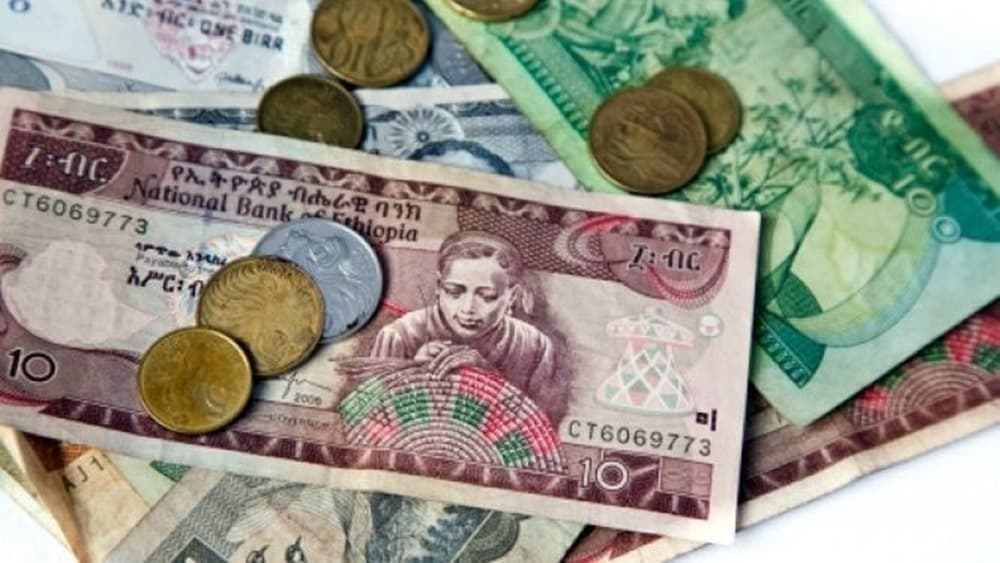
In Éthiopie, the local currency is called the "birr", though it is sometimes referred to as the "Ethiopian dollar". The birr was once one of the strongest currencies on the African continent.
In Éthiopie, the local currency is called the "birr", though it is sometimes referred to as the "Ethiopian dollar". The birr was once among the strongest currencies on the African continent. Its depreciation against the US dollar became particularly notable in 2009, when its value was cut in half relative to the American currency.
A brief history of the birr
The currency used in Éthiopie until 1949 was the Maria Theresa thaler. It was subsequently replaced by the birr, which was introduced into the country as early as 1945.
The first birr banknotes were printed in early 1945 in the United States in Philadelphia. They were officially put into circulation on Ethiopian territory on May 29, 1945.
Currencies in circulation
Banknotes: 1, 5, 10, 50, 100
Coins: 5, 10, 25, 50
ISO 4217 Code: ETB
Banks
Generally speaking, banks in the country are open Monday to Friday from 8 a.m. to 12 p.m. and from 2 p.m. to 4 p.m. Some establishments operate on a continuous basis. On Saturdays, local banks are, in principle, open from 8 a.m. to 12 p.m.
Ethiopian banks are either public or private, and they are beginning to establish themselves gradually in rural areas. You can even find banks offering currency exchange services outside urban centers.
Dashen Bank, one of the most well-known in the country, has ATMs in several major hotels.
Foreign banks are not yet present in Éthiopie.
N.B: On all invoices issued in Éthiopie, the currency used must obligatorily be the birr. This is required by the Ethiopian National Bank. However, it should be noted that most hotel establishments and some tour operators accept payments in dollars or euros.
Where to exchange currency?
At Addis Ababa Airport
As the country's main entry point, Addis Ababa Airport offers several currency exchange bureaus before and after immigration control.
Before returning to the West, you can also exchange your remaining birrs for euros or dollars. However, it should be noted that such transactions are strictly reserved for tourists leaving Ethiopian soil.
At banks
The majority of banks operating on Ethiopian territory handle the exchange of euros. However, their rates may vary depending on fees charged.
Important:
For security reasons, it is preferable to carry out banking operations such as currency exchanges or cash withdrawals in major cities on the territory such as: Addis Ababa, Axoum, Gondar, Lalibela, Dire Dawa, Jimma, Debre Zeit, Bahar Dar, Awassa, Mekele, etc...
At hotels
Some large hotel establishments offer a currency exchange service, but be careful of the exchange rates offered.
Card payments
The use of credit cards is very limited in Éthiopie. You can only use them at major hotels located in Addis Ababa, Bahar Dar, Lalibela, Gondar, Jimma, Mekele, Dire Dawa, Awassa...
Precautions to take
Throughout your stay in Éthiopie, it is best to carry cash, especially if you plan to venture outside the Ethiopian capital, Addis Ababa.
Never exchange your currency on the black market, as this presents too many risks. Furthermore, the exchange rate is not always favorable there.
Traveler's checks
Bringing a traveler's check booklet to Éthiopie would be pointless, as these are not usable in the country.