Sources of the Blue Nile
Sources of the Blue Nile
Lake Tana, Ethiopia's largest lake and source of the Blue Nile, is home to 37 islands whose monasteries became the cradle of Christian Abyssinia.
Lake Tana, situated at over 1,800 meters altitude in the Amhara region, is Éthiopie's largest lake and the source of the Blue Nile. With its 2,156 km² and 37 islets, more than half of which harbor religious buildings, it constitutes the cradle of Christian Abyssinia between the 14th and 17th centuries. From Bahir Dar, the main gateway, boat excursions allow you to reach island monasteries and witness the spectacular emergence of the Blue Nile.
Why visit Lake Tana and the Blue Nile sources
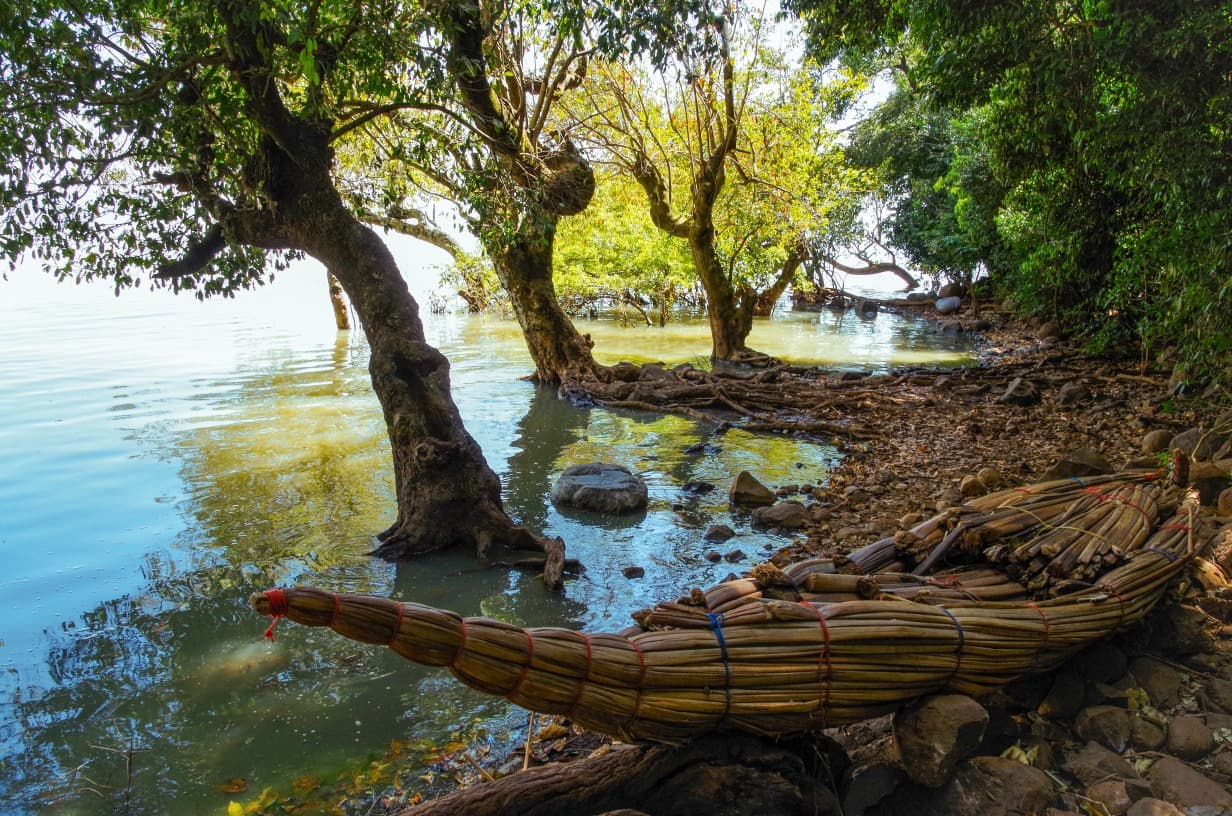
Few sites in East Africa combine religious heritage, geographical significance, and natural wealth to this extent. Lake Tana gives birth to the Blue Nile, one of the two major tributaries of the Nile, whose exact source was determined by Scottish explorer James Bruce in 1770. The monasteries dotting its islands, founded between the 14th and 17th centuries, preserve frescoes, manuscripts, and liturgical traditions of the Ethiopian Orthodox Church. On the shores, fishermen continue to use tankwa, vessels made of woven papyrus whose silhouette has barely changed in centuries.
History of Lake Tana
The Tana basin formed through the collapse of a vast volcanic zone blending flows from the Aden Lava Series and Trappean Lava Series, as the Ethiopian highlands rose.
From the 13th century onward, the lake played a key role in consolidating the Christian Empire of Abyssinia. During the raids led in the 16th century by Imam Ahmed Gragñ, monks fled to the islands and the Shewa region, which became a land of refuge. The papyrus tankwa and the Portuguese bridge of Alata allowed passage across the waters and their emissaries. The lake remained the heart of Christian Abyssinia from the 14th to the 17th century, a period during which the principal monasteries affirmed their prestige.
In 1770, James Bruce traced the Blue Nile to its source at Gish Abay, south of the lake, establishing the river's geography for Europe. Near Gorgora, on the northern shore, the ruins of Emperor Susneyos's 17th-century palace remind us that he initiated the architectural style that would flourish later in Gondar.
What to see on Lake Tana
The monastic islands
- Tana Qirqos: a sacred island inhabited by monks. Ethiopian Church tradition places the presence of the Table of the Ten Commandments here, said to have been preserved on the island from around 400 BCE to 400 CE before its supposed transfer to Aksum.
- Daga: the Daga Estifanos monastery houses the tombs of several Ethiopian emperors.
- Rema: the Medhame Alem church is adorned with frescoes characteristic of Ethiopian religious painting.
- Zege: the peninsula is home to Ura Kidane Mehret, a circular church whose interior walls are entirely covered with frescoes depicting the Bible and the lives of Ethiopian saints.
Most of these monasteries are off-limits to women, who may nonetheless approach the islands by boat and appreciate the buildings from the outside. On Zege, which is more accessible, women can visit Ura Kidane Mehret.
The Blue Nile sources and falls
At the southern end of the lake, the Blue Nile escapes toward Bahir Dar then drops spectacularly at Tis Issat ("the water that smokes"), roughly thirty kilometers downstream. The Portuguese bridge of Alata, built in the 17th century, spans the river near the falls.
Fauna and shores
The banks welcome abundant birdlife (pelicans, cormorants, kingfishers, migratory birds) and, in some places, hippopotamuses. Remnants of afromontane forest survive around Zege, where trails cross wild coffee plants and fig trees.
Practical information
- Starting point: nearly all excursions depart from Bahir Dar's port.
- Duration: allow a half-day to visit one or two nearby islands (Zege, Entos Eyesu), a full day to combine Zege, Daga, and Tana Qirqos.
- Rates: boat rental and monastery entrance fees are settled separately, in birr. Plan to pay in cash.
- Restrictions: most monasteries are reserved for men. Modest dress (shoulders, knees covered) is required to enter churches.
- What to bring: hat, water, closed-toe shoes for Zege's trails, binoculars for birdwatching.
When to go
The dry season, from October to March, offers the best conditions for navigation and visiting: clear skies, calm waters, easy island access. From June to September, the monsoon swells tributaries and the lake level rises, sometimes flooding the coastal plains; the Blue Nile falls downstream are then at maximum flow, but excursions may be disrupted. April-May and late September are pleasant off-seasons with fewer crowds.
How to get there
Bahir Dar is connected to Addis Ababa by daily flights (approximately 1 hour) and by road (approximately 560 km, 10 to 12 hours). From the city center, the embarkation port is a few minutes away by bajaj (tuk-tuk) or taxi. The city fits naturally on the historic route of the North, between Gondar and Lalibela, and most Éthiopie circuits devote one to two nights there.
Nearby attractions
- The Blue Nile Falls (Tis Issat), about thirty kilometers from Bahir Dar.
- Fasilidas Castle in Gondar, the 17th-century imperial capital, heir to the style initiated at Susneyos.
- Debre Birhan Selassie Church, famous for its painted angels on the ceiling, also in Gondar.
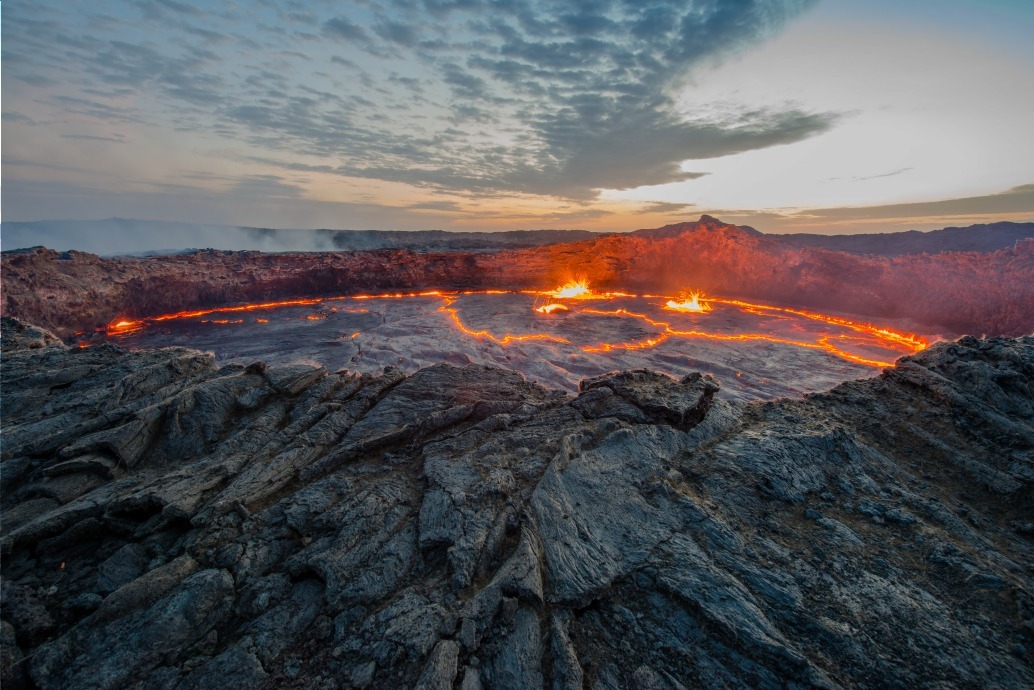
- Erta Ale Volcano and Dallol, in the Danakil depression, to extend your journey toward radically different landscapes.
Frequently asked questions
Frequently asked questions
A half-day is sufficient to approach Zege or a nearby islet. To combine several monasteries like Daga Estifanos and Tana Qirqos, allow a full day on the water.
Most monasteries on Lake Tana are off-limits to women, in keeping with Ethiopian Orthodox Church tradition. However, certain churches on the Zege peninsula, such as Ura Kidane Mehret, are open to them.
The dry season, from October to March, offers the most stable conditions. During the monsoon (June-September), waters swell and the Blue Nile falls downstream are impressive, but outings may be disrupted.
This is a tradition of the Ethiopian Church, which believes the Table was preserved on the island for roughly eight centuries before its transfer to Aksum. No archaeological evidence confirms this account, but it grounds the site's sacredness.
The simplest way is to take a domestic flight to Bahir Dar (approximately 1 hour). The road is also possible but takes 10 to 12 hours via Debre Markos.
Planning your trip to Éthiopie
Lake Tana integrates ideally into an itinerary along the historic route of the North, between Gondar, Lalibela, and the Simien highlands. To build your stay around these stages, consult our Éthiopie travel suggestions.
Interested in this visit?
We can include it in your personalised itinerary.