The Black Jerusalem
The Black Jerusalem
At Lalibela, eleven monolithic churches carved into rock in the 13th century form the Black Jerusalem, a UNESCO site and a sacred pilgrimage destination for Ethiopian Orthodox Christianity.
At Lalibela, in the highlands of northern Éthiopie, eleven monolithic churches carved into rock form what is known as the Black Jerusalem. Listed as a UNESCO World Heritage Site since 1978, this rock-hewn complex remains one of the principal spiritual centers of the Ethiopian Orthodox Church and a major Christian pilgrimage site in Africa.
Why visit the Black Jerusalem
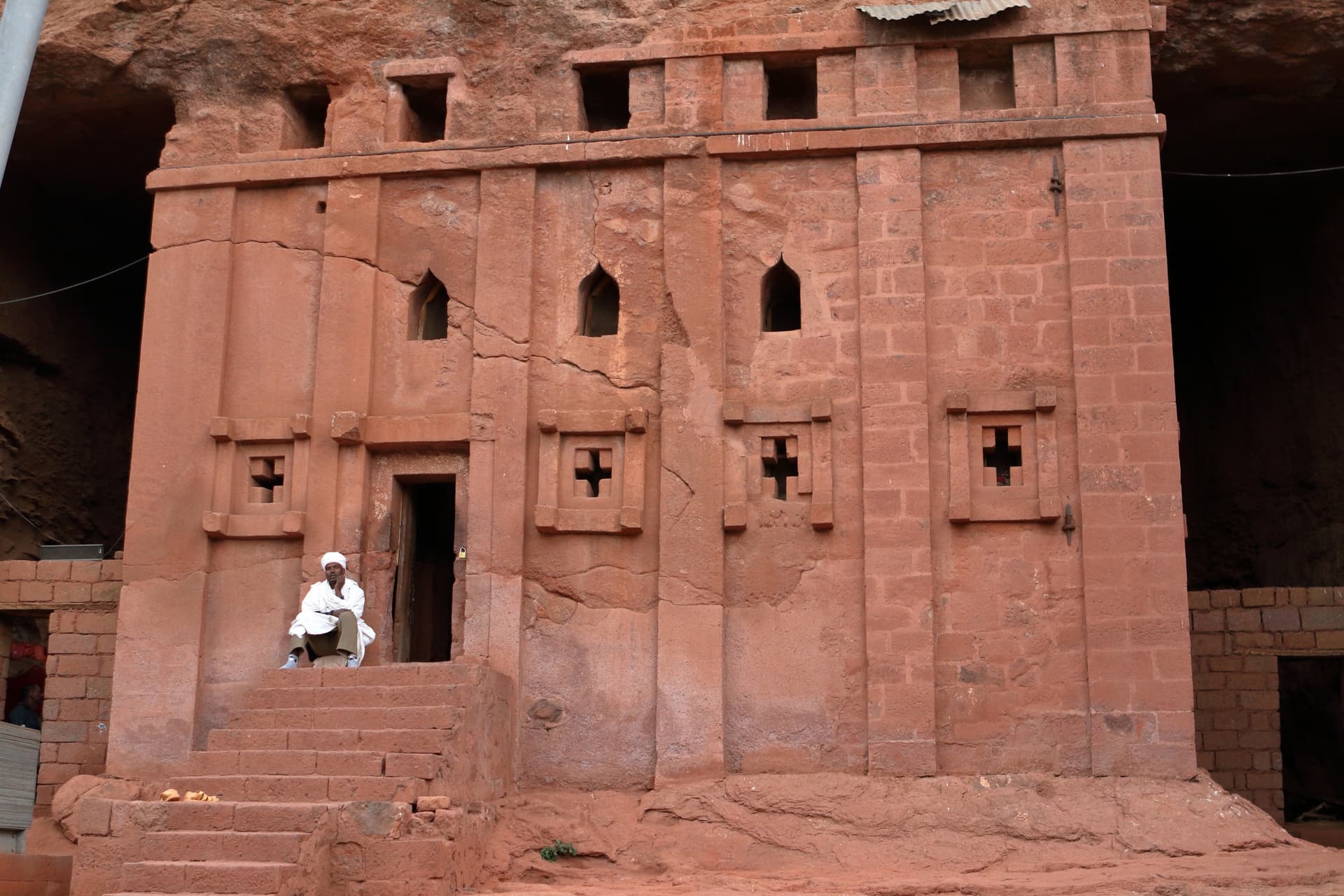
The site comprises eleven sanctuaries carved into volcanic tufa, connected by a network of tunnels, trenches, and interior courtyards. Unlike buildings constructed stone by stone, each church was extracted from a single block, from roof to foundations, by carving away the rock. The complex remains a living place of worship: daily services, processions, the faithful wrapped in white cloth, and priests reading the gospels in Ge'ez punctuate every visit.
History of the site
Tradition attributes the construction of the churches to King Gebra Maskal Lalibela, a sovereign of the Zagwe dynasty, around the 13th century. Archaeological dating remains debated, with some sanctuaries possibly being older and having been remodeled during this period.
The historical context was shaped by the progressive closure of pilgrimage routes to Jerusalem following the city's capture by Saladin in 1187. The construction of a substitute sanctuary on Ethiopian soil responded to this difficulty in accessing the Holy Land. The organization of the site reproduces biblical topography: the river flowing through Lalibela is named the Jordan, and the city itself is nicknamed the "New Jerusalem" or "Black Jerusalem." The ambition was also political and symbolic: to rival Aksum, the ancient capital and legendary home of the Ark of the Covenant in Ethiopian tradition.
Since its UNESCO inscription in 1978, several buildings have been covered with large sloping metal roofs to slow erosion. These protective structures, considered aesthetically unpleasing by some visitors and specialists, remain controversial today.
The churches to see
The complex is traditionally divided into two groups, separated by the Jordan river, to which is added Bieta Ghiorghis, situated slightly apart.
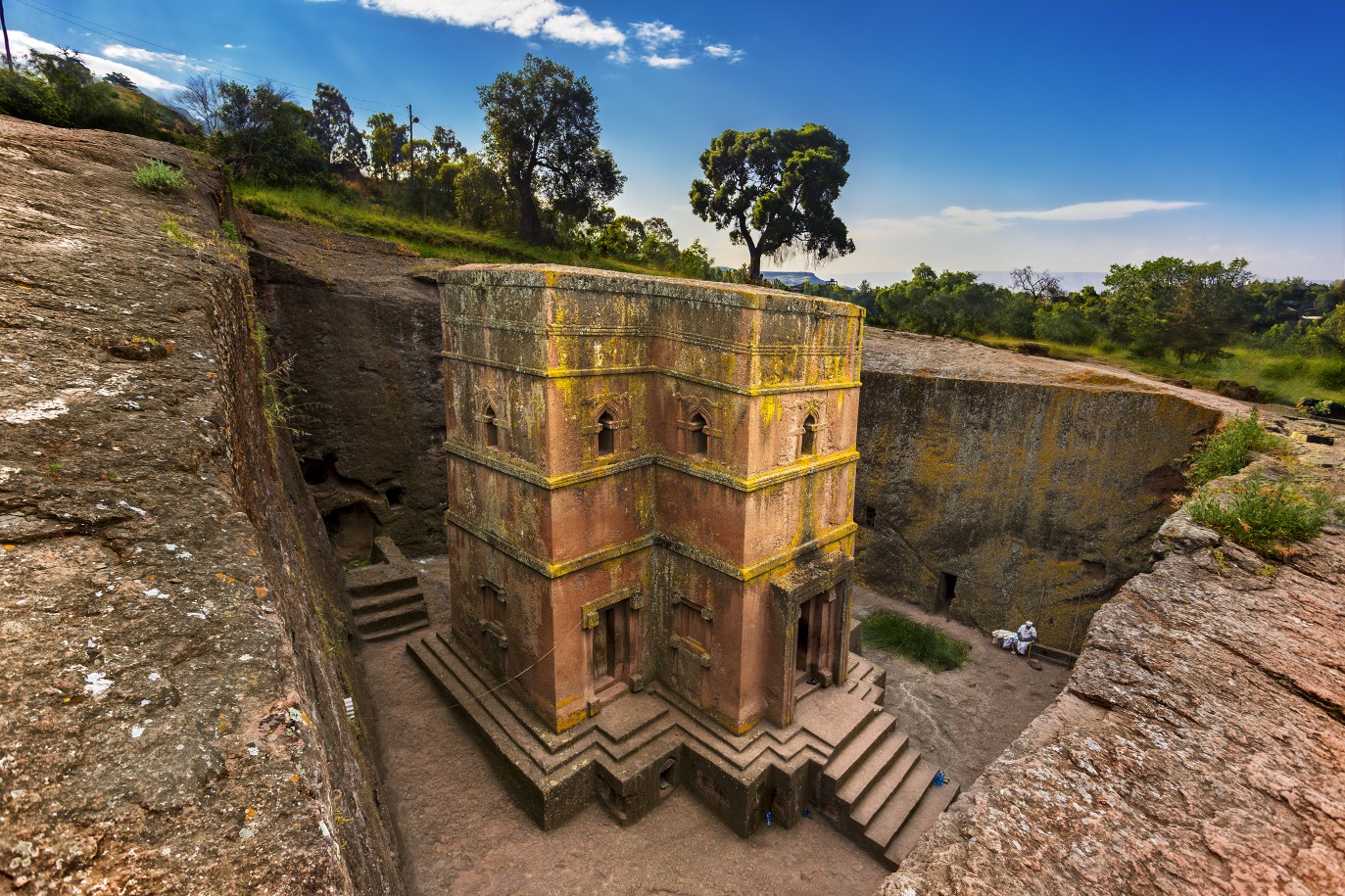
Bieta Ghiorghis (House of Saint George)
Arguably the most emblematic. Sculpted in the form of a Greek cross pointing skyward, it reveals itself to visitors from the edge of a deep pit. The church is connected to other sanctuaries to the southeast by tunnels that communicate with caves that once served as refuge for ancient hermits.
Bete Medhane Alem (House of the Savior of the World)
The tallest and most expansive structure on the site. Surrounded by an exterior colonnade, it is considered a replica of the Church of Saint Mary of Zion in Aksum. Its interior, austere, is devoid of paintings.
Bete Maryam, Bete Meskel, Bete Dengel
The northern group houses several sanctuaries with remarkable decorations: Bete Maryam (House of Mary), renowned for its frescoes and carved capitals, Bete Meskel (House of the Cross), carved as a gallery, and Bete Dengel (House of the Virgin Martyrs).
Bete Golgotha, Bete Mikael, and the Tomb of Adam
Reserved for men in the case of Bete Golgotha, this group contains bas-reliefs depicting saints, as well as spaces associated with the symbolic burial of King Lalibela.
Practical information
- Admission: a single pass grants access to all eleven churches and is valid for several days. Relatively high price for the country, payable at the site entrance.
- Duration of visit: allow a full day to explore both groups and Bieta Ghiorghis without rushing, or two days if attending a service.
- Dress code: shoulders and knees must be covered; wear shoes that are easy to remove (removal is mandatory before entering each church).
- Guide: the presence of a local guide is highly recommended to understand the symbolism of the sites and the iconography of the frescoes.
When to visit
The site is open year-round, but the dry season, from October to March, offers the most comfortable conditions. Two major religious festivals draw large crowds and give the site a particular intensity:
- Genna, Ethiopian Orthodox Christmas, celebrated on January 7, which draws tens of thousands of pilgrims to Lalibela.
- Timkat, the Epiphany festival, mid-January, marked by processions, chanting, and water blessings.
Booking well in advance is essential during these periods; at other times, the atmosphere is quieter and allows for a more contemplative visit.
How to get there
Lalibela is isolated in the Amhara region, more than 600 km north of Addis Ababa, on mountain roads. The simplest route is by air: Ethiopian Airlines operates daily flights from Addis Ababa to Lalibela airport, often combined with Gondar, Aksum, and Bahir Dar as part of the northern historical circuit. From the airport, allow about thirty minutes by road to reach the center. Overland routes exist from Bahir Dar and Mekele but require one to two days of travel.
What to see nearby
Lalibela fits naturally into the northern historical circuit of Éthiopie, which combines several major sites:
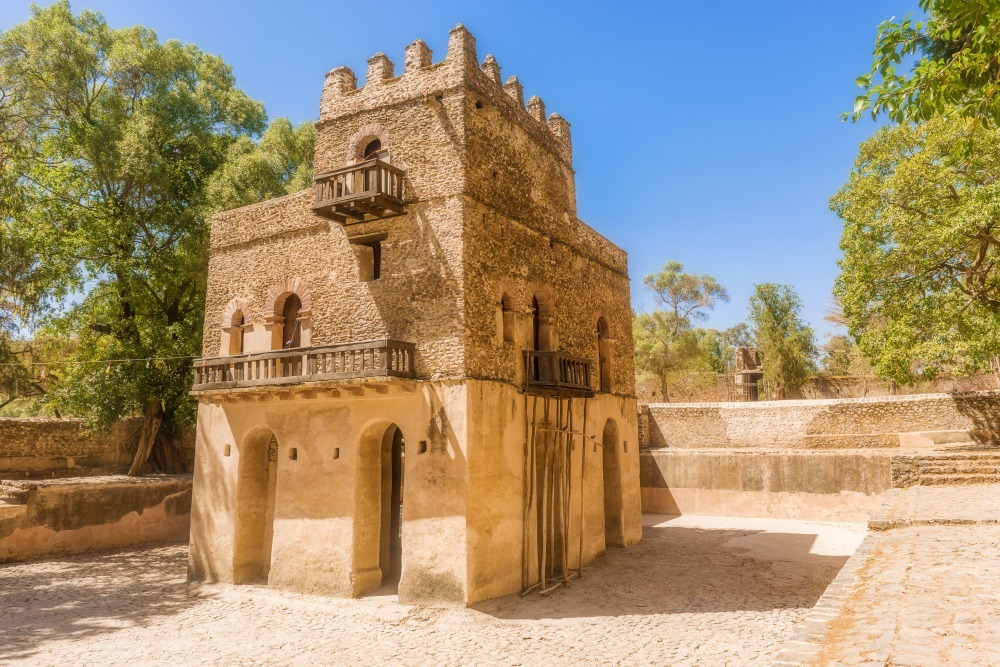
- Fasilidas Castle in Gondar, the former imperial capital.
- Debre Birhan Selassie Church, famous for its ceiling painted with angels.
- The sources of the Blue Nile and the monasteries of Lake Tana.
- Abreha Atsbeha Church, another remarkable example of Ethiopian rock-hewn architecture.
Frequently asked questions
Frequently asked questions
Eleven monolithic churches, divided into two main groups separated by the Jordan river, plus Bieta Ghiorghis situated slightly apart.
King Gebra Maskal Lalibela wished to create a symbolic replica of the Holy Land, which had become difficult to reach for pilgrims following the capture of Jerusalem by Saladin in 1187. The local river was renamed the Jordan and the city nicknamed the New Jerusalem.
A full day allows for a comprehensive tour. Two days are preferable to attend a service, appreciate the carved details, and walk leisurely between the sanctuaries.
Most are accessible to visitors, provided you respect the rules (shoe removal, modest dress, silence). Bete Golgotha is traditionally reserved for men.
October to March for the climate. For religious atmosphere, Genna (January 7) and Timkat (mid-January) are incomparable, but the site is then very crowded.
Plan your trip
The Black Jerusalem fits naturally into an itinerary combining Gondar, Aksum, and Lake Tana. To build a custom route through the north of the country, consult our Éthiopie travel ideas.
Interested in this visit?
We can include it in your personalised itinerary.